New to Charles H. Spurgeon? Start with
Gleanings Among the Sheaves
All works · 127 hr 39 min read
Biography
- 1834 Born
- 1850 Converted
- 1861 Tabernacle
- 1892 Died
There and then the cloud was gone, the darkness had rolled away, and that moment I saw the sun.
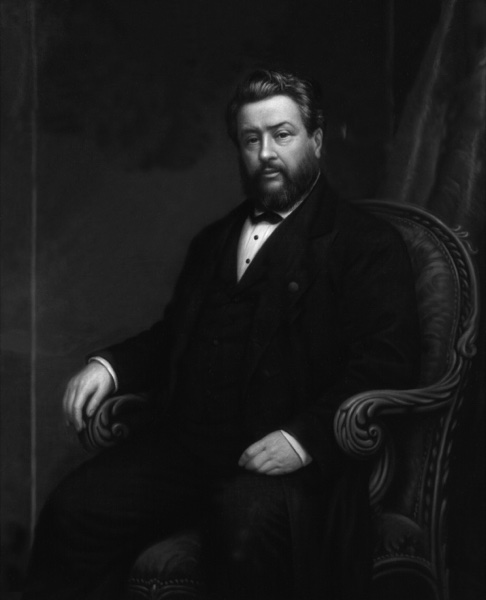
Charles Haddon Spurgeon has been called the “Prince of Preachers,” and for once the title is not an exaggeration. For nearly forty years he stood before congregations of five and six thousand in the heart of London, without a microphone, and held them still with the plain preaching of Christ crucified. His sermons were taken down in shorthand, printed every week, and carried by the shipload to every continent; by the end of his life he had preached to perhaps ten million people and published more words than any other Christian author in the English language. Yet the man behind the fame was often a suffering, praying, tender-hearted pastor who insisted that the real power of his ministry was not his own voice at all, but the people on their knees beneath the pulpit.
A Boy in the Snow
He was born on 19 June 1834 in Kelvedon, Essex, into a family already rich in gospel ministry — both his father, John Spurgeon, and his grandfather, James Spurgeon, were Congregational preachers who faithfully served rural England. Because his father’s ministry often kept him from home, much of the boy’s childhood was spent in his grandfather’s manse at Stambourne, a house filled with old Puritan books. There the child spent countless hours with John Bunyan, Richard Baxter, John Owen, and Thomas Watson, and those writers shaped his mind for life. He grew up knowing the doctrines of grace by heart. What he did not yet know was the Saviour himself. For months, as a teenager, he was under deep conviction of sin, longing to know that he was truly forgiven and finding no peace.
The turning point came on a snowy Sunday morning, 6 January 1850, when he was fifteen. A blizzard drove him off his intended road and into a tiny Primitive Methodist chapel in Artillery Street, Colchester. The appointed preacher never arrived through the snow, so a thin, unlettered layman — a shoemaker or tailor by trade — climbed into the pulpit with nothing to say but his single text: “Look unto me, and be ye saved, all the ends of the earth” (Isaiah 45:22). Fixing his eyes on the miserable-looking boy under the gallery, he cried out, “Young man, look to Jesus Christ. Look! Look! Look!” In that instant Spurgeon looked, and was saved.
There and then the cloud was gone, the darkness had rolled away, and that moment I saw the sun.
— Charles Spurgeon, on his conversion
He was baptized that spring in the river Lark, having become, by his own glad conviction, a Baptist. The transformation was immediate and total: the boy who had wrestled so long in the dark now could not keep silent about the light, and from that day he burned to proclaim the message that had saved him — that salvation comes not through human striving but through faith in Jesus Christ alone.
The Boy Preacher
It is one of the wonders of his story that this future prince of the Victorian pulpit never attended university or theological seminary. His schooling was modest — local schools in Essex and a season at Newmarket — while the celebrated clergy of his day were polished at Oxford and Cambridge. What Spurgeon possessed instead was an extraordinary memory, an insatiable appetite for books, and the Puritan library of his boyhood; by his teens he had devoured more theology, history, and literature than many ordained men. Personal study, spiritual discipline, and a rare gift for putting deep truth into vivid, practical language did the rest.
Within months of his conversion he was teaching, distributing tracts, and — by the age of sixteen — preaching in the village churches around Cambridge. Still in his teens he became pastor of the little chapel at Waterbeach, where his fervent preaching soon filled the building and the congregation grew rapidly. His gifts could not stay hidden long. In 1854, at just nineteen years old, he was called to the historic but declining New Park Street Chapel in London. The congregation that met to hear the untried country boy was small; within weeks it could not hold the crowds. They enlarged the building, then hired Exeter Hall, then the vast Surrey Gardens Music Hall, and still thousands were turned away. London had never seen anything like it: a teenager preaching old-fashioned Calvinistic doctrine to overflowing multitudes, in language a servant girl could follow and a scholar could not fault.
In 1856, amid the whirlwind, he married Susannah, whose love and steady support would anchor him for the rest of his life. The couple had twin sons, Thomas and Charles junior, and both would one day follow their father into Christian ministry.
Fire and Darkness
The fame brought bitter trials. On the evening of 19 October 1856, as Spurgeon led some ten thousand people in prayer at the Surrey Gardens Music Hall, malicious troublemakers shouted “Fire! The galleries are giving way!” There was no fire, but in the stampede for the doors seven people were crushed to death and many more injured. Spurgeon, only twenty-two, was carried from the pulpit “more dead than alive” and sank into a grief so heavy it nearly ended his ministry. For the rest of his life he battled recurring depression, and he never pretended otherwise.
That honesty became one of his great gifts to the church. He spoke openly of the “causeless depression” that would fall on him, and he comforted thousands of fellow sufferers by refusing to hide his own. His theology of suffering was not glib; it was hammered out in the furnace. He came to believe that his afflictions — the disaster, the slander, the gout that later racked his body — were the very things that drove him again and again to cling to Christ, and made his preaching tender toward the broken.
The Powerhouse
In 1861 the congregation moved into the newly built Metropolitan Tabernacle at Newington, seating around five thousand, where Spurgeon would preach for the next thirty years. Visitors came from around the world to study his methods, expecting to find the secret in his oratory. Spurgeon knew better. He would take them down to the basement before a service and open a door on several hundred members of his church, kneeling and pleading with God for the preaching about to begin.
He believed prayer to be real work with real results, and he pressed his people to labour at it with all their strength.
Prayer pulls the rope below, and the great bell rings above in the ears of God. Some scarcely stir the bell, for they pray so languidly; others give but an occasional pluck at the rope; but he who wins with heaven is the man who grasps the rope boldly and pulls continuously with all his might.
— Charles Spurgeon
So bound was he to the prayers of his congregation that he told them plainly he could not go on without them.
May God help me, if you cease to pray for me! Let me know the day, and I must cease to preach.
— Charles Spurgeon
Faith That Builds
Spurgeon’s ministry was never confined to the pulpit. In 1856 he founded the Pastors’ College to train preachers who, like himself, lacked the money for a formal education, personally teaching and supporting scores of men who went out to plant churches. He launched a Colportage Association to carry Christian books to the poor, published the monthly magazine The Sword and the Trowel, and gave himself away in a hundred works of mercy. He was convinced that the gospel must transform both souls and society, and he refused to preach a grace he would not practise.
The Stockwell Orphanage was born of exactly this praying, believing spirit. Grieved by the plight of fatherless children, Spurgeon had asked God to let him help them — and the answer came in a way he could never have engineered.
He would not separate the preaching of grace from the doing of it. The same faith that filled the Tabernacle built the college, the orphanage, and the almshouses, and it did so, again and again, in answer to prayer.
The Down Grade
Spurgeon’s last great battle was for the truth of Scripture itself. He had always held the Bible to be the inspired Word of God and the final authority for faith and life, and every sermon he preached was rooted in it. So in 1887, alarmed by a drift toward doubt about the Bible, the atonement, and the reality of judgment among some Baptist ministers, he sounded the alarm in a series of articles known as the “Down-Grade” controversy. Rather than compromise, he withdrew from the Baptist Union, which then formally censured him. The conflict cost him friendships and, many believed, hastened his decline. But he counted the authority of God’s Word worth any price, and he would not be moved.
Home
His body, worn by gout, rheumatism, and Bright’s disease, gave way under the strain of a lifetime’s labour. Nursed faithfully by his beloved Susannah — herself an invalid, who from her sickroom ran a Book Fund that placed thousands of theological volumes into the hands of pastors too poor to buy them — he sought relief in the milder air of Menton, on the French Riviera. There, on 31 January 1892, at the age of fifty-seven, he died. London mourned as for a prince; tens of thousands filed past his coffin, and his open Bible lay upon it.
He left behind more than three thousand five hundred published sermons — still the largest body of work by any Christian author — along with beloved books like Morning and Evening, The Treasury of David, All of Grace, and Lectures to My Students. More than a century later they are read as eagerly as ever, translated into scores of languages, because the man who wrote them never preached himself. He preached Christ, and he did it on his knees. The Prince of Preachers would have wanted it remembered that his crown was borrowed, and that the secret of the powerhouse was open to anyone who would take hold of the rope and pull.
Books by Charles H. Spurgeon (21)








Sermons by Charles H. Spurgeon (18)
Books about Charles H. Spurgeon (1)

Also appears in

Articles about Charles H. Spurgeon (13)
Questions and Answers
How was Charles Spurgeon converted?
On a snowy Sunday morning, 6 January 1850, the fifteen-year-old Spurgeon was driven by a blizzard into a tiny Primitive Methodist chapel on Artillery Street in Colchester. The appointed minister never arrived through the storm, so a humble lay preacher took the pulpit with a single text, “Look unto me, and be ye saved, all the ends of the earth” (Isaiah 45:22), and, fixing his eyes on the miserable-looking boy, cried, “Young man, look to Jesus Christ. Look! Look! Look!” Spurgeon looked, and by his own account the darkness rolled away in that instant. He was baptized that spring in the river Lark, having become a convinced Baptist.
Is it true he never attended university or seminary?
Yes. Spurgeon had only a modest schooling in Essex and a season at Newmarket, while the celebrated clergy of his day were polished at Oxford and Cambridge. What he had instead was a prodigious memory and the Puritan library of his grandfather’s manse at Stambourne, where as a boy he pored over Bunyan, Baxter, Owen, and Watson. He began preaching in the village churches around Cambridge at sixteen and pastored the little chapel at Waterbeach while still a teenager.
How did a country teenager end up preaching to thousands in London?
In 1854, at just nineteen, Spurgeon was called to the historic but declining New Park Street Chapel in London, and within weeks the building could not hold the crowds. The congregation moved to Exeter Hall and then the vast Surrey Gardens Music Hall, and in 1861 into the newly built Metropolitan Tabernacle at Newington, seating around five thousand, where he preached for the next thirty years. Week by week his sermons were taken down in shorthand and printed, carrying his voice far beyond London.
Who was his wife Susannah, and what was her Book Fund?
Spurgeon married Susannah Thompson in January 1856, and the couple had twin sons, Thomas and Charles, both of whom later entered Christian ministry. Though she became a semi-invalid for much of her life, Susannah ran a Book Fund from her sickroom that placed theological volumes into the hands of pastors too poor to buy them, giving away many thousands of books over the years. She nursed Charles faithfully to the very end of his life.
Did a disaster nearly end his ministry when he was young?
On the evening of 19 October 1856, as the twenty-two-year-old Spurgeon led some ten thousand people in prayer at the Surrey Gardens Music Hall, troublemakers falsely shouted that a fire had broken out and the galleries were giving way. There was no fire, but in the stampede for the doors seven people were crushed to death and many more injured. Spurgeon was carried from the pulpit overcome with grief, and for a time some feared he would never preach again; he recovered within weeks, but the wound never fully healed.
Did Spurgeon really struggle with depression and physical illness?
He did, and he never hid it. From the Surrey Gardens tragedy onward he battled recurring bouts of what he called “causeless depression,” and his body was worn by gout, rheumatism, and eventually Bright’s disease. Rather than conceal these afflictions, he spoke of them openly, and he came to believe that his own suffering made his preaching tender toward the broken and brought comfort to countless fellow sufferers.
What did Spurgeon mean by the “powerhouse” of his church?
When visitors came expecting to learn the secret of his oratory, Spurgeon would lead them not to the pulpit but down to the basement, where several hundred church members knelt in prayer before every service. He called that room the boiler-house of the Tabernacle and regarded it as the true engine of his ministry. Asked the secret of his success, he characteristically answered that his people prayed for him.
What lasting works did he build besides his preaching?
In 1856 Spurgeon founded the Pastors’ College to train preachers who, like himself, lacked the means for a formal education, and he taught and supported many of them personally. In 1867 the Stockwell Orphanage opened, begun after an Anglican widow named Anne Hillyard gave a large sum in answer to his appeal on behalf of fatherless children; he also launched a Colportage Association to carry books to the poor and edited the monthly magazine The Sword and the Trowel. He insisted that the grace he preached must be practised in works of mercy.
What was the Down-Grade Controversy?
In 1887, alarmed by a drift among some Baptist ministers away from the inspiration of Scripture, the substitutionary atonement, and the reality of judgment, Spurgeon sounded a warning in a series of articles known as the “Down-Grade” controversy. Rather than compromise, he withdrew from the Baptist Union, which then voted to censure him, and the conflict cost him friendships and, many believed, hastened his decline. He counted the authority of God’s Word worth any price.
How and where did he die, and what did he leave behind?
Worn out by a lifetime of labour and illness, Spurgeon sought relief in the milder air of Menton on the French Riviera, and there he died on 31 January 1892, at the age of fifty-seven. He left behind more than three thousand five hundred published sermons, still among the largest bodies of work by any Christian author, along with beloved books such as The Treasury of David, All of Grace, and Lectures to My Students. London mourned as for a prince, tens of thousands filed past his coffin, and his open Bible lay upon it.