Book
Come Ye Children
A Book for Parents and Teachers on the Christian Training of Children
Charles H. Spurgeon · 1834–1892
- 23 chapters
- 3 hr 21 min read
- Accessible Reading difficulty
Free to read·No account needed
"Feed My Lambs"—How to Do It
About this book
“The best of the church are none too good for this work.” Charles Spurgeon believed that teaching children the gospel was among the highest callings in the church, and in Come Ye Children he writes to parents and Sunday-school teachers on Christ’s charge, “Feed My lambs.” He insists that children must be brought to Jesus and not hindered, that a child may be truly converted, and that the Saviour must be taught to the young plainly, lovingly and with prayer. Drawing on Timothy and his mother and grandmother, the child Samuel, Obadiah who feared the Lord from his youth, young Abijah and the Shunammite’s son, he presses all who have charge of the young to expect great things of God for them.
The best of the church are none too good for this work. Do not think because you have other service to do that therefore you should take no interest in this form of holy work, but kindly, according to your opportunities, stand ready to help the little ones, and to cheer those whose chief calling is to attend to them.
Contents
- 1 "Feed My Lambs"—How to Do It 7 min
- 2 Do Not Hinder the Children 9 min
- 3 The Disciples and the Mothers 12 min
- 4 The Children's Shepherd 11 min
- 5 Of Such Is the Kingdom of Heaven 8 min
- 6 As a Little Child 16 min
- 7 Feed My Lambs 6 min
- 8 The Child Timothy and His Teachers 12 min
- 9 "What Mean Ye by This Service?" 11 min
- 10 Samuel and His Teachers 8 min
- 11 Instructions for Teachers and Parents 6 min
- 12 Model Lesson for Teachers 8 min
- 13 "Come, Ye Children"—Three Admonitions 5 min
- 14 "Come, Ye Children"—The Psalmist's Invitation 7 min
- 15 King David's Two Encouragements to Parents and Teachers 4 min
- 16 Childhood and Holy Scripture 8 min
- 17 Witnesses for God Converted in Youth 6 min
- 18 Obadiah's Early Piety 6 min
- 19 Obadiah and Elijah 9 min
- 20 Abijah's "Some Good Thing" 12 min
- 21 Abijah's "Some Good Thing"—II 10 min
- 22 The Shunammite Woman's Son 7 min
- 23 The Shunammite Woman's Son—II 11 min
Questions and Answers
What is Come Ye Children about?
It is Charles Spurgeon's book for parents and Sunday-school teachers on the Christian training of children. Taking its title from Psalm 34:11 — “Come, ye children, hearken unto me: I will teach you the fear of the Lord” — it urges that children be brought to Christ early, taught the gospel plainly, and expected to be truly converted.
Who is the book written for?
For adults who have the care of children: fathers and mothers, Sunday-school teachers, and ministers. It is not a children's book but a book about children — a charge to those who teach them, with practical counsel on gaining their attention, winning their love, and keeping the cross at the centre of every lesson.
What does Spurgeon mean by “Feed My lambs”?
He takes Christ's words to Peter in John 21 as a commission to the whole church. The lambs are the young of the flock, and Spurgeon argues that feeding them is no lesser work but one that needs the best Christians, a heart that loves Christ, and teaching that is full of the gospel rather than mere moral lessons.
Does Spurgeon believe children can truly be converted?
Yes, emphatically. He calls the idea that children must wait until they are older to come to Christ as wrong as wrong can be, and he warns teachers against hindering the little ones. He tells of children he had known who gave clear evidence of grace, and he insists that adults must become like little children to enter the kingdom at all.
Which Bible examples does the book draw on?
Many. Spurgeon writes on Jesus blessing the little children, the child Timothy taught the Scriptures by his mother and grandmother, Samuel in the temple, Obadiah who feared the Lord from his youth, the young Abijah in whom was found “some good thing toward the Lord God of Israel,” and Elisha raising the Shunammite woman's son as a picture of the teacher's work with a soul.
What practical advice does Spurgeon give teachers?
To get the children to come, to win their love, and to hold their attention — with illustrations, anecdotes and plain words. Above all he urges teachers to keep Christ crucified at the centre, to teach the ruin of sin, redemption by the blood, and regeneration by the Spirit, and to pray earnestly for the conversion of every child in their care.
More like this
Public domain. Source text from the original edition.
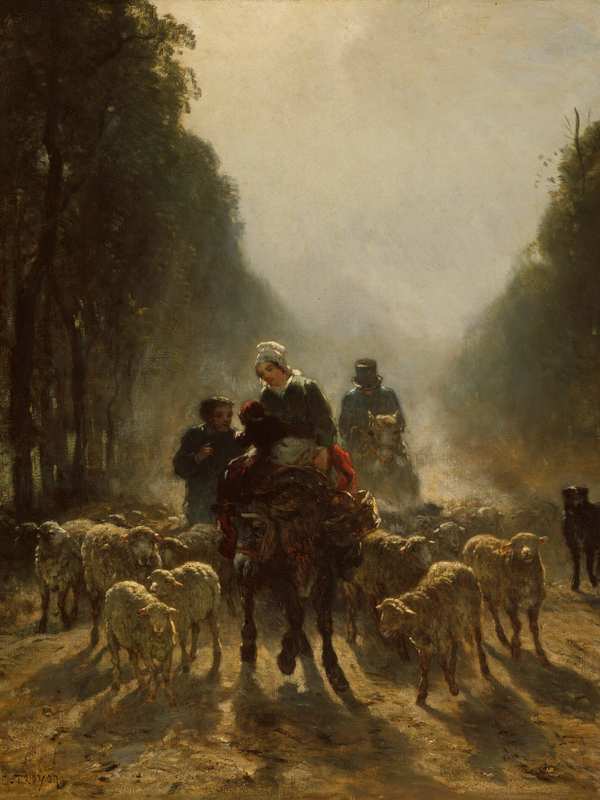
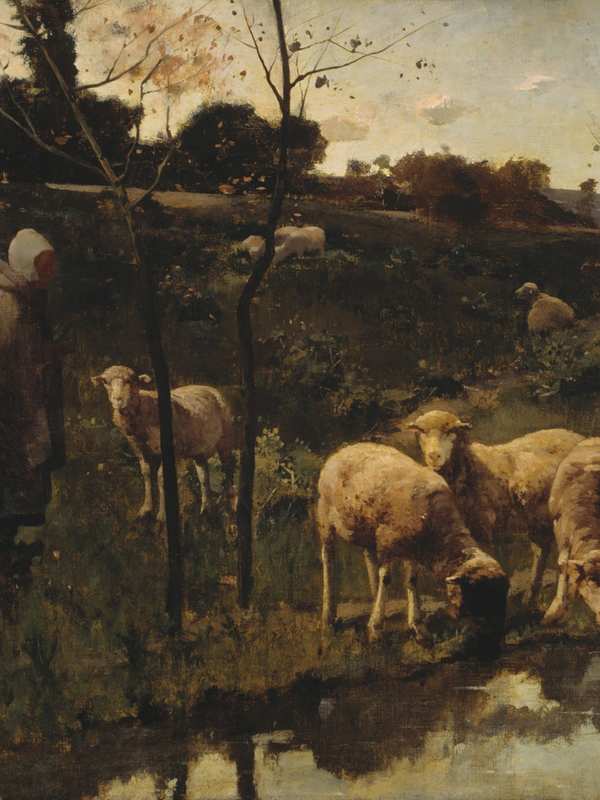
Constant Troyon, “The Road to Market” (1858–59). The Art Institute of Chicago, CC0.
Cite this book
Copy a citation in the style you need.
- MLA
- Spurgeon, Charles H. Come Ye Children. 1897. Ochorus, https://ochorus.com/books/come-ye-children/.
- Chicago
- Spurgeon, Charles H. Come Ye Children. 1897. Reprint, Ochorus. https://ochorus.com/books/come-ye-children/.
- Chicago footnote
- Charles H. Spurgeon, Come Ye Children (1897; repr., Ochorus), https://ochorus.com/books/come-ye-children/.
- BibTeX
- @book{spurgeon1897come, author = {Spurgeon, Charles H.}, title = {{Come Ye Children}}, year = {1897}, publisher = {Ochorus}, url = {https://ochorus.com/books/come-ye-children/} }