

- 11 chapters
- 1 hr 34 min read
- Accessible Reading difficulty
Free to read·No account needed
Awakening.
Taking books where there’s no signal? See Ochorus for missionaries or chaplains
About this book
Charles Spurgeon wrote this little book for those who linger just outside the gate of salvation—awakened, anxious, almost persuaded, yet not believing. With characteristic warmth and urgency he clears away the difficulties that keep seekers from Christ, showing how simple faith really is and why nothing short of it will do. A friendly hand stretched out to any reader who is near the kingdom but not yet in it.
Great numbers of persons have no concern about eternal things. They care more about their cats and dogs than about their souls. It is a great mercy to be made to think about ourselves, and how we stand towards God and the eternal world. This is full often a sign that salvation is coming to
Contents
- 1 Awakening. 7 min
- 2 Jesus only. 8 min
- 3 Faith in the Person of the Lord Jesus. 11 min
- 4 Faith very Simple. 13 min
- 5 Fearing to Believe. 8 min
- 6 Difficulty in the Way of Believing. 8 min
- 7 A Helpful Survey. 8 min
- 8 A Real Hindrance. 7 min
- 9 On Raising Questions. 7 min
- 10 Without Faith no Salvation. 5 min
- 11 To those who have Believed. 10 min
Questions and Answers
What is Around the Wicket Gate about?
It is Charles Spurgeon's short, earnest appeal to those who are lingering just outside the gate of salvation — awakened, anxious, almost persuaded, yet not believing. With his usual warmth and urgency he clears away the difficulties and delays that keep seekers standing at the threshold, and presses them simply to enter in by trusting Christ.
What is the 'wicket gate' in the title?
The image comes from Bunyan's Pilgrim's Progress, where the wicket gate is the narrow entrance onto the way of life through which Christian must pass. Spurgeon takes it up as a picture of the moment of faith — the small, plain door of trust in Christ — and writes to all who have come near it but not yet gone through.
Who is the book written for?
For the almost-persuaded: those who are convinced of their need, troubled about their souls, and drawn toward Christ, but held back by hesitation, delay, or misunderstanding. Spurgeon writes not to argue the careless into concern but to help the concerned over the last step into faith.
What kinds of hindrances does Spurgeon address?
The familiar ones that keep seekers waiting: procrastination and the 'more convenient season'; trusting to feelings or waiting to feel worthy enough; the fear that one has sinned too greatly; confusion about what faith actually is; and the habit of resting in conviction instead of coming to Christ. He takes each in turn and gently removes it from the seeker's path.
What does Spurgeon urge the seeker to do?
To believe on Christ now — to stop waiting for a better frame of mind or a stronger feeling and simply trust the Saviour who is already inviting them. His constant refrain is that faith is not a work to be achieved but a reliance to be exercised, and that the gate stands open to any who will come as they are.
How is this book like All of Grace?
It is a close companion to it — another of Spurgeon's short evangelistic books, written in the same warm, direct, pastoral voice. Where All of Grace lays out the gospel for the anxious sinner, Around the Wicket Gate is especially for the one who has heard it and is hovering at the very point of decision, and the two are often read and given away together.
What is Spurgeon's tone?
Tender and pressing at once. He writes as a physician of souls who has dealt with many anxious seekers, patient with their fears but unwilling to let them delay, because he believes the danger of lingering is real and the invitation of Christ is sure. The urgency is that of love, not scolding.
Where should a reader begin?
At the beginning, reading it as the personal appeal it is meant to be. It is very short, and best read slowly by anyone who is seeking, or given by a Christian to a friend standing near the gate — its whole aim is to help such a one take the single step of trusting Christ.
Read in your language
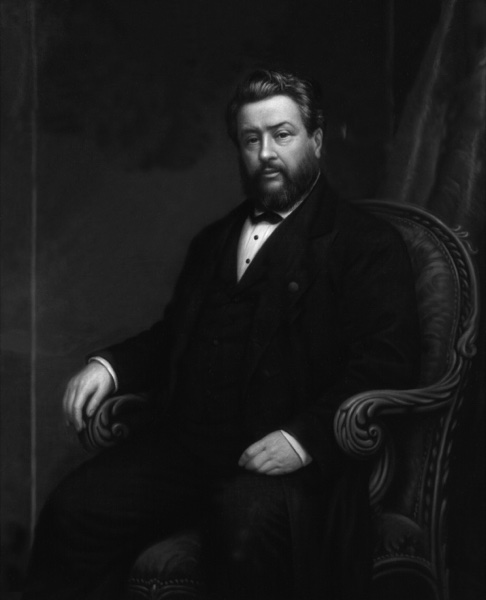
About the author
Charles H. Spurgeon
Around the Wicket Gate · 1890
More like this



Jan van Goyen, “The Pelkus Gate near Utrecht” (1646). The Metropolitan Museum of Art, Open Access.
Cite this book
Copy a citation in the style you need.
- MLA
- Spurgeon, Charles H. Around the Wicket Gate. 1890. Ochorus, https://ochorus.com/books/around-the-wicket-gate/.
- Chicago
- Spurgeon, Charles H. Around the Wicket Gate. 1890. Reprint, Ochorus. https://ochorus.com/books/around-the-wicket-gate/.
- Chicago footnote
- Charles H. Spurgeon, Around the Wicket Gate (1890; repr., Ochorus), https://ochorus.com/books/around-the-wicket-gate/.
- BibTeX
- @book{spurgeon1890around, author = {Spurgeon, Charles H.}, title = {{Around the Wicket Gate}}, year = {1890}, publisher = {Ochorus}, url = {https://ochorus.com/books/around-the-wicket-gate/} }