Book
John Ploughman's Talk
Or, Plain Advice for Plain People
Book 1 of 2 in John Ploughman·Next in the series: John Ploughman's Pictures
Charles H. Spurgeon · 1834–1892
- 25 chapters
- 3 hr 31 min read
- Moderate Reading difficulty
Free to read·No account needed
Preface
About this book
Spurgeon wrote these talks in the voice of John Ploughman, a Surrey farm labourer, “for ploughmen and common people.” In homely proverbs and plain country speech, and with a good deal of fun, he takes aim at idleness, grumbling, gossip, debt and drink, and speaks up for patience, thrift, a good wife and a happy home. First published in 1869, it had found more than 300,000 readers within his lifetime, and it is still Spurgeon at his most down-to-earth.
It is of no more use to give advice to the idle than to pour water into a sieve; and as to improving them, one might as well try to fatten a greyhound. Yet, as The Old Book tells us to "cast our bread upon the waters," we will cast a hard crust or two upon these stagnant ponds; for there will be this comfort…
Contents
- 1 Preface 1 min
- 2 To the Idle 15 min
- 3 On Religious Grumblers 10 min
- 4 On the Preacher's Appearance 5 min
- 5 On Good Nature and Firmness 11 min
- 6 On Patience 6 min
- 7 On Gossips 4 min
- 8 On Seizing Opportunities 6 min
- 9 On Keeping One's Eyes Open 6 min
- 10 Thoughts about Thought 6 min
- 11 Faults 5 min
- 12 Things Not Worth Trying 6 min
- 13 Debt 15 min
- 14 Home 11 min
- 15 Men Who Are Down 7 min
- 16 Hope 9 min
- 17 Spending 7 min
- 18 A Good Word for Wives 14 min
- 19 Men with Two Faces 9 min
- 20 Hints as to Thriving 12 min
- 21 Tall Talk 10 min
- 22 Things I Would Not Choose 7 min
- 23 Try 8 min
- 24 Monuments 6 min
- 25 Very Ignorant People 13 min
Questions and Answers
What is John Ploughman's Talk?
It is a book of plain advice by Charles Spurgeon, written in the voice of a Surrey farm labourer called John Ploughman. In twenty-four short talks, packed with country proverbs and rough humour, John speaks his mind on idleness, religious grumblers, gossip, debt, spending, home, wives, hypocrites, bragging and ignorance — the everyday faults and virtues of working people.
Who is John Ploughman?
He is Spurgeon himself in a smock-frock. In the preface Spurgeon says that Ploughman is a name he may justly claim, since every minister has put his hand to the plough and his business is to break up the fallow ground. John talks about his master's farm, his old mare, his wife and his boys, and Our Minister, but the opinions are Spurgeon's own.
Why did Spurgeon write in such a homely style?
Because he was writing for ploughmen and common people. He says he discarded refined taste and dainty words for strong proverbial expressions and homely phrases, so that these lowly pages might teach thrift and industry all the days of the week, in the cottage and the workshop. He makes no apology for the humour: there is, he says, no particular virtue in being seriously unreadable.
Is it a religious book?
It is mostly practical and moral rather than doctrinal — Spurgeon later called its tone rather moral than religious. But it is written by a preacher and it shows. The talks keep returning to God's word, to honest living as part of a Christian's witness, to the hope of the next world, and to the folly of those who see God nowhere when John the ploughman feels him everywhere.
What kinds of subjects does it cover?
Idleness and opportunity, patience and good nature, gossip and tall talk, debt and spending, hints on thriving, home and a good word for wives, men with two faces, things worth trying and things not worth trying, monuments and epitaphs, and very ignorant people. Each chapter takes one subject and turns it over with a string of sayings, stories and a rhyme or two.
Where should a reader begin?
At the beginning, with To the Idle, which sets the tone — though each talk stands on its own and the book is easy to dip into. Readers who enjoy it can go straight on to John Ploughman's Pictures, the sequel, which turns a famous proverb into a talk in each chapter.
About the author
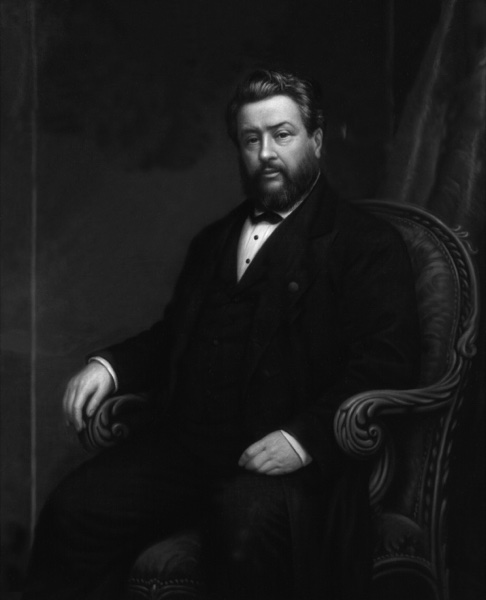
Charles H. Spurgeon
John Ploughman's Talk · 1869
More like this
Public domain. Source text from the original edition.
John Constable, “Stoke-by-Nayland” (1836). The Art Institute of Chicago, CC0.
Cite this book
Copy a citation in the style you need.
- MLA
- Spurgeon, Charles H. John Ploughman's Talk. 1869. Ochorus, https://ochorus.com/books/john-ploughmans-talk/.
- Chicago
- Spurgeon, Charles H. John Ploughman's Talk. 1869. Reprint, Ochorus. https://ochorus.com/books/john-ploughmans-talk/.
- Chicago footnote
- Charles H. Spurgeon, John Ploughman's Talk (1869; repr., Ochorus), https://ochorus.com/books/john-ploughmans-talk/.
- BibTeX
- @book{spurgeon1869john, author = {Spurgeon, Charles H.}, title = {{John Ploughman's Talk}}, year = {1869}, publisher = {Ochorus}, url = {https://ochorus.com/books/john-ploughmans-talk/} }