- 18 chapters
- 6 hr 14 min read
- Accessible Reading difficulty
Free to read·No account needed
The Sluggard's Farm
Grow with the story
Reader’s guide
About this book
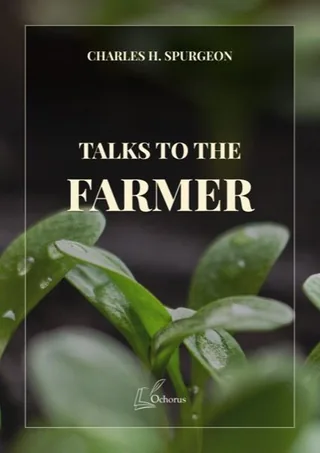
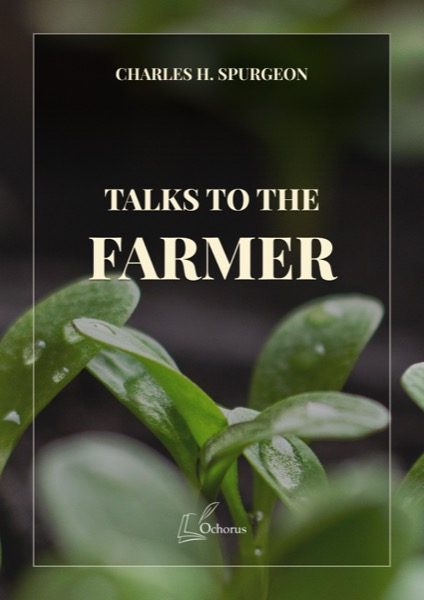
Have you ever wondered how the ordinary scenes of farm life can reveal deep spiritual truths? In Talks to the Farmer, Charles Spurgeon draws vivid lessons from seeds, soil, labour, and harvest, turning everyday rural life into profound reflections on repentance, grace, and the work of God in the heart. Open these pages and let their timeless wisdom challenge, encourage, and nourish your faith.
“I passed by the field of a sluggard, by the vineyard of a man lacking sense, and behold, it was all overgrown with thorns; the ground was covered with nettles, and its stone wall was broken down.
Contents
- 1 The Sluggard's Farm 23 min
- 2 The Broken Fence 20 min
- 3 Frost and Thaw 23 min
- 4 The Corn of Wheat Dying to Bring Forth Fruit 14 min
- 5 The Ploughman 22 min
- 6 Ploughing the Rock 21 min
- 7 The Parable of the Sower 20 min
- 8 The Principal Wheat 22 min
- 9 Spring in the Heart 17 min
- 10 Farm Laborers 21 min
- 11 What the Farm Laborers Can Do and What They Cannot Do 23 min
- 12 The Sheep Before the Shearers 22 min
- 13 In the Hay - Field 21 min
- 14 The Joy of Harvest 23 min
- 15 Spiritual Gleaning 33 min
- 16 The Loaded Wagon 18 min
- 17 Threshing 17 min
- 18 Wheat in the Barn 17 min
Questions and Answers
What is Talks to the Farmer about?
It is a collection of Charles Spurgeon's sermons and addresses that draw spiritual lessons from the ordinary scenes of farm life — seeds, soil, ploughing, sowing, labour, and harvest. Spurgeon turns everyday rural work into vivid pictures of repentance, grace, faith, and the working of God in the soul, making country life a parable of the gospel.
Who was Charles Spurgeon?
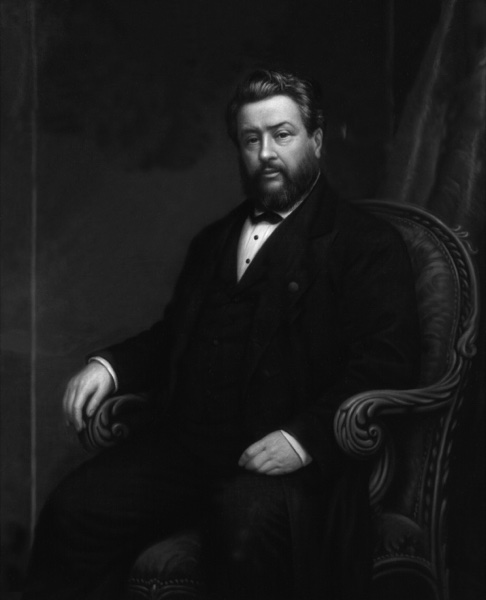
Charles Haddon Spurgeon was the most famous English preacher of the nineteenth century, known as the 'Prince of Preachers,' who addressed thousands each week in London. A master of homely, vivid illustration, he loved to draw gospel truth from common things, and this book gathers his talks that do exactly that with the imagery of the farm.
Why did Spurgeon use farming imagery?
Because he believed the plainest scenes could carry the deepest truths, and because Scripture itself is full of seed, soil, and harvest. By speaking through familiar rural pictures, Spurgeon made the gospel concrete and memorable, meeting ordinary people where they lived and letting the fields preach to them of God.
What spiritual lessons does the book draw?
Many, all rooted in country life: the different soils of the heart that receive the gospel seed; the need for the plough of conviction to break up fallow ground; the patience of sowing and the certainty of harvest; the wheat and the tares; the labour that reaping requires. Each becomes a searching lesson on the soul's dealings with God.
Is this book only for country readers?
No — though its images come from the farm, its lessons are for everyone. Spurgeon uses the rural scenes as a way in to universal truths about sin, grace, and salvation, so a city reader who has never held a plough will still find the pictures clear and the applications pointed straight at the conscience.
What is Spurgeon's aim in these talks?
Always the same as in all his preaching: to bring the hearer to Christ. The farming imagery is never mere decoration; Spurgeon uses each picture to press repentance, faith, and the reception of grace, turning a talk about seed or soil into an earnest appeal to the reader's soul.
What is the tone of the book?
Warm, vivid, and direct — the voice of a preacher who delighted in plain speech and homely example. Spurgeon is by turns humorous, tender, and urgent, and the rural pictures give the addresses a freshness and charm that carry the serious gospel purpose beneath them without ever obscuring it.
Where should a reader begin?
Anywhere, really — the talks stand on their own, each built around a single rural image and its lesson, so the book can be read straight through or dipped into. A reader might start with the sower and the soils, a favourite of Spurgeon's, and let the fields lead them through the gospel he means to preach.
Read in your language
More like this



Cite this book
Copy a citation in the style you need.
- MLA
- Spurgeon, Charles H. Talks to the Farmer. Ochorus, https://ochorus.com/books/talks-to-the-farmer/.
- Chicago
- Spurgeon, Charles H. Talks to the Farmer. Ochorus. https://ochorus.com/books/talks-to-the-farmer/.
- Chicago footnote
- Charles H. Spurgeon, Talks to the Farmer (Ochorus), https://ochorus.com/books/talks-to-the-farmer/.
- BibTeX
- @book{spurgeontalks, author = {Spurgeon, Charles H.}, title = {{Talks to the Farmer}}, publisher = {Ochorus}, url = {https://ochorus.com/books/talks-to-the-farmer/} }