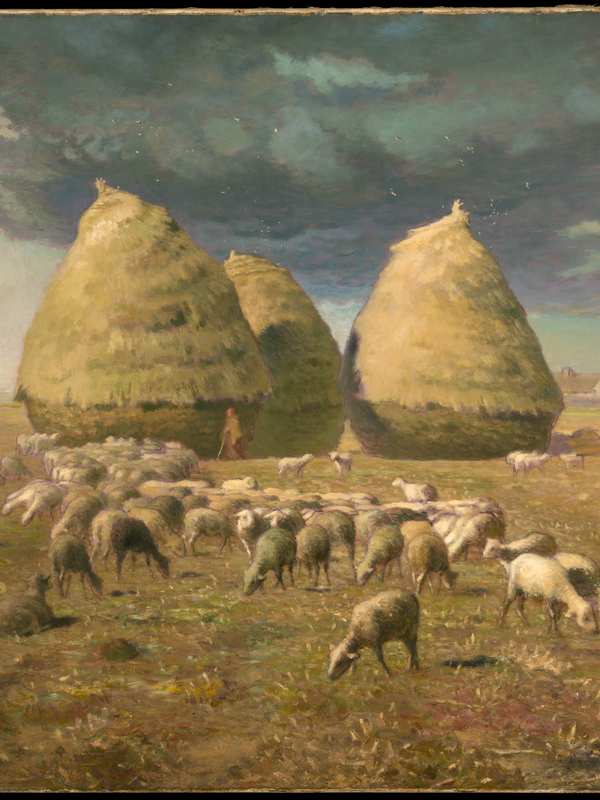
If you have ever wished for a book of Spurgeon you could open for two minutes and close the better for it, Gleanings Among the Sheaves is that book. It is a harvest of short readings — brief, vivid meditations gathered from the sermons and writings of Charles Haddon Spurgeon, the nineteenth century’s “Prince of Preachers.” Each piece distils a single truth into a handful of memorable lines, so that even a moment’s reading yields something to carry through the day. This guide explains what the book is, how it is arranged, what it keeps returning to, and how to read it well — as short daily portions rather than a volume to be finished.
What the book is
The title comes straight from the fields of Scripture. To glean is to gather the leftover grain after the reapers have passed, as Ruth did in the fields of Boaz (Ruth 2:2; Ruth 2:3). Spurgeon poured out his fullest thoughts in long sermons and treatises; Gleanings Among the Sheaves gathers up the choicest handfuls that fall from those sheaves — small but nourishing portions, collected for the reader to pick up and feed on. Nothing here is padded or theoretical. Each gleaning is a finished thought, complete in a paragraph, the kind of pointed, image-rich sentence for which Spurgeon was famous.
What gives the readings their flavour is Spurgeon’s gift for the concrete picture. He rarely states a doctrine flatly; he shows it. The promises of God, for instance, become a storehouse, an armory, a surgery stocked with remedies:
The promises of God are to the believer an inexhaustible mine of wealth. Happy is it for him if he knows how to search out their secret veins, and enrich himself with their hid treasures.
Charles Spurgeon
That is the character of the whole book: warm, quotable, and unafraid to press a truth home. These are meditations to be tasted rather than studied — sentences meant to lodge in the memory and rise again when they are needed. Spurgeon’s aim is never merely to inform; it is to comfort the troubled, challenge the careless, and turn the reader’s eyes toward Christ.
How it is arranged
The gleanings are gathered under twenty themes of the Christian life, each with a cluster of short readings beneath it. The order runs from the objective ground of faith to the inner experience of the believer and out again to the world. It opens with the promises of God and faith and assurance; moves through the hard country of sorrow and affliction, the Christian warfare, and strength in weakness; rises into communion with Christ, the love of Christ, and grace and salvation; and settles among the practical graces — holiness and the new life, humility and self-examination, prayer, good works and diligence. It closes with the great horizons: providence, peace and rest, the Word of God, the Holy Spirit, the church and the world, and finally heaven and the life to come.
This thematic shape makes the book unusually easy to use. You can turn to the subject you need — a page on affliction in a hard week, a page on assurance when faith is low — or simply move through the themes in order, gathering brief meditations as you go. Because each reading stands on its own, there is no thread to lose and no chapter to finish before you may stop.
It helps to know that the arrangement is topical rather than sequential. The gleanings were not written in this order; they have been drawn together from across Spurgeon’s output and grouped by subject, so a reading on prayer that came from one sermon may sit beside another from a book written years apart. That is a strength, not a weakness: it lets the same great truths be viewed from several angles, and it means any theme can be read as a small collection in its own right. A believer wanting a week on humility, or a fortnight on communion with Christ, will find enough gathered under one heading to sustain the whole stretch.
The central themes
Four notes sound again and again. The first is grace — the wonder that God should save sinners at all. Spurgeon marvels not that men reject Christ but that any receive Him:
It is one of the greatest of wonders that all men do not love Christ.
Charles Spurgeon
Salvation, for Spurgeon, is never an achievement but a gift, received by faith apart from works (Ephesians 2:8; Hebrews 11:6). He will not let the reader rest in virtue detached from trust; the very graces that impress the world are worthless without faith in Christ, for “without faith it is impossible to please God” (Hebrews 11:6).
The second note is communion with Christ — the soul’s satisfaction found in Jesus and nowhere else. Here the book is at its most tender:
He who delights in the possession of the Lord Jesus hath all that heart can wish.
Charles Spurgeon
Christ is the true vine in whom the believer abides and bears fruit (John 15:5), the beloved under whose shadow the soul sits down with great delight (Song of Solomon 2:3). Spurgeon presses the reader to stay near, to feast at home on Jesus rather than starve abroad on lesser loves.
The third note is the comfort of affliction. Spurgeon knew depression and pain, and he does not pretend the Christian life is easy. Instead he shows how God meets His people in the furnace:
As sure as ever God puts His children in the furnace, He will be in the furnace with them.
Charles Spurgeon
Trial is not the absence of God’s favour but often the school of it: “The Lord gets his best soldiers out of the highlands of affliction.” The many are the afflictions of the righteous, yet the Lord delivers out of them all (Psalm 34:19), and the light affliction works a weight of glory (2 Corinthians 4:17; Romans 8:28).
The fourth note is practical godliness — a faith that shows in humility, diligence, and holiness. Spurgeon defines the virtue plainly and refuses to let it become a pose:
Humility is to make a right estimate of one’s self.
Charles Spurgeon
He calls believers to sober self-judgement (Romans 12:3), to pursue the holiness without which no one will see the Lord (Hebrews 12:14), and to make life so rich in love that it blesses others like wine poured out. Woven through all of it is the steady summons to look away from self and upward to Christ — “in all thy troubles, look unto God, and be saved” — for it is by looking to Him, the author and finisher of faith, that we are saved (Isaiah 45:22; Hebrews 12:2).
Who should read it
This is a book for anyone who wants short, rich readings for busy days. Its brief, thematic pieces suit both the hurried and the reflective. If your mornings are crowded and a long devotional feels out of reach, a single gleaning will still feed you. If you are new to Spurgeon and unsure where to begin, this is a gentle door — a taste of his voice before you take up a whole sermon. And if you already love him, you will find here a treasury of his most quotable lines, gathered where you can reach them.
It serves the discouraged especially well. Readers walking through grief, anxiety, or spiritual dryness will find in the chapters on affliction, peace, and looking to Christ a companion who has felt what they feel and points steadily to the joy of the Lord as their strength (Nehemiah 8:10). Teachers, preachers, and small-group leaders will also find it a well of illustrations and pointed sayings to prime their own reflection.
How to read it today
Read it slowly and in small portions — that is how the book was made to be used. Take one gleaning a day. Read it once for sense, then again slowly, letting a single image settle. A page of Spurgeon on the promises, tasted in the morning, will often preach itself back to you by evening.
Let the theme guide you rather than the page number. When the week is heavy, turn to In Sorrow and Affliction or Peace and Rest. When faith feels thin, sit with Faith and Assurance or Looking unto Jesus. When your heart is cold, read Communion with Christ and The Love of Christ until the warmth returns. Keep a pen nearby; these are sentences worth copying out and carrying. Where a gleaning quotes or leans on a text, open your Bible and read the passage whole — Spurgeon always means to send you back to the Word, which is a lamp to the feet and a light to the path (Psalm 119:105).
Above all, read to pray. Spurgeon’s gleanings are not information to master but fuel for communion. Let a reading become a prayer, a confession, or a fresh grip on a promise. Read this way, five minutes with the book can reorder a whole day, and the fullness of joy found in God’s presence becomes something you begin to know rather than only read about (Psalm 16:11).
For reflection
- Spurgeon calls the promises of God “an inexhaustible mine of wealth.” Which promise of God are you leaning on this week — and are you searching it out, or leaving it buried?
- He says God is in the furnace with His children. Where are you tempted to read your trials as God’s absence rather than His nearness (Psalm 34:19)?
- “Humility is to make a right estimate of one’s self.” Where might a truer estimate — neither proud nor falsely low — change how you serve?
- Spurgeon marvels that any man loves Christ at all. When did the wonder of grace last move you, and what dulled it?
- He urges the soul to “stay at home and feast on Jesus.” What lesser loves are you looking to for a satisfaction only Christ can give (John 15:5)?
Begin wherever your need is today. Read a little, and read to pray — and let these gleanings send you back into the full harvest of Spurgeon’s work. When you are ready for a longer draught, turn to his tender presentation of the gospel in All of Grace or his meditations at the Lord’s table in Till He Come, and explore more from Charles Spurgeon across the library.