Book
John Ploughman's Pictures
Or, More of His Plain Talk for Plain People
Charles H. Spurgeon · 1834–1892
- 39 chapters
- 2 hr 57 min read
- Accessible Reading difficulty
Free to read·No account needed
Preface
About this book
After John Ploughman's Talk had sold by the hundred thousand, Spurgeon gave its readers a second book “of the same character.” Each chapter takes an old proverb and the picture that went with it — “Burn a candle at both ends,” “Beware of the dog,” “A leaking tap is a great waster” — and turns it into homely, humorous counsel against waste, quarrelling, laziness and, above all, the monster evil of drink. First published in 1880.
Friendly Readers, Last time I made a book I trod on some people's corns and bunions, and they wrote me angry letters, asking, "Did you mean me?" This time, to save them the expense of a halfpenny card, I will begin my book by saying—
Contents
- 1 Preface 2 min
- 2 If the Cap Fits, Wear It 4 min
- 3 Burn a Candle at Both Ends, and It Will Soon Be Gone 6 min
- 4 Hunchback Sees Not His Own Hump, but He Sees His Neighbor's 3 min
- 5 It Is Hard for an Empty Sack to Stand Upright 8 min
- 6 He Who Would Please All Will Lose His Donkey 5 min
- 7 All Are Not Hunters That Blow the Horn 4 min
- 8 A Handsaw Is a Good Thing, but Not to Shave With 6 min
- 9 Don't Cut Off Your Nose to Spite Your Face 3 min
- 10 He Has a Hole under His Nose, and His Money Runs into It 8 min
- 11 Every Man Should Sweep before His Own Door 3 min
- 12 Scant Feeding of Man or Horse Is Small Profit and Sure Loss 7 min
- 13 Never Stop the Plough to Catch a Mouse 3 min
- 14 A Looking-Glass Is of No Use to a Blind Man 6 min
- 15 He Has Got the Fiddle, but Not the Stick 2 min
- 16 "Great Cry and Little Wool," as the Man Said Who Clipped the Sow 4 min
- 17 You May Bend the Sapling, but Not the Tree 4 min
- 18 A Man May Love His House, though He Ride Not on the Ridge 7 min
- 19 Great Drinkers Think Themselves Great Men 7 min
- 20 Two Dogs Fight for a Bone, and a Third Runs Away with It 2 min
- 21 He Lives under the Sign of the Cat's Foot 6 min
- 22 He Would Put His Finger in the Pie, so He Burnt His Nail Off 4 min
- 23 You Can't Catch the Wind in a Net 5 min
- 24 Beware of the Dog 10 min
- 25 Like Cat Like Kit 5 min
- 26 A Horse Which Carries a Halter Is Soon Caught 3 min
- 27 An Old Fox Is Shy of a Trap 3 min
- 28 A Black Hen Lays a White Egg 2 min
- 29 He Looks One Way and Pulls the Other 2 min
- 30 Stick to It and Do It 10 min
- 31 Don't Put the Cart before the Horse 5 min
- 32 A Leaking Tap Is a Great Waster 7 min
- 33 Fools Set Stools for Wise Men to Stumble Over 2 min
- 34 A Man in a Passion Rides a Horse That Runs Away with Him 3 min
- 35 Where the Plough Does Not Go, the Weeds Will Grow 3 min
- 36 All Is Lost That Is Poured into a Cracked Dish 3 min
- 37 Grasp All and Lose All 1 min
- 38 Scatter and Increase 3 min
- 39 Every Bird Likes Its Own Nest 5 min
Questions and Answers
What is John Ploughman's Pictures?
It is the sequel to John Ploughman's Talk: thirty-eight short chapters of plain advice by Charles Spurgeon, again in the voice of the Surrey ploughman John. Each chapter is built on an old proverb — If the cap fits, wear it; Never stop the plough to catch a mouse; Every bird likes its own nest — and the picture that illustrated it in the first edition.
Why is it called Pictures?
Because every chapter was built around a woodcut illustrating its proverb, and John often talks about the picture at the head of the page — a man burning his candle at both ends, Hodge clipping the sow, two dogs fighting over a bone. Those woodcuts are not reproduced in this edition, so here and there the text refers to a picture you cannot see; the proverb in the chapter title tells you what it showed.
How is it connected to John Ploughman's Talk?
Spurgeon wrote it because the first book had found a great many readers and done them good. In the preface he says that it led many to take the first steps by which men climb to better things, and that this moved him to attempt a second book of the same character, in the same simple mother tongue.
Why does it say so much about drink?
Spurgeon says in the preface that to smite evil, and especially the monster evil of drink, had been his earnest endeavour. He had seen what the public-house did to labouring families, and several chapters — He has a hole under his nose, Great drinkers think themselves great men, A leaking tap is a great waster — take it on directly, one of them ending with a handbill for the landlord's window.
Where did the proverbs and rhymes come from?
From everywhere, Spurgeon admits: he gathered expressions and verses here, there and everywhere, and would rather deny all claim to originality than try to list his sources. He names one especially — Thomas Tusser's Points of Good Husbandry, the sixteenth-century farming rhymes he quotes again and again.
Is there anything for the soul in it?
Yes. Under the fun the book keeps pointing past thrift to godliness: warnings against making a god of money, pleas to give to the poor (Scatter and increase), counsel on bringing up children, and a closing chapter in which John thanks God for home and country and ends with a hymn of praise.
About the author
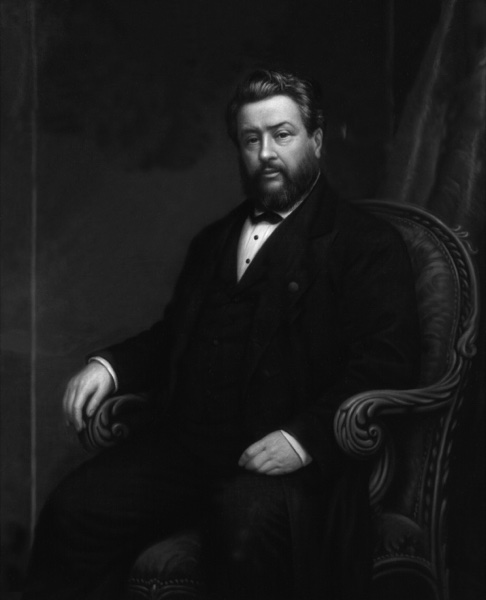
Charles H. Spurgeon
John Ploughman's Pictures · 1880
More like this
Public domain. Source text from the original edition.
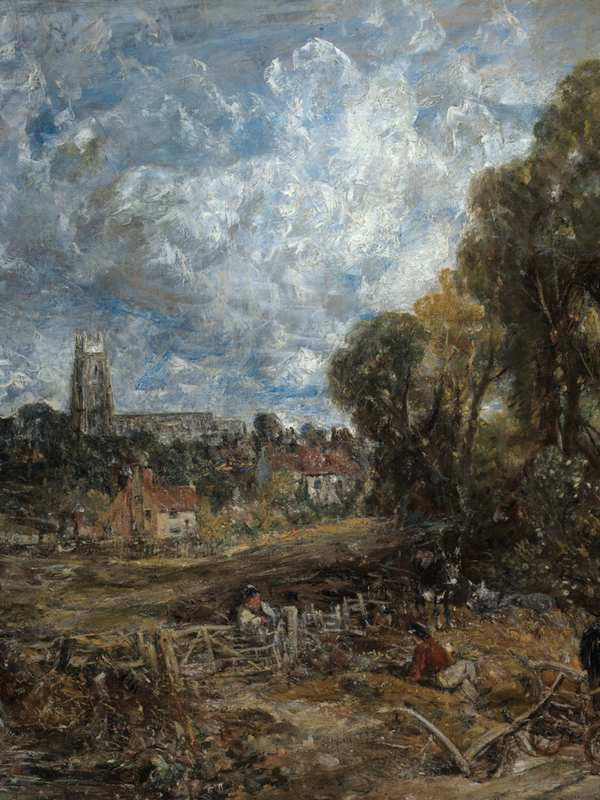
John Constable, “Landscape with Cottages” (1809–10). The Art Institute of Chicago, CC0.
Cite this book
Copy a citation in the style you need.
- MLA
- Spurgeon, Charles H. John Ploughman's Pictures. 1880. Ochorus, https://ochorus.com/books/john-ploughmans-pictures/.
- Chicago
- Spurgeon, Charles H. John Ploughman's Pictures. 1880. Reprint, Ochorus. https://ochorus.com/books/john-ploughmans-pictures/.
- Chicago footnote
- Charles H. Spurgeon, John Ploughman's Pictures (1880; repr., Ochorus), https://ochorus.com/books/john-ploughmans-pictures/.
- BibTeX
- @book{spurgeon1880john, author = {Spurgeon, Charles H.}, title = {{John Ploughman's Pictures}}, year = {1880}, publisher = {Ochorus}, url = {https://ochorus.com/books/john-ploughmans-pictures/} }