Book
The Cheque Book of the Bank of Faith
Daily Readings on God's Promises
Other titles: The Check Book of the Bank of Faith · Faith's Checkbook
Charles H. Spurgeon · 1834–1892
- 13 chapters
- 7 hr 40 min read
- Accessible Reading difficulty
Free to read·No account needed
Preface
Taking books where there’s no signal? See Ochorus for missionaries or chaplains
About this book
In this beloved daily devotional, Charles Spurgeon treats each promise of Scripture as a cheque drawn on the Bank of Faith—to be endorsed by personal faith and presented to God for fulfilment. Written, as his preface tells, in a time of deep personal trial, these readings for every day of the year are brief, rich, and full of comfort for believers in need.
Jan. 1 "And I will put enmity between thee and the woman, and between thy seed and her seed; it shall bruise thy head, and thou shalt bruise his heel." Gen. 3:15 This is the first promise to fallen man. It contains the whole gospel, and the essence of the covenant of grace. It has been in great measure fulfilled.
Contents
- 1 Preface 6 min
- 2 The Month of January 38 min
- 3 The Month of February 36 min
- 4 The Month of March 39 min
- 5 The Month of April 38 min
- 6 The Month of May 38 min
- 7 The Month of June 37 min
- 8 The Month of July 38 min
- 9 The Month of August 38 min
- 10 The Month of September 38 min
- 11 The Month of October 38 min
- 12 The Month of November 37 min
- 13 The Month of December 38 min
Questions and Answers
What is The Cheque Book of the Bank of Faith about?
It is Charles Spurgeon's daily devotional built entirely on the promises of Scripture. Spurgeon treats each promise as a cheque drawn on the Bank of Faith — to be endorsed by the believer's personal faith and presented to God for payment. With a promise and a short meditation for every day of the year, it trains the reader to claim God's word and expect him to keep it.
What is the 'Bank of Faith' image?
Spurgeon's governing metaphor: that God's promises are like cheques written on an inexhaustible bank, and faith is the endorsing signature that presents them for payment. A promise unclaimed, he suggests, is like a cheque left in the book; faith takes it, signs it by trusting, and receives what God has pledged. The whole devotional teaches the reader to bank on God's word.
Who was Charles Spurgeon?
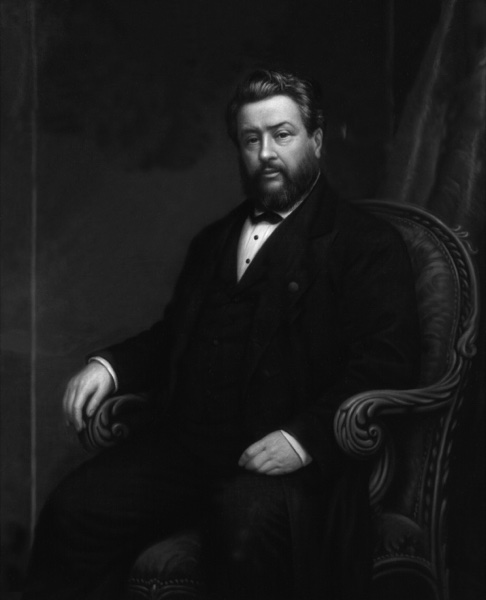
Charles Haddon Spurgeon was the most famous English preacher of the nineteenth century, the 'Prince of Preachers,' who addressed thousands weekly in London and wrote prolifically. He compiled this book near the end of his life, out of long experience of proving God's promises true, and it carries the settled confidence of a man who had banked on them for decades.
How is the book arranged?
As a reading for each day of the year. Every entry sets out a promise of Scripture and follows it with a short, warm meditation urging the reader to take God at his word and claim what he has pledged. It is designed to be used one day at a time, building the habit of resting each day on a specific promise of God.
What did Spurgeon mean it to do for readers?
To build a confident, promise-claiming faith. Spurgeon wrote it to help believers stop merely admiring God's promises and start relying on them — to treat the Bible's assurances as real and personal, meant to be drawn upon in daily need. The book aims to send the reader to God each day expecting him to be as good as his word.
When and why did Spurgeon write it?
He wrote it near the end of his life, and, as his preface tells, in a time of his own trial and weakness — which gives it special weight. It is the testimony of a man who had leaned hard on God's promises through suffering and found them sure, offering to others the confidence he had proved for himself.
Who is this devotional for?
For any Christian who wants to learn to trust God's promises in a practical, daily way — especially the anxious or the tried, who need something firm to rest on. Brief enough for any morning and rich with Scripture, it has served generations as a school of faith, teaching them to bank each day on the word of God.
Where should a reader begin?
At today's date, and then a promise each day. Like Spurgeon's other daily books, it is meant to be lived with across a year rather than read straight through — one promise claimed and rested on each day — so the best way to start is simply to take up today's cheque and present it to God in faith.
Read in your language
About the author
Charles H. Spurgeon
The Cheque Book of the Bank of Faith · 1888
More like this


Joseph Anton Koch, “Heroic Landscape with Rainbow” (1824). The Metropolitan Museum of Art, Open Access.
Cite this book
Copy a citation in the style you need.
- MLA
- Spurgeon, Charles H. The Cheque Book of the Bank of Faith. 1888. Ochorus, https://ochorus.com/books/cheque-book/.
- Chicago
- Spurgeon, Charles H. The Cheque Book of the Bank of Faith. 1888. Reprint, Ochorus. https://ochorus.com/books/cheque-book/.
- Chicago footnote
- Charles H. Spurgeon, The Cheque Book of the Bank of Faith (1888; repr., Ochorus), https://ochorus.com/books/cheque-book/.
- BibTeX
- @book{spurgeon1888cheque, author = {Spurgeon, Charles H.}, title = {{The Cheque Book of the Bank of Faith}}, year = {1888}, publisher = {Ochorus}, url = {https://ochorus.com/books/cheque-book/} }