- 13 chapters
- 7 hr 27 min read
- Moderate Reading difficulty
Free to read·No account needed
Introduction
About this book
No subject drew more of Charles Spurgeon's fire than prayer. Here are twelve of his greatest sermons on it, gathered into one volume — from the boldness of “The Throne of Grace” and the holy argument of “Order and Argument in Prayer” to the tender comfort of “Prayer, the Cure for Care.” A school of prayer from the Prince of Preachers.
THESE words are found embedded in that gracious verse, “Let us therefore come boldly unto the throne of grace, that we may obtain mercy, and find grace to help in time of need”; they are a gem in a golden setting. True prayer is an approach of the soul by the Spirit of God to the throne of
Contents
- 1 Introduction 5 min
- 2 The Throne of Grace 38 min
- 3 The Golden Key of Prayer 36 min
- 4 Order and Argument in Prayer 38 min
- 5 Ask and Have 37 min
- 6 The Conditions of Power in Prayer 37 min
- 7 Praying in the Holy Spirit 36 min
- 8 Pray Without Ceasing 35 min
- 9 True Prayer—True Power! 39 min
- 10 Intercessory Prayer 37 min
- 11 The Power of Prayer and the Pleasure of Praise 37 min
- 12 Prayer, the Cure for Care 37 min
- 13 The Ravens' Cry 35 min
Questions and Answers
What is Mighty Power in Prayer about?
It is a collection of twelve of Charles Spurgeon's greatest sermons on prayer, gathered into one volume. No subject drew more of Spurgeon's fire than prayer, and these sermons — from the boldness of 'The Throne of Grace' to the holy argument of 'Order and Argument in Prayer' — press believers to pray with confidence, earnestness, and faith in a God who hears.
Who was Charles Spurgeon?
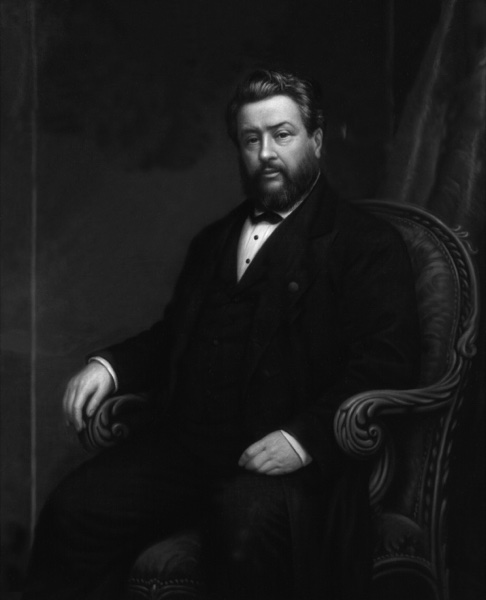
Charles Haddon Spurgeon was the most famous English preacher of the nineteenth century, the 'Prince of Preachers,' who addressed thousands each week in London. He was himself a man of great prayerfulness, attributing the power of his ministry to the prayers of his people, and prayer was among the themes he preached on most powerfully.
What kinds of sermons does the collection contain?
Twelve of Spurgeon's sermons on prayer, each taking up a different aspect — coming boldly to the throne of grace, pleading God's own promises back to him, persevering in prayer, praying in the Spirit, and more. Together they form not a treatise but a series of vivid, earnest appeals, each pressing the reader toward a particular grace of prayer.
What is 'The Throne of Grace' about?
It is one of Spurgeon's best-loved sermons on prayer, dwelling on the wonder that sinners may come boldly to God's throne — a throne of grace, not of judgement — through Jesus Christ. Spurgeon unfolds the encouragement this gives to prayer: that the God we approach is enthroned in grace, ready to receive and to give, so that we may come with confidence and expectation.
What does Spurgeon mean by 'argument in prayer'?
He means the holy boldness of pleading reasons with God — laying hold of his character, his promises, and his past mercies, and urging them back to him as grounds for the answer we seek. Spurgeon commends this 'ordering of our cause' before God not as irreverence but as the earnestness of faith, and his sermon on it teaches believers to pray with reasons, as the saints of Scripture did.
What tone do these sermons take toward prayer?
Bold, warm, and encouraging. Spurgeon aims to enlarge the believer's confidence and expectation in prayer, sweeping away timidity and unbelief and pressing them to ask great things of a great God. Even when searching, his purpose is to send the hearer to the throne of grace with fresh boldness and faith.
Who should read this book?
Any Christian who wants to be stirred to pray, and to pray with greater faith and boldness. Preachers and ordinary believers alike have valued Spurgeon's sermons on prayer for their fervour and their scriptural encouragement, and this collection gathers the best of them into a single, faith-building volume.
Where should a reader begin?
With any sermon that draws them, since each stands complete on its own — though 'The Throne of Grace' is a natural and encouraging place to start. Read a few at a time and prayerfully, these were spoken to move hearts to pray, and something of their original power to do so survives on the page.
Read in your language
More like this


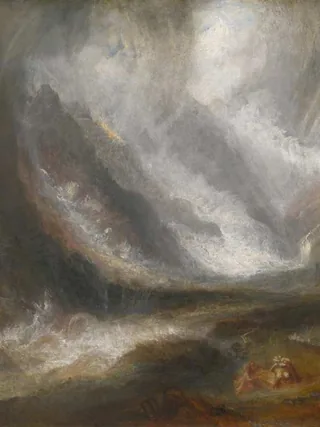
Joseph Mallord William Turner, “Valley of Aosta: Snowstorm, Avalanche, and Thunderstorm” (1836–37). The Art Institute of Chicago, CC0.
Cite this book
Copy a citation in the style you need.
- MLA
- Spurgeon, Charles H. Mighty Power in Prayer. Ochorus, https://ochorus.com/books/spurgeon-on-prayer/.
- Chicago
- Spurgeon, Charles H. Mighty Power in Prayer. Ochorus. https://ochorus.com/books/spurgeon-on-prayer/.
- Chicago footnote
- Charles H. Spurgeon, Mighty Power in Prayer (Ochorus), https://ochorus.com/books/spurgeon-on-prayer/.
- BibTeX
- @book{spurgeonmighty, author = {Spurgeon, Charles H.}, title = {{Mighty Power in Prayer}}, publisher = {Ochorus}, url = {https://ochorus.com/books/spurgeon-on-prayer/} }