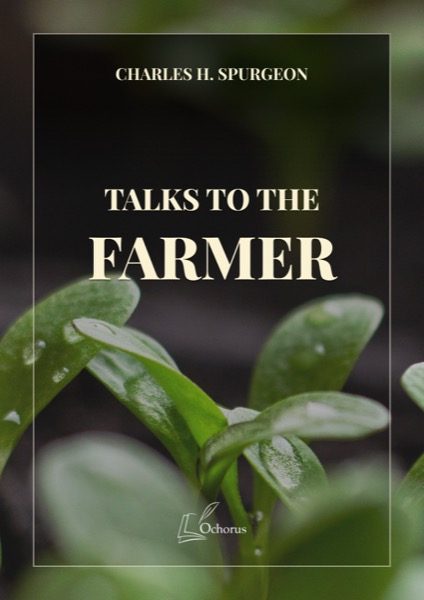
Talks to the Farmer is Charles Spurgeon at his most down-to-earth: a set of spiritual lessons drawn straight from the plough, the seed-basket, and the harvest field. If you have come looking for a plain summary, here it is in one sentence — Spurgeon takes the ordinary work of farming and country life and turns each scene into a searching, hopeful sermon about the soul, the grace of God, and the harvest that faith is meant to reap. This guide walks through what the book is, how it is arranged, the themes that run through it, who will get the most from it, and how to read it today. You can read the whole book free at Talks to the Farmer.
What the book is, and Spurgeon’s method
Charles Haddon Spurgeon (1834–1892) was the most popular preacher of Victorian England, and Talks to the Farmer gathers a series of his addresses on rural themes. It belongs to the same practical, warm-hearted family as his other classics — the gospel appeal of All of Grace and the devotional readings of Till He Come. What sets this book apart is its method. Spurgeon takes a single farming image — a neglected field, a broken fence, a grain of wheat buried in the ground, a ploughman leaning into his work — and holds it up until it becomes a mirror for the reader’s own heart.
This is not accidental. Spurgeon is following his Master. When Jesus taught, He reached for seed and soil and vineyard, because the truths of the kingdom are pressed into the fabric of the created world. “A sower went out to sow his seed,” Jesus said in Luke 8:5, and “The kingdom of God is as if a man should scatter seed on the ground,” in Mark 4:26. Spurgeon simply keeps that habit going. He writes for plain people — labourers, tenant farmers, the poor of the countryside — and he refuses to hide the gospel behind fine language. The lesson always comes home to the conscience, but it comes gently, the way a farmer knows his own land.
The harvest of a quiet eye can be gathered from a sluggard’s land just as much as from a well-managed farm.
Charles Spurgeon
That is Spurgeon’s whole approach in a line. A watchful, teachable eye can gather instruction from anything — even a ruined vineyard — because God has written His truth into the world for those willing to read it. The talks were first given to real country congregations, and you can feel it. Spurgeon knows the smell of turned earth and the weariness of a long day’s work, and he never talks down to the people in front of him. He assumes they are intelligent, that they know their trade better than he does, and that the quickest way to their souls is through the very fields they walk every morning.
How the book is organized
The chapters are short, self-contained talks, each built on a farming picture and rooted in a specific text of Scripture. You can read them in order or dip in wherever a title catches you. The images move roughly through the farmer’s year and the farmer’s tools:
- The neglected field — “The Sluggard’s Farm” and “The Broken Fence” open the book with a warning against spiritual laziness, drawn from Proverbs 24:30.
- Ground being prepared — “Frost and Thaw,” “The Ploughman,” and “Ploughing the Rock” describe how God breaks up the hard heart, taking their cue from Isaiah 28:24 and the call of Hosea 10:12 to break up fallow ground.
- Sowing and growth — “The Corn of Wheat Dying to Bring Forth Fruit” (on John 12:24), “The Parable of the Sower,” “The Principal Wheat,” and “Spring in the Heart” turn to the seed and its life.
- The labourers — “Farm Laborers,” “What the Farm Laborers Can Do and What They Cannot Do,” and “The Sheep Before the Shearers” speak to the work and the limits of those who serve.
- The harvest — “In the Hay-Field,” “The Joy of Harvest” (on Isaiah 9:3), “Spiritual Gleaning,” “The Loaded Wagon,” “Threshing,” and “Wheat in the Barn” bring the book to its ingathering.
Read straight through, the book quietly traces the whole shape of the Christian life — from an untilled, weed-choked heart, through the painful ploughing of conviction, to sowing, growth, patient labour, and at last the joy of the harvest home.
The central themes
Sowing and reaping
The book’s deepest nerve is the law that Paul states plainly in Galatians 6:7: “whatever one sows, that will he also reap.” Spurgeon presses it in both directions. It is a warning — a life sown to neglect and sin will come up in thorns and nettles. It is also a promise — good seed faithfully sown does not fail. He points the anxious reader to Psalm 126:5, where those who “sow in tears shall reap with shouts of joy,” and reminds the generous that, as 2 Corinthians 9:6 says, the one who sows bountifully will reap bountifully.
The state of the soil, the state of the heart
Following the parable of the sower in Matthew 13:3 and Luke 8:5, Spurgeon returns again and again to the condition of the ground. The trodden path, the rocky patch, the thorny corner, the good soil — these are the responses of the human heart to the same gospel seed. The point is not to admire the farming but to ask which soil you are.
Diligence and the ploughman’s perseverance
“The Ploughman,” built on Isaiah 28:24, is the heart of the book’s call to steady work. Spurgeon draws two lessons from a man who keeps at his furrow all day: God’s patience with the sinner, and the servant’s duty to keep labouring for souls without flagging.
Ploughing is hard work, but there will be no harvest without it.
Charles Spurgeon
He has no patience with religion by fits and starts. Ploughing is not done with sudden bursts of energy but with long, faithful furrows — and so is the Christian life and the work of winning others.
Grace in the ordinary
For all his calls to diligence, Spurgeon is clear that the harvest is God’s gift, not the farmer’s wage. Nothing good grows in us of itself.
Unless the great Husbandman tills us by His grace, we will produce nothing good, but only what is evil.
Charles Spurgeon
The plough, the seed, the rain, the growth — every stage is grace. This is why the book, for all its earthy realism about weeds and hard ground, is finally so hopeful. The God who commands “Comfort, comfort my people” in Isaiah 40:1 is the same God who ploughs the heart, and He does not break it only to leave it broken. The harvest of Isaiah 9:3 belongs to Him. Spurgeon’s realism about sin never curdles into despair, because he is convinced that the same divine hand which turns the hard soil will also scatter the seed and send the sun and rain. The farmer’s labour and the farmer’s dependence sit side by side — he works with all his strength precisely because he trusts the Lord of the harvest to give the increase.
Who should read it
This is one of the most accessible doors into Spurgeon. If long theological treatises feel daunting, these short, vivid talks are the perfect place to begin — each stands on its own and can be read in a sitting. It suits the ordinary believer who wants sermons that meet real life, the reader who loves the countryside and finds God near in it, and anyone weary of abstract religion who longs for truth they can picture and hold.
It is also quietly aimed at two particular readers. The first is the person not yet converted, still “ploughed but not sown” — Spurgeon’s tenderness toward the long-resisting heart is one of the moving things in the book. The second is the Christian worker tempted to give up, whom Spurgeon calls back to the furrow with the reminder that faithful labour, not flash and excitement, brings in the sheaves. Anyone who has felt the fields are ready — recalling Jesus’ words in John 4:35 that the fields are “white for harvest,” and His lament in Matthew 9:37 that “the laborers are few” — will find their calling renewed here.
How to read it today
A few suggestions will help this Victorian book breathe in the present. First, read slowly and one talk at a time. Each chapter is a complete meditation; racing through them flattens their force. Treat one as a morning’s devotional and let its single image work on you through the day.
Second, keep a Bible open. Spurgeon anchors every talk in a text — Proverbs 24:30, Isaiah 28:24, John 12:24, Isaiah 9:3 — and the addresses land with far more weight when you read the passage first and let him unfold it. Notice how he does it; it is a short course in reading the Bible for the heart.
Third, translate the farming into your own life. Few of us plough now, but everyone knows what it is to labour without visible result, to let a corner of life grow weedy, to long for a harvest. Ask what your fields are — your family, your work, your prayers — and let the image find you where you are.
Finally, read it as a gospel book, not a manual of self-improvement. The steady refrain beneath every call to diligence is grace: it is God who gives the increase. When you finish, carry it into Spurgeon’s fuller gospel appeal in All of Grace, or into the communion meditations of Till He Come, and read more of him on his author page.
For reflection
Use these questions on your own or in a group as you work through the book.
- Spurgeon says a “quiet eye” can gather instruction even from a sluggard’s ruined field. Where might God be teaching you through the ordinary and even the disappointing parts of your life right now?
- The parable of the sower asks which soil you are. Reading Matthew 13:3 and Luke 8:5, which of the four grounds most honestly describes your heart this season — and what would it take to become good soil?
- Galatians 6:7 warns that we reap what we sow. What are you sowing, in habit and attention, that you will one day harvest — for good or ill?
- Hosea 10:12 calls us to “break up your fallow ground.” Is there hard, untilled ground in your life that God is patiently ploughing? How are you responding to the plough?
- Spurgeon insists there is “no harvest without” hard, persistent work, yet the increase is God’s gift. How do you hold together faithful diligence and trust in grace in your own walk and service?