Book
Journal of an Expedition up the Niger
Up the Niger and Tshadda Rivers, 1854
Samuel Ajayi Crowther · 1809–1891
- 5 chapters
- 4 hr 33 min read
- Accessible Reading difficulty
Free to read·No account needed
Departure from Abbeokuta
Taking books where there’s no signal? See Ochorus for missionaries or chaplains
About this book
In 1854 Samuel Crowther — a Yoruba boy once carried down this same coast in a slave ship, now an ordained missionary — steamed up the Niger and Tshadda rivers aboard the <em>Pleiad</em>, on the first such expedition to come home without losing a man to fever. This is his own day-by-day journal of the voyage: the towns and chiefs he met, the trade and the slavery he witnessed, the Scriptures he read to kings, and his longing to see the gospel and the freed people of Sierra Leone return to the interior of Africa.
June 17: The ‘Bacchante’ arrived this morning from Fernando Po, and brought the painful intelligence of Mr. Beecroft's death, which took place the night before she sailed. I felt this very much as the Expedition was just expected, and I knew no other person connected with it besides him ; this caused a little anxiety, but I resigned everything to God’s good and unerring providence.
Contents
Questions and Answers
What is the Journal of an Expedition up the Niger about?
It is Samuel Crowther's record of the 1854 expedition that steamed up the Niger and Tshadda rivers aboard the Pleiad — the first such expedition to return without loss of life. Crowther, a Yoruba man once carried into slavery down that same coast and now an ordained missionary, kept this journal of the voyage, its peoples, and the prospects it opened for the gospel in the African interior.
Who was Samuel Crowther?
Samuel Ajayi Crowther was a Yoruba man who, enslaved as a boy and freed by a British anti-slavery squadron, became the first African Anglican bishop, as well as a pioneer missionary and translator. His journey up the Niger, recorded in this journal, was part of his lifelong work to bring the gospel to Africa and to see a church take root in its own soil and languages.
What was remarkable about the 1854 expedition?
It was the first expedition up the Niger to come home without loss of life — earlier attempts had been devastated by disease. The successful use of quinine against malaria made it possible, opening the interior to trade and mission in a new way. Crowther's journal records this hopeful turning point from the vantage of an African churchman surveying his own continent.
Why is Crowther's own perspective significant?
Because it is the account of Africa written by an African — and by one who had himself been carried into slavery down that coast as a boy. Crowther surveys the peoples and possibilities of the Niger not as a foreign observer but as a native son returning with the gospel, which gives the journal a unique depth and poignancy among expedition records of its era.
What does the journal reveal about mission strategy?
It reflects Crowther's vision of a gospel carried into Africa by Africans, rooted in local languages and life. As he observes the peoples along the rivers, he weighs the openings for evangelism, translation, and the building of an indigenous church — anticipating the mission he would later lead on the Niger, and his conviction that Africa would be won largely through African agency.
What was Crowther's connection to slavery?
He had been enslaved as a boy and carried toward the coast, before being freed when a British naval squadron intercepted the slave ship. That deliverance set him on the path to education, faith, and ministry. To steam up the Niger years later as a free and ordained man, surveying the land for the gospel, gave the expedition a personal weight the journal quietly carries.
Why read this book today?
For its rare first-hand view of nineteenth-century West Africa through African eyes, its place in the history of Christian missions, and the remarkable life behind it. Crowther's journal documents a hopeful moment in the encounter of the gospel with the African interior, told by a man whose own life embodied that encounter's promise.
Where should a reader begin?
At the beginning, following the expedition upriver as Crowther records it day by day. It is a first-hand journal of a voyage, best read in sequence, so that the reader travels with him up the Niger and the Tshadda and sees the land, its peoples, and its prospects for the gospel as he saw them.
Read in your language
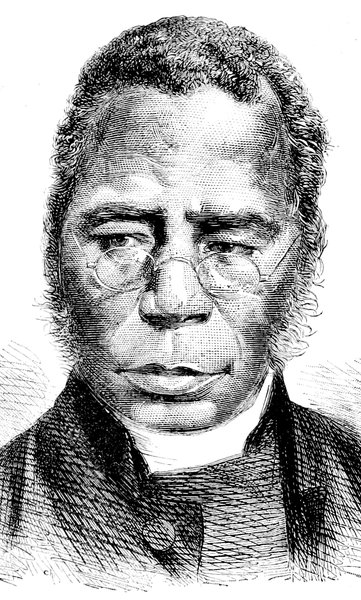
About the author
Samuel Ajayi Crowther
Journal of an Expedition up the Niger · 1855
More like this
Public domain. Source text from the original edition.
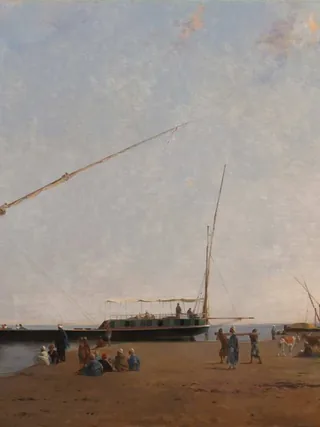
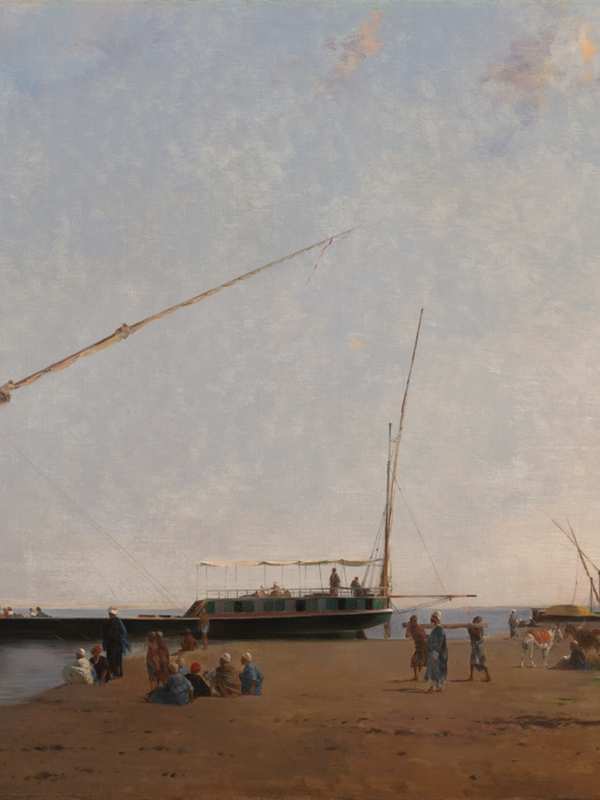
Eugène Fromentin, “On the Nile” (1871). The Art Institute of Chicago, CC0.
Cite this book
Copy a citation in the style you need.
- MLA
- Crowther, Samuel Ajayi. Journal of an Expedition up the Niger. 1855. Ochorus, https://ochorus.com/books/journal-of-an-expedition-up-the-niger/.
- Chicago
- Crowther, Samuel Ajayi. Journal of an Expedition up the Niger. 1855. Reprint, Ochorus. https://ochorus.com/books/journal-of-an-expedition-up-the-niger/.
- Chicago footnote
- Samuel Ajayi Crowther, Journal of an Expedition up the Niger (1855; repr., Ochorus), https://ochorus.com/books/journal-of-an-expedition-up-the-niger/.
- BibTeX
- @book{crowther1855journal, author = {Crowther, Samuel Ajayi}, title = {{Journal of an Expedition up the Niger}}, year = {1855}, publisher = {Ochorus}, url = {https://ochorus.com/books/journal-of-an-expedition-up-the-niger/} }