
Book
Amanda Smith: An Autobiography
The Story of the Lord's Dealings with Mrs. Amanda Smith
Amanda Berry Smith · 1837–1915
- 41 chapters
- 16 hr 46 min read
- Moderate Reading difficulty
Free to read·No account needed
Preface
Taking books where there’s no signal? See Ochorus for missionaries or chaplains
Grow with the story

Reader’s guide
About this book
The Wesleyan-Holiness evangelist's own story of a life of faith: born into slavery in Maryland, freed, sanctified, and sent out as an independent missionary across America, Britain, India, and West Africa.
I was born at Long Green, Md., Jan. 23rd, 1837. My father's name was Samuel Berry. My mother's name, Mariam. Matthews was her maiden name. My father's master's name was Darby Insor. My mother's master's name, Shadrach Green. They lived on adjoining, farms. They did not own as large a number of black people, as some who lived in the neighborhood.
Contents
- 1 Preface 3 min
- 2 Introduction 12 min
- 3 Birth, Parentage, and Deliverance from Slavery 14 min
- 4 Removal to Pennsylvania 16 min
- 5 Remembrances of My Girlhood Days 17 min
- 6 Marriage and Conversion 24 min
- 7 How I Bought My Sister Frances 15 min
- 8 Disappointed Hopes and My Father's Death 36 min
- 9 The Blessing of Sanctification 40 min
- 10 My First Temptation 25 min
- 11 His Presence and My Obedience 39 min
- 12 Learning Thy Will Be Done 25 min
- 13 My Call to Go Out 34 min
- 14 My Last Call, and How I Obeyed It 37 min
- 15 Remembrances of Camp Meeting 24 min
- 16 Kennebunk Camp Meeting 36 min
- 17 At Dr. Taylor's Church, New York 26 min
- 18 The National Camp Meeting at Knoxville 21 min
- 19 Sea Cliff, and First Thoughts of Africa 22 min
- 20 Pittman Church, Philadelphia 32 min
- 21 The Call to Go to England 30 min
- 22 Liverpool, and Pages from My Diary 22 min
- 23 Scotland, London, and the Call to India 43 min
- 24 On the Way to India 30 min
- 25 India: Notes from My Diary 35 min
- 26 The Great Meeting at Bangalore 29 min
- 27 Africa: Arrival at Monrovia 32 min
- 28 Temperance Work at Fortsville 33 min
- 29 Conference at Monrovia 32 min
- 30 Old Calabar, and the Women of Africa 32 min
- 31 How I Came to Take Little Bob 10 min
- 32 Among the People of Creektown 24 min
- 33 Liberia: Its People and Schools 27 min
- 34 Cape Palmas, and a Great Revival 41 min
- 35 Emigration and the Schools of Liberia 30 min
- 36 Letters and Testimonials 1 min
- 37 An Address from the A. M. E. Zion Church, Sierra Leone 3 min
- 38 Martha Payne's Experience 4 min
- 39 Mary R. Denman's Testimony 5 min
- 40 Return to Liverpool, and Faith Healing 25 min
- 41 Work in England, and Home Again 17 min
Questions and Answers
What is Amanda Berry Smith's Autobiography about?
It is the Wesleyan-holiness evangelist's own story of a life of faith: born into slavery in Maryland, freed, sanctified, and sent out as an independent missionary and evangelist across America, Britain, India, and West Africa. It recounts her conversion and sanctification, her call to preach, and decades of remarkable gospel labour on four continents, largely supported by faith alone.
Who was Amanda Berry Smith?
Amanda Berry Smith was a nineteenth-century Black American evangelist, born a slave, who became one of the best-known holiness preachers of her age. Without formal backing or education, she travelled and preached across the United States, the British Isles, India, and Africa, and was widely respected as a woman of deep faith and evident spiritual power.
How did a formerly enslaved woman come to preach on four continents?
By a sense of divine call and a life of radical trust in God. After conversion and the experience of sanctification, Smith began to exercise a preaching and evangelistic ministry that carried her, step by step and often on faith alone for her support, from American camp meetings to England, then India, and then years of missionary work in West Africa — an extraordinary path for a Black woman of her time.
What place does sanctification have in her story?
A central one. Smith testifies to a definite experience of entire sanctification in the Wesleyan-holiness tradition — a cleansing and empowering that she saw as the turning point of her spiritual life and the source of her ministry. The autobiography is, in large part, the story of a sanctified life lived out in bold obedience to God.
What was her missionary work in Africa like?
Smith spent years in West Africa in evangelism and in caring for children, laboring under great hardship and often alone. Her account gives a first-hand picture of missionary life on the continent through the eyes of a Black American woman, and reflects both the cost of the work and her steady confidence in God's provision and call.
Why is this autobiography significant?
Because it is a rare and vivid first-person record of a Black woman who rose from slavery to an internationally known ministry, spanning four continents. It stands as a landmark of African American religious autobiography and of the holiness movement, preserving the voice and testimony of a remarkable evangelist too often left out of the histories.
What kind of faith does the book reveal?
A bold, holiness-shaped, deeply trusting faith — one that took God at his word for guidance, provision, and power, and obeyed his call across daunting obstacles of race, gender, and poverty. Smith writes plainly and warmly, and her story is above all a testimony to what such faith, in an ordinary yet extraordinary life, could accomplish.
Where should a reader begin?
At the beginning, with her early life in slavery, conversion, and sanctification, and on through her widening ministry across continents. It is a long, first-person narrative best read in order, so that the reader follows the whole arc of a life carried by faith from a Maryland slave cabin to the mission fields of the world.
Read in your language
About the author
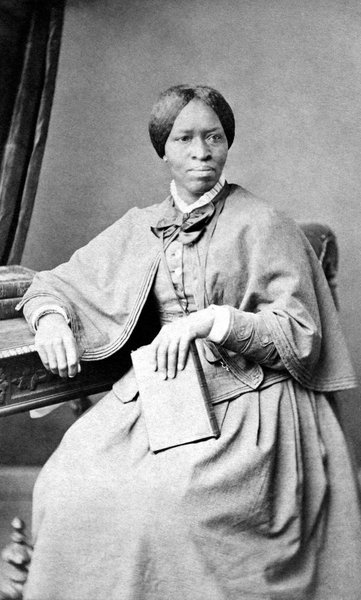
Amanda Berry Smith
Amanda Smith: An Autobiography · 1893
More like this


Public domain. Source text from the original edition.
Martin Johnson Heade, “Point Judith, Rhode Island” (1867–68). The Cleveland Museum of Art, CC0.
Cite this book
Copy a citation in the style you need.
- MLA
- Smith, Amanda Berry. Amanda Smith: An Autobiography. 1893. Ochorus, https://ochorus.com/books/amanda-smith-autobiography/.
- Chicago
- Smith, Amanda Berry. Amanda Smith: An Autobiography. 1893. Reprint, Ochorus. https://ochorus.com/books/amanda-smith-autobiography/.
- Chicago footnote
- Amanda Berry Smith, Amanda Smith: An Autobiography (1893; repr., Ochorus), https://ochorus.com/books/amanda-smith-autobiography/.
- BibTeX
- @book{smith1893amanda, author = {Smith, Amanda Berry}, title = {{Amanda Smith: An Autobiography}}, year = {1893}, publisher = {Ochorus}, url = {https://ochorus.com/books/amanda-smith-autobiography/} }