Book
Religious Experience and Journal
Giving an Account of Her Call to Preach the Gospel
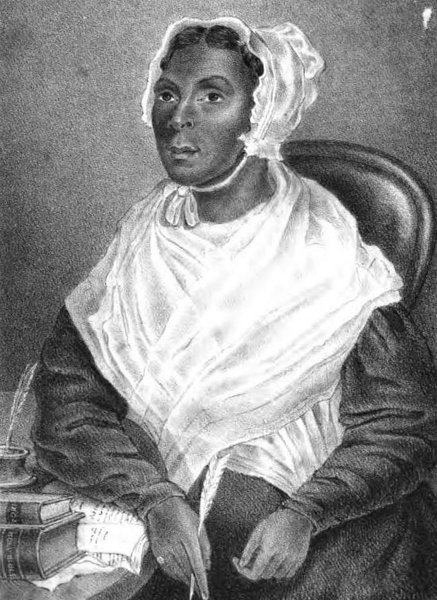
Jarena Lee · 1783–1864
- 8 chapters
- 3 hr 54 min read
- Moderate Reading difficulty
Free to read·No account needed
My Call to Preach the Gospel
Taking books where there’s no signal? See Ochorus for missionaries or chaplains
Reader’s guide
About this book
The first woman authorized to preach in the African Methodist Episcopal Church tells her own story: her conversion under Richard Allen, the long struggle to be allowed to preach, and then decades of travelling thousands of miles on foot and by wagon to carry the gospel. Her 1849 journal is a record of holy boldness — a Black woman claiming a pulpit the age denied her, and finding God meet her at every turn.
Between four and five years after my sanctification, on a certain time, an impressive silence fell upon me, and I stood as if some one was about to speak to me, yet I had no such thought in my heart.—But to my utter surprise there seemed to sound a voice which I thought I distinctly heard, and most certainly understand, which said to me, “Go…
Contents
Questions and Answers
What is Religious Experience and Journal about?
It is the autobiography of Jarena Lee, the first woman authorized to preach in the African Methodist Episcopal Church. She tells her own story: her conversion under Richard Allen, her long struggle to be permitted to preach as a woman, and then decades of travelling thousands of miles to proclaim the gospel — a pioneering record of faith, calling, and perseverance against great obstacles.
Who was Jarena Lee?
Jarena Lee was a free-born Black woman of the early nineteenth century who became the first woman authorized to preach in the AME Church under its founder, Richard Allen. Believing herself called by God to preach at a time when almost no church would allow it, she travelled vast distances and preached widely, leaving this journal as the testimony of her ministry.
How did she come to preach?
Through a conviction she could not shake that God had called her to it. When she first told Richard Allen, the discipline of the church made no provision for women preachers, and she was not permitted; but years later, after she spontaneously exhorted during a service, Allen affirmed her call, and she became a travelling preacher — the first woman so recognized in the denomination.
What obstacles did she face?
The great obstacle was the near-universal refusal of her day to let a woman preach. Lee had to contend with the doubts of church leaders, the prejudices of congregations, and the hardships of constant travel as a Black woman in early nineteenth-century America. Her journal records both the opposition and the evident fruit of a ministry she was sure God had appointed.
What does the book reveal about her faith?
A deep, experiential faith marked by conversion, a longing for holiness, and an unshakable sense of divine calling. Lee writes in the warm, testimony-rich style of Methodist spirituality, recounting her spiritual struggles and consolations, and her account is as much a record of inner religious experience as of outward labour.
Why is this book historically important?
Because it is a rare first-hand narrative from a Black woman preacher in the early American republic, and a landmark in the history of both African American Christianity and women in ministry. Lee's insistence on her calling, and her account of exercising it, preserve a voice too often absent from the record of the church's life.
How does it connect to Richard Allen and the AME Church?
Closely — Lee was converted under Allen's preaching and it was Allen who eventually affirmed her right to preach. Her story unfolds within the early life of the African Methodist Episcopal Church that Allen founded, and it stands alongside his own Life and Gospel Labours as part of the founding testimony of independent Black Methodism.
Where should a reader begin?
At the beginning, with Lee's conversion and her growing sense of call, and on through her struggle to preach and her years of travelling ministry. It is a first-person journal meant to be read in order, and taken that way it conveys both the reality of her faith and the courage of a woman who preached against every obstacle.
Read in your language
More like this

Public domain. Source text from the original edition.
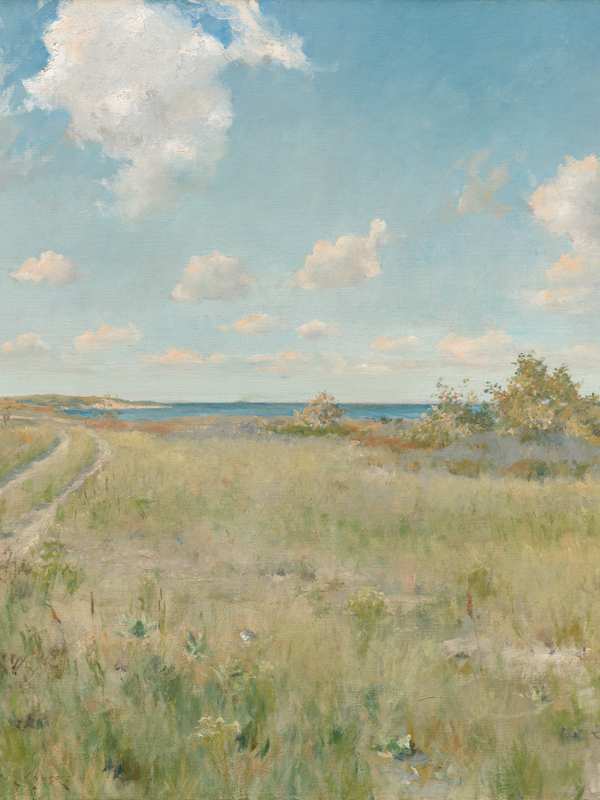
William Merritt Chase, “The Old Road to the Sea” (c. 1893). The Cleveland Museum of Art, CC0.
Cite this book
Copy a citation in the style you need.
- MLA
- Lee, Jarena. Religious Experience and Journal. 1836. Ochorus, https://ochorus.com/books/religious-experience-and-journal/.
- Chicago
- Lee, Jarena. Religious Experience and Journal. 1836. Reprint, Ochorus. https://ochorus.com/books/religious-experience-and-journal/.
- Chicago footnote
- Jarena Lee, Religious Experience and Journal (1836; repr., Ochorus), https://ochorus.com/books/religious-experience-and-journal/.
- BibTeX
- @book{lee1836religious, author = {Lee, Jarena}, title = {{Religious Experience and Journal}}, year = {1836}, publisher = {Ochorus}, url = {https://ochorus.com/books/religious-experience-and-journal/} }