

Book
Things as They Are
Mission Work in Southern India
Other titles: Things as They Are: Mission Work in Southern India
Amy Carmichael · 1867–1951
- 35 chapters
- 7 hr 13 min read
- Moderate Reading difficulty
Free to read·No account needed
Note
Taking books where there’s no signal? See Ochorus for missionaries or chaplains
Reader’s guide
About this book
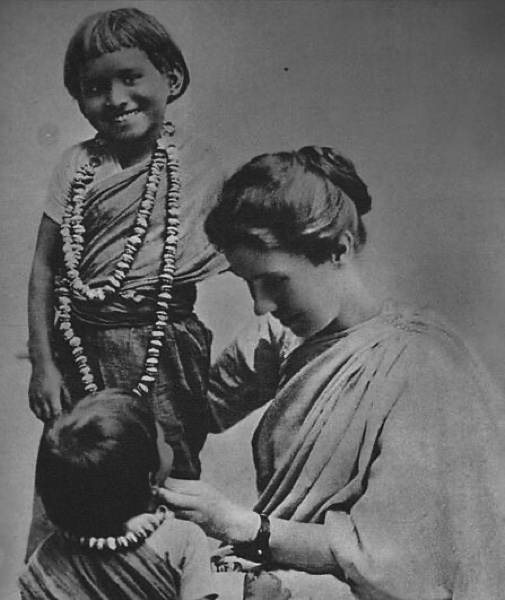
Amy Carmichael’s unvarnished account of missionary work in southern India—written to show things as they are, not as friends at home might wish them to be. In vivid scenes from village life she describes the grip of caste and idolatry and the real cost of winning even one soul. A sobering, honest book, and a moving call to prayer for those still unreached.
WITHIN a few weeks of the publication of Things as They Are, letters were received from missionaries working in different parts of India, confirming its truth. But some in England doubt it. And so it was proposed that if a fourth edition were called for, a few confirmatory notes, written by experienced South Indian missionaries, other than those of the district described, would be helpful.…
Contents
- 1 Note 8 min
- 2 Preface 7 min
- 3 About the Book 5 min
- 4 Three Afternoons off the Track 17 min
- 5 Humdrum 11 min
- 6 Correspondences 9 min
- 7 The Prey of the Terrible 11 min
- 8 Missed Ends 23 min
- 9 The Dust of the Actual 19 min
- 10 Roots 16 min
- 11 The Classes and the Masses 11 min
- 12 The Creed Chasm 7 min
- 13 Caste viewed as a Doer 12 min
- 14 Petra 8 min
- 15 Death by Disuse 10 min
- 16 What Happened 8 min
- 17 Simply Murdered 11 min
- 18 Wanted, Volunteers 12 min
- 19 If it is so very important. . . ? 5 min
- 20 The Call Intensified 22 min
- 21 Attracted by the Influence 15 min
- 22 The Elf 24 min
- 23 Deified Devilry 7 min
- 24 Behind the Door 13 min
- 25 Pan, Pan is Dead 19 min
- 26 Married to the God 8 min
- 27 Skirting the Abyss 18 min
- 28 From a Hindu Point of View 17 min
- 29 Though ye know Him not 9 min
- 30 How Long? 7 min
- 31 What do we count them worth? 16 min
- 32 Two Safe 5 min
- 33 Three Objections 17 min
- 34 Show me Thy Glory! 21 min
- 35 Appendix 3 min
Questions and Answers
What is Things as They Are about?
It is Amy Carmichael's unvarnished account of missionary work in southern India — written, as the title says, to show things as they are, not as friends at home might wish them to be. In vivid scenes from village life she describes the grip of caste and idolatry, the hardness of the work, and the real cost of the gospel's advance, refusing to soften the picture for comfortable readers.
Who was Amy Carmichael?
Amy Carmichael was an Irish missionary who spent over fifty years in south India without returning home on furlough, founding the Dohnavur Fellowship to rescue children from exploitation. A writer as well as a missionary, she wrote many books; Things as They Are is among her earliest and most striking, an honest report from the field.
Why did Carmichael write so bluntly?
Because she believed home supporters were being given a romanticized picture of missions, and she wanted them to see the reality — the resistance, the slow progress, the spiritual darkness she encountered — so that their prayers and support would be grounded in truth. The book's frankness was deliberate, meant to correct comfortable illusions about the work.
What does the book describe?
Scenes from village life in south India: the power of caste, the pull of idolatry, the plight of women and children, and the fierce opposition the gospel met. Carmichael writes in vivid, concrete detail, recounting particular people and encounters rather than generalities, so that the reader feels the weight and difficulty of the work as she experienced it.
Was the book controversial?
Somewhat — its unflinching honesty unsettled readers accustomed to more triumphant missionary reports, and some found it too dark. But Carmichael was unwilling to trade truth for encouragement, and the book's very frankness gave it power, making it a lasting and respected account precisely because it refused to pretend the work was easier than it was.
What does it reveal about Carmichael's own faith?
A faith honest enough to face hard reality without losing hope — one that could name the darkness and still labour on, trusting God with results she could not see. The same searching honesty that marks her devotional book If runs through this account of the field, showing a missionary unwilling to deceive herself or others.
Who should read this book?
Anyone interested in missions who wants the truth rather than a comfortable version of it, and any reader drawn to Carmichael's honest, costly faith. It remains a bracing corrective to sentimental views of missionary work, and a moving portrait of the real conditions in which the gospel was carried into rural south India.
Where should a reader begin?
At the beginning, letting Carmichael set out her purpose of showing things as they are, then follow her vivid scenes from the field. The book is a series of first-hand pictures rather than an argument, so it can be read straight through, and its cumulative honesty conveys the reality of the work more powerfully than any summary could.
Read in your language
More like this



Frederic Edwin Church, “View of Cotopaxi” (1857). The Art Institute of Chicago, CC0.
Cite this book
Copy a citation in the style you need.
- MLA
- Carmichael, Amy. Things as They Are. 1903. Ochorus, https://ochorus.com/books/things-as-they-are/.
- Chicago
- Carmichael, Amy. Things as They Are. 1903. Reprint, Ochorus. https://ochorus.com/books/things-as-they-are/.
- Chicago footnote
- Amy Carmichael, Things as They Are (1903; repr., Ochorus), https://ochorus.com/books/things-as-they-are/.
- BibTeX
- @book{carmichael1903things, author = {Carmichael, Amy}, title = {{Things as They Are}}, year = {1903}, publisher = {Ochorus}, url = {https://ochorus.com/books/things-as-they-are/} }