- 30 chapters
- 1 hr 56 min read
- Accessible Reading difficulty
Free to read·No account needed
Birth and Parentage
Taking books where there’s no signal? See Ochorus for missionaries or chaplains
Reader’s guide
About this book
The memoir of a holiness evangelist who would not be silenced. Born to formerly enslaved parents, Julia Foote was converted at fifteen, sanctified soon after, and called to preach when almost no church would let a woman into the pulpit. Excommunicated for preaching and undaunted, she travelled for decades and became the first woman ordained a deacon in the A.M.E. Zion Church. Her sketch is a plain, fervent account of grace, opposition, and the full salvation she preached to the end.
I WAS born in 1823, in Schenectady, N. Y. I was my mother's fourth child. My father was born free, but was stolen, when a child, and enslaved. My mother was born a slave, in the State of New York. She had one very cruel master and mistress.
Contents
- 1 Birth and Parentage 5 min
- 2 Learning the Alphabet 4 min
- 3 The Primes — Going to School 3 min
- 4 My Teacher Hung for Crime 3 min
- 5 An Undeserved Whipping 4 min
- 6 First and Last Dancing 5 min
- 7 My Conversion 4 min
- 8 A Desire for Knowledge — Inward Foes 3 min
- 9 Various Hopes Blasted 3 min
- 10 Disobedience, but Happy Results 4 min
- 11 A Religion as Old as the Bible 2 min
- 12 My Marriage 4 min
- 13 Boston — The Work of Full Salvation 3 min
- 14 Early Fruit Gathered Home 3 min
- 15 New and Unpleasant Revelations 3 min
- 16 A Long-Lost Brother Found 3 min
- 17 A Call to Preach the Gospel 3 min
- 18 Heavenly Visitations Again 5 min
- 19 Public Effort — Excommunication 5 min
- 20 Women in the Gospel 4 min
- 21 The Lord's Leading — Philadelphia 3 min
- 22 A Visit to My Parents — Further Labors 6 min
- 23 Color Indignities — General Conference 4 min
- 24 Death of My Husband and Father 3 min
- 25 Work in Various Places 4 min
- 26 A "Threshing" Sermon 7 min
- 27 My Cleveland Home — Later Labors 5 min
- 28 A Word to My Christian Sisters 5 min
- 29 Love not the World 6 min
- 30 How to Obtain Sanctification 2 min
Questions and Answers
What is A Brand Plucked from the Fire about?
It is the memoir of Julia Foote, a holiness evangelist who would not be silenced. Born to formerly enslaved parents, she was converted at fifteen, entered into the experience of entire sanctification soon after, and was called to preach when almost no church would let a woman into the pulpit. Her narrative tells of that call, the opposition she met, and her ministry as one of the first Black women preachers of the holiness movement.
Who was Julia Foote?
Julia Foote was a nineteenth-century Black American evangelist and one of the earliest women preachers in the holiness movement. Excommunicated from her church for insisting on preaching, she persevered in a travelling ministry and was later ordained a deacon, and then an elder, in the AME Zion Church — among the first women to hold such office.
What does the title mean?
It comes from a biblical image (Zechariah 3:2) of a brand — a burning stick — snatched from the fire, a picture of one rescued by God's mercy from destruction. Foote takes it for her own life, seeing herself as one plucked by grace and set apart for God's service, and the phrase frames her whole story as a testimony to that rescuing mercy.
What was her experience of sanctification?
Central to the book. Foote testifies not only to conversion but to a definite second experience of entire sanctification — a cleansing and filling of the heart with holy love, in the Wesleyan holiness tradition. This experience shaped her whole ministry and message, and her account of it makes the memoir an important witness to holiness spirituality among Black Christians.
What opposition did she face for preaching?
Fierce opposition, even excommunication. When Foote insisted that God had called her to preach, her church leaders forbade it and eventually cut her off. She had to contend with the conviction of her day that women, and especially Black women, had no place in the pulpit — yet she persisted, sure of her calling, and lived to see herself ordained.
Why is this book significant?
Because it is a first-hand testimony from a Black woman who broke through the barriers of both race and gender to preach the gospel, and an important document of the holiness movement. Foote's insistence on her call, and her record of exercising it against excommunication and scorn, give voice to a courage and faith the wider church long overlooked.
What kind of faith does the memoir reveal?
An ardent, holiness-shaped faith centred on conversion, sanctification, and obedience to God's call whatever the cost. Foote writes with conviction and fervour, and her narrative is as much a spiritual testimony — of grace, cleansing, and a life wholly given to God — as it is a record of the obstacles she overcame.
Where should a reader begin?
At the beginning, with Foote's childhood, conversion, and experience of sanctification, before her call to preach and the opposition it brought. It is a short first-person memoir meant to be read in order, and read that way it carries both the fire of her faith and the courage of a woman who preached against every barrier.
Read in your language
About the author
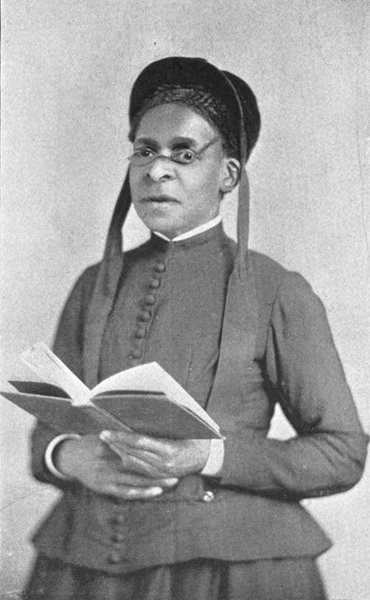
Julia A. J. Foote
A Brand Plucked from the Fire · 1879
More like this




Public domain. Source text from the original edition.
George Inness, “Sunny Autumn Day” (1892). The Cleveland Museum of Art, CC0.
Cite this book
Copy a citation in the style you need.
- MLA
- Foote, Julia A. J. A Brand Plucked from the Fire. 1879. Ochorus, https://ochorus.com/books/a-brand-plucked-from-the-fire/.
- Chicago
- Foote, Julia A. J. A Brand Plucked from the Fire. 1879. Reprint, Ochorus. https://ochorus.com/books/a-brand-plucked-from-the-fire/.
- Chicago footnote
- Julia A. J. Foote, A Brand Plucked from the Fire (1879; repr., Ochorus), https://ochorus.com/books/a-brand-plucked-from-the-fire/.
- BibTeX
- @book{foote1879brand, author = {Foote, Julia A. J.}, title = {{A Brand Plucked from the Fire}}, year = {1879}, publisher = {Ochorus}, url = {https://ochorus.com/books/a-brand-plucked-from-the-fire/} }