
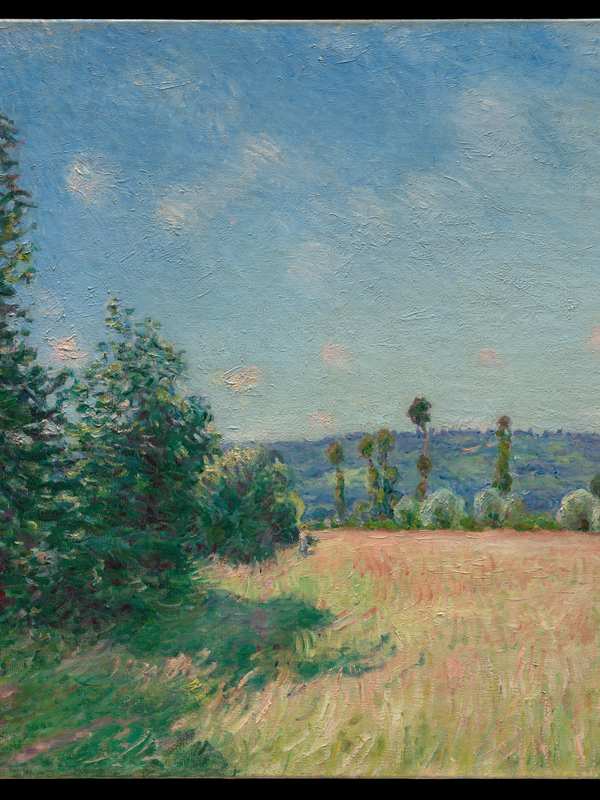
Book
Power Through Prayer
Men Are God's Method
Other titles: Preacher and Prayer
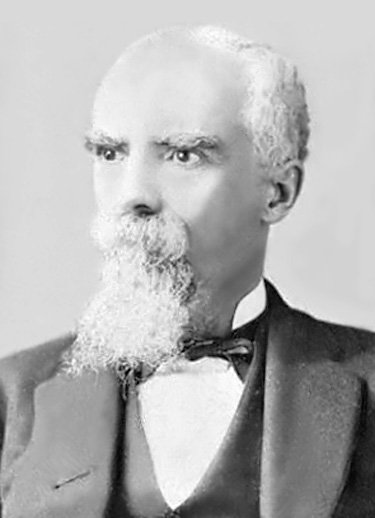
E. M. Bounds · 1835–1913
- 20 chapters
- 1 hr 45 min read
- Moderate Reading difficulty
Free to read·No account needed
Men of Prayer Needed
Taking books where there’s no signal? See Ochorus for missionaries or chaplains
Reader’s guide
About this book
E. M. Bounds wrote for preachers, and his argument is single: the Church is looking for better methods, but God is looking for better men. In twenty short chapters, each opening with the words of an earlier praying man, he presses the case that a sermon's power is made in the closet before it is made in the study, and that unction — which no learning, genius or eloquence can win — is bought with much prayer or not at all. Bracing, and hard to read comfortably.
Study universal holiness of life. Your whole usefulness depends on this, for your sermons last but an hour or two; your life preaches all the week. If Satan can only make a covetous minister a lover of praise, of pleasure, of good eating, he has ruined your ministry. Give yourself to prayer, and get your texts, your thoughts, your words from
Contents
- 1 Men of Prayer Needed 8 min
- 2 Our Sufficiency Is of God 5 min
- 3 The Letter Killeth 5 min
- 4 Tendencies to Be Avoided 5 min
- 5 Prayer, the Great Essential 5 min
- 6 A Praying Ministry Successful 5 min
- 7 Much Time Should Be Given to Prayer 5 min
- 8 Examples of Praying Men 5 min
- 9 Begin the Day with Prayer 3 min
- 10 Prayer and Devotion United 5 min
- 11 An Example of Devotion 6 min
- 12 Heart Preparation Necessary 5 min
- 13 Grace from the Heart Rather than the Head 4 min
- 14 Unction a Necessity 4 min
- 15 Unction, the Mark of True Gospel Preaching 5 min
- 16 Much Prayer the Price of Unction 5 min
- 17 Prayer Marks Spiritual Leadership 6 min
- 18 Preachers Need the Prayers of the People 7 min
- 19 Deliberation Necessary to Largest Results from Prayer 7 min
- 20 A Praying Pulpit Begets a Praying Pew 4 min
Questions and Answers
What is Power Through Prayer about?
It is E. M. Bounds's impassioned plea to preachers that the power of their ministry lies not in method or machinery but in prayer. His argument is single and relentless: the Church is looking for better methods, but God is looking for better men — men whom the Holy Spirit can use because they are given to prayer. In twenty short chapters he presses the case that the preacher's real work is done on his knees.
Who was E. M. Bounds?
Edward McKendree Bounds was an American Methodist minister and, in his later years, a man who rose at four each morning to pray. He wrote a series of books on prayer that were mostly published after his death; Power Through Prayer, sometimes titled Preacher and Prayer, is the best known, and has become a classic call to the ministry of intercession.
Who is the book written for?
Preachers above all — Bounds writes to and about the man in the pulpit. But its message reaches every Christian, because its theme is that God works through people rather than programmes, and that spiritual results come only from spiritual power. Any reader who has trusted in ability or organization instead of prayer will feel its edge.
What is the book's central contrast?
Men versus methods. Bounds argues that the Church is forever seeking better techniques, organizations, and plans, while God is seeking praying men through whom to work. The gospel, he insists, does not depend on machinery but on the character and prayerfulness of those who carry it — 'the men God uses are men of prayer,' and nothing can substitute for that.
Why does Bounds tie preaching so closely to prayer?
Because he believes the sermon is made in the closet before it is ever preached, and that the preacher's private prayer life is the hidden source of all public power. A prayerless preacher, however gifted, works in his own strength; a praying one becomes a channel for God's. Bounds will not let the reader separate the message from the man or the man from his praying.
What tone does the book take?
Urgent, direct, and unsparing. Each short chapter opens with the words of an earlier praying man — a saint or missionary whose life proved the point — and then Bounds drives the argument home without softening it. He means to disturb the comfortable minister and to set the whole ministry on its knees, and the book's fervour is part of its enduring power.
Is Power Through Prayer only about preaching?
Its immediate subject is the preacher, but its deeper subject is the primacy of prayer in all spiritual work. Bounds is really contending that God's kingdom advances through consecrated people who pray, not through efficiency, and that lesson applies to every servant of Christ, in the pulpit or out of it.
Where should a reader begin?
At the beginning and straight through — the chapters are very short and cumulative, each hammering the one theme from a new angle. It is a book to be read a chapter at a time and prayed over, not studied; many have used it as a repeated summons back to the closet and the hidden work of intercession.
Read in your language
More like this
Alfred Sisley, “Sahurs Meadows in Morning Sun” (1894). The Metropolitan Museum of Art, Open Access.
Cite this book
Copy a citation in the style you need.
- MLA
- Bounds, E. M. Power Through Prayer. 1907. Ochorus, https://ochorus.com/books/power-through-prayer/.
- Chicago
- Bounds, E. M. Power Through Prayer. 1907. Reprint, Ochorus. https://ochorus.com/books/power-through-prayer/.
- Chicago footnote
- E. M. Bounds, Power Through Prayer (1907; repr., Ochorus), https://ochorus.com/books/power-through-prayer/.
- BibTeX
- @book{bounds1907power, author = {Bounds, E. M.}, title = {{Power Through Prayer}}, year = {1907}, publisher = {Ochorus}, url = {https://ochorus.com/books/power-through-prayer/} }