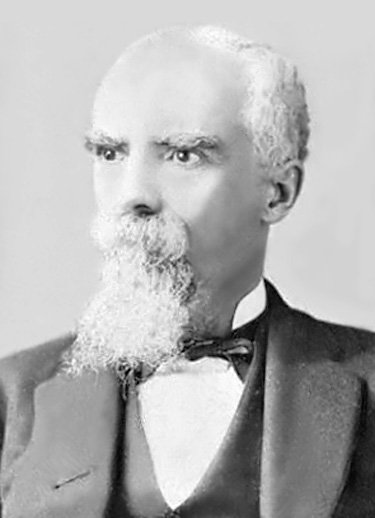
New to E. M. Bounds? Start with
Power Through Prayer
All works · 18 hr 41 min read
Biography
- 1835 Born
- 1859 Ordained
- 1865 Franklin
- 1894 To Georgia
- 1913 Died
What the Church needs to-day is not more machinery or better, not new organizations or more and novel methods, but men whom the Holy Spirit can use — men of prayer, men mighty in prayer.
Edward McKendree Bounds died in 1913 in a small Georgia town, largely unknown outside the churches he had served. He left behind a stack of manuscripts, a modest library, and a reputation among a handful of friends for rising before dawn to pray. A century later his books on prayer have been translated into dozens of languages and have never gone out of print. He is one of the clearest cases in the modern church of a life whose fruit came almost entirely after its end.
A Missouri boyhood and an early ambition
He was born on 15 August 1835 in Shelby County, Missouri, and named for William McKendree, the frontier bishop of American Methodism — a name that turned out to be a kind of prophecy. His father died when Edward was fourteen, and the boy's education was cut short by the family's sudden need. Like many young men of his generation he went west in the years of the gold rush, but he did not stay a prospector. He came back to Missouri, read law, and was admitted to the bar while still a teenager, practising as one of the youngest attorneys in the state.
The law held him for only a few years. He was converted under the preaching of a Methodist revival, and the call to preach came with a force he could not argue away — which is worth noting about a man trained to argue. He gave up the practice, and in 1859, at twenty-four, he was ordained and sent to the Methodist Episcopal Church, South, at Monticello, Missouri. He had traded a promising career for a circuit and a small salary, and he never showed any sign of regretting it.
Prison, and a war he did not choose
Two years later the country broke apart, and Missouri broke with it. In May 1861 Bounds, then pastoring at Brunswick, was arrested by Union troops along with more than two hundred other men suspected of Southern sympathies. He was required to swear an oath of allegiance to the United States or pay a fine of five hundred dollars. He refused both — not, by his own account, out of politics, but because he would not be compelled in a matter of conscience. It was a costly scruple. He was held at Jefferson City and then in a federal prison in St Louis, among non-combatants, for roughly a year and a half.
Released in an exchange, he made his way south and served the rest of the war as a chaplain to Confederate troops from Missouri. It was the hardest kind of ministry: burying men his own age, writing to their mothers, holding services in mud. At Franklin, Tennessee, he was struck in the forehead by a sabre and taken prisoner again. He carried the scar for the rest of his life.
It should be said plainly that the cause he served fought to preserve slavery, and nothing he later wrote about prayer alters that. What can be said alongside it is what he did when the war ended, which surprised the town he did it in.
Franklin: six men and a Tuesday night
When the war ended and he was finally released in the summer of 1865, Bounds went back to Franklin — to the town where he had been wounded and beaten, whose fields still held the graves of men he had buried. He did not go to rebuild it with money or lumber. He went to pastor the Methodist church there, and his method was almost absurdly simple. He looked for a handful of men who actually believed that prayer did something, and he found about half a dozen. Every Tuesday night they knelt together and prayed — for themselves, for the church, for the town, for revival in a wrecked and bitter country.
That decade shaped the rest of him. Everything he would later put on paper about the uselessness of machinery and the necessity of praying men, he learned first on the floor of a church in a defeated town, with five or six others beside him.
What the Church needs to-day is not more machinery or better, not new organizations or more and novel methods, but men whom the Holy Spirit can use — men of prayer, men mighty in prayer.
— E. M. Bounds, Power Through Prayer
The editor's desk, and a grief that did not break him
Bounds's gifts were recognised. He pastored in Alabama and Missouri, and served as editor of the St Louis Christian Advocate and then as associate editor of the Nashville Christian Advocate, the official paper of his denomination — for a time one of the more influential desks in Southern Methodism. He was, by any ordinary reckoning, a successful churchman.
In September 1876 he married Emma Elizabeth Barnett, of Washington, Georgia; they called her Emmie. Three children followed — Celeste, Corneille, and a son, Edward. In February 1886 Emmie died. Twenty months later Bounds married her cousin, Harriet Elizabeth Barnett, and six more children came: Samuel, Charles, and Osborne, Elizabeth, Mary, and a daughter they named Emmie. The man who wrote so insistently about praying at four in the morning was not a monk with an empty house. He was a father with a full one, and he had known the kind of loss that makes a person either stop praying or start praying differently.
The hours before daylight
Around 1894 he left the editor's chair and moved his family to Washington, Georgia, his first wife's home town. He held no prominent pulpit again. He had long been an early riser; now, with no congregation to fill and no salary for it, praying became his principal work — and he seems to have regarded it as work, in the plain sense. He rose at four in the morning and prayed until seven.
Those who knew him described a man walking and praying aloud in the dark hours, often carrying a single text for days until it burned. He was not performing; almost nobody was watching. He travelled when invited, held prayer meetings, wrote for the papers, and gave his books away as often as he sold them. And in those pre-dawn hours he wrote — eight manuscripts on prayer, covering its necessity, its possibilities, its reality, its weapons, and the men who had prayed in Scripture.
The men who have done the most for God in this world have been early on their knees. He who fritters away the early morning, its opportunity and freshness, in other pursuits than seeking God will make poor headway seeking him the rest of the day.
— E. M. Bounds, Power Through Prayer
Only one of the eight found a publisher while he lived: Preacher and Prayer, issued in 1907 and later retitled Power Through Prayer, the book by which most readers still know him. The other seven sat in manuscript. He had no reason to believe they would ever be read.
"When He is ready, I am ready"
Bounds died at home in Washington, Georgia, on 24 August 1913, nine days after his seventy-eighth birthday. Not long before the end he wrote to his friend Homer W. Hodge a line that reads exactly like the rest of his life:
When He is ready, I am ready; I long to taste the joys of the heavenlies.
— E. M. Bounds, in a letter to Homer W. Hodge
The manuscripts might have ended in an attic. Instead two friends — Claudius Lysias Chilton, and after him Hodge — took up the labour of editing and placing them. Purpose in Prayer appeared in 1920, Prayer and Praying Men in 1921, and the rest followed through the 1920s and into 1931. Bounds saw none of it.
Why he still reads
Bounds is not a systematic theologian and does not pretend to be. He repeats himself. He hammers one nail. But he wrote as a man describing something he did every morning rather than something he had read about, and that is why the books have outlasted almost everything published alongside them. His central conviction never moves: God works through people, not arrangements, and the person God can use is the one who has learned to pray.
Talking to men for God is a great thing, but talking to God for men is greater still.
— E. M. Bounds, Power Through Prayer
He is buried in Washington, Georgia, under a modest stone. He held no great office, founded no movement, and died with his best work unpublished. He simply got up, nineteen years running, while the town was still dark — and the church has been reading what came out of those mornings ever since.
Books by E. M. Bounds (7)
Books about E. M. Bounds (1)

Also appears in
Articles about E. M. Bounds (8)
Questions and Answers
Who was E. M. Bounds?
Edward McKendree Bounds (1835–1913) was an American Methodist pastor, Civil War chaplain and former attorney who gave the last years of his life to rising at four in the morning to pray. He died largely unknown outside the churches he had served, leaving a stack of manuscripts; a century later his books on prayer have been translated into dozens of languages and never gone out of print. He is one of the clearest cases of a life whose fruit came almost entirely after its end.
What was his early life?
Born in Missouri in 1835 and named for the frontier bishop William McKendree, he lost his father at fourteen and, like many of his generation, went west in the gold-rush years before coming back to read law, admitted to the bar as one of the youngest attorneys in the state. Converted under a Methodist revival, he gave up the practice — worth noting in a man trained to argue — and in 1859, at twenty-four, was ordained.
What did the Civil War cost him?
In 1861 he was arrested by Union troops as a suspected Southern sympathiser and required to swear an oath of allegiance or pay a fine; he refused both, not out of politics but because he would not be compelled in a matter of conscience, and was held some eighteen months. He then served the rest of the war as a Confederate chaplain and was struck by a sabre at Franklin. The cause he served fought to preserve slavery, which nothing he later wrote alters.
What happened at Franklin after the war?
He went back to Franklin — the town where he had been wounded, whose fields still held men he had buried — to pastor its Methodist church, and his method was almost absurdly simple. He looked for a handful of men who actually believed prayer did something, found about half a dozen, and every Tuesday night they knelt together and prayed for themselves, the church, the town, and revival in a wrecked and bitter country.
What did Franklin teach him?
That decade shaped the rest of him. Everything he later put on paper about the uselessness of machinery and the necessity of praying men he learned first on the floor of a church in a defeated town: "What the Church needs to-day is not more machinery or better, not new organizations or more and novel methods, but men whom the Holy Spirit can use — men of prayer, men mighty in prayer."
Was he a successful churchman?
By ordinary reckoning, yes. He pastored in Alabama and Missouri and served as editor of the St Louis Christian Advocate and then associate editor of the Nashville Christian Advocate, for a time one of the more influential desks in Southern Methodism. He married twice — his first wife, Emmie, died in 1886 — and had nine children in all. The man who wrote so insistently about praying at four in the morning was not a monk with an empty house but a father with a full one.
What were the hours before daylight?
Around 1894 he left the editor's chair for Washington, Georgia, held no prominent pulpit again, and made prayer his principal work — in the plain sense of work. He rose at four in the morning and prayed until seven, and those who knew him described a man walking and praying aloud in the dark hours, often carrying a single text for days until it burned. Almost nobody was watching.
What did he write in those hours?
Eight manuscripts on prayer, covering its necessity, its possibilities, its reality, its weapons, and the men who had prayed in Scripture. Only one, "Preacher and Prayer" (1907, later retitled "Power Through Prayer"), found a publisher while he lived; the other seven sat in manuscript, and he had no reason to believe they would ever be read. "The men who have done the most for God in this world have been early on their knees," he wrote.
How were the other seven books published?
Bounds died at home in Washington, Georgia, on 24 August 1913, having written to a friend, "When He is ready, I am ready; I long to taste the joys of the heavenlies." The manuscripts might have ended in an attic; instead two friends, Claudius Chilton and Homer Hodge, took up the labour of editing and placing them, and they appeared through the 1920s into 1931. He saw none of it, yet they have since been read in dozens of languages by more people than heard him preach.
Why does he still read?
Bounds is not a systematic theologian and does not pretend to be; he repeats himself and hammers one nail. But he wrote as a man describing something he did every morning rather than something he had read about, and that is why the books have outlasted almost everything published alongside them. His central conviction never moves: God works through people, not arrangements. "Talking to men for God is a great thing," he wrote, "but talking to God for men is greater still."