Book
The Reformed Pastor
On the Duties of the Christian Ministry
Other titles: Gildas Salvianus · Gildas Salvianus, The Reformed Pastor
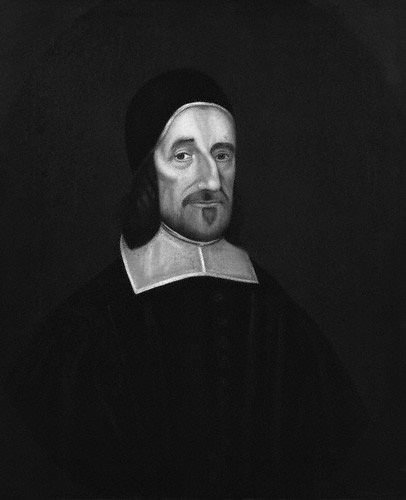
Richard Baxter · 1615–1691
- 17 chapters
- 7 hr 20 min read
- Advanced Reading difficulty
Free to read·No account needed
Preface
Taking books where there’s no signal? See Ochorus for missionaries or chaplains
Reader’s guide
About this book
A book about pastoral work that spends almost no time on preaching. Baxter's subject is the personal instruction of every family in a parish, one household at a time, and his argument is that a minister who preaches to hundreds on Sunday and knows none of them the rest of the week has not done the job.
He had done it himself. At Kidderminster he and his assistant set aside Mondays and Tuesdays to work through fifteen or sixteen families a week — “upwards of eight hundred families, in a year” — and the town changed. The book was written in 1656 for a gathering of Worcestershire ministers who had agreed to attempt the same thing, which is why it reads less like a manual than like a man pressing colleagues who have already said yes and might still not do it.
The severity has a source. Baxter wrote in constant pain and expected to die young — he was ill for most of his adult life and preached, in his own phrase, as a dying man to dying men — and the book is organised around an examination he believed was coming shortly. The long opening section is addressed to the minister's own soul before it says a word about anyone else's, on the ground that a man who has not attended to himself will not attend to a parish.
Ministers have found it uncomfortable for three and a half centuries, which is roughly the response Baxter was going for. It is also read by people who are not ministers, usually with a clearer view afterwards of what they are entitled to ask of one.
Let us consider, what it is to take heed to ourselves. 1. See that the work of saving grace be thoroughly wrought in your own souls. Take heed to yourselves, lest you be void of that saving grace of God which you offer to others, and be strangers to the effectual working of that gospel which you preach; and lest, while you proclaim to the…
Contents
- 1 Preface 6 min
- 2 Dedication 22 min
- 3 Introductory Note 2 min
- 4 Section 1 — the Nature of This Oversight 38 min
- 5 Section 2 — the Motives to This Oversight 31 min
- 6 Section 1 — the Nature of This Oversight 49 min
- 7 Section 2 – the Manner of This Oversight 26 min
- 8 Section 3 — Motives to the Oversight of the Flock 17 min
- 9 Section 1 – the Use of Humiliation 81 min
- 10 Section 2 – the Duty of Personal Catechizing and Instructing the Flock Particularly Recommended 1 min
- 11 Article I 39 min
- 12 Article 2 5 min
- 13 Article 3 11 min
- 14 Article 4 23 min
- 15 Part II 39 min
- 16 Article 1 11 min
- 17 Article 2 40 min
Questions and Answers
What is The Reformed Pastor about?
It is a book about pastoral work that spends almost no time on preaching. Written by Richard Baxter in 1656, its subject is the personal instruction of every family in a parish, one household at a time. Baxter's argument is that a minister who preaches to hundreds on Sunday and knows none of them the rest of the week has not done the job.
What was Baxter's own practice at Kidderminster?
Baxter had done what the book asks. At Kidderminster he and his assistant set aside Mondays and Tuesdays to work through fifteen or sixteen families a week — upwards of eight hundred families in a year — instructing each household in person, and the town was changed by it. He wrote as a man who expected to be examined on the work he was pressing on others.
Why did Baxter write it?
It was written in 1656 for a gathering of Worcestershire ministers who had agreed to attempt the same house-by-house instruction. That is why it reads less like a manual than like a man pressing colleagues who have already said yes and might still not do it — an appeal to conscience among peers rather than a set of techniques for beginners.
Why is the book so severe?
The severity has a source. Baxter wrote in constant pain and expected to die young — he was ill for most of his adult life and preached, in his own phrase, as a dying man to dying men. The book is organised around a final reckoning he believed was coming shortly, which gives its urgency about the care of souls a personal edge.
What is the long opening section about?
The first and longest section is addressed to the minister's own soul before it says a word about anyone else's. Baxter's ground is that a man who has not attended to himself will not attend to a parish — that the care of others has to begin with self-examination, or the whole work is hollow. Only after that does he turn to the duty owed to the people.
Is the book only for ministers?
No. Though written for clergy, it is also read by people who are not ministers, usually with a clearer view afterwards of what they are entitled to ask of one. It sets out what faithful pastoral care actually involves, which lets any reader recognise it — or its absence — in the ministry they receive.
What is its central claim about ministry?
That the heart of a minister's work is personal, not just public: knowing and instructing the people of a parish family by family, rather than only addressing them from a distance on Sundays. Preaching without that personal care, in Baxter's view, leaves the real work undone, however large the congregation.
How have ministers received the book?
Ministers have found it uncomfortable for three and a half centuries — which is roughly the response Baxter was going for. It has never stopped functioning as an examination of conscience for those in ministry, and its refusal to let a preacher be satisfied with the pulpit alone is exactly what has kept it in print.
Read in your language
More like this



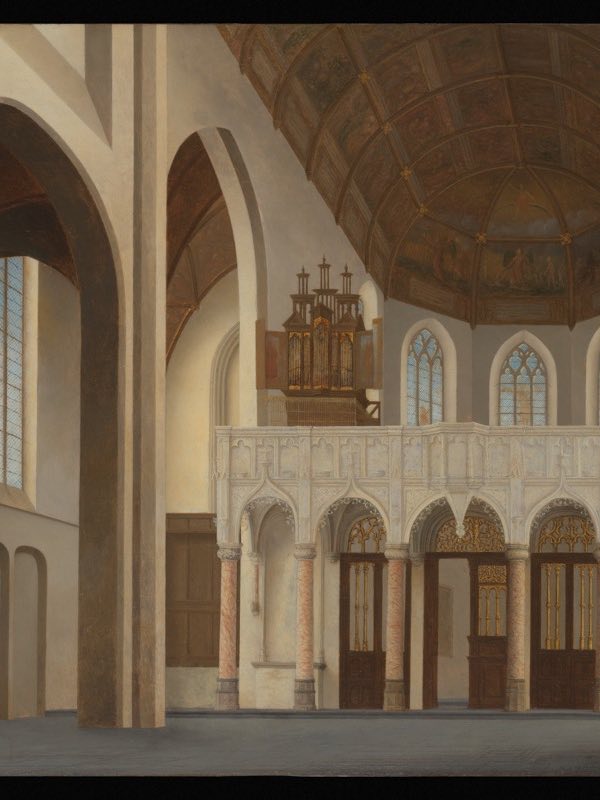
Pieter Jansz. Saenredam, “Interior of the Sint-Pieterskerk, 's-Hertogenbosch” (1632). The Metropolitan Museum of Art, Open Access.
Cite this book
Copy a citation in the style you need.
- MLA
- Baxter, Richard. The Reformed Pastor. 1656. Ochorus, https://ochorus.com/books/the-reformed-pastor/.
- Chicago
- Baxter, Richard. The Reformed Pastor. 1656. Reprint, Ochorus. https://ochorus.com/books/the-reformed-pastor/.
- Chicago footnote
- Richard Baxter, The Reformed Pastor (1656; repr., Ochorus), https://ochorus.com/books/the-reformed-pastor/.
- BibTeX
- @book{baxter1656reformed, author = {Baxter, Richard}, title = {{The Reformed Pastor}}, year = {1656}, publisher = {Ochorus}, url = {https://ochorus.com/books/the-reformed-pastor/} }