Book
On the Priesthood
Six Books on the Pastoral Office
Other titles: De Sacerdotio · Περὶ Ἱερωσύνης · Six Books on the Priesthood · A Treatise on the Priesthood
John Chrysostom · 347–407
- 7 chapters
- 3 hr 43 min read
- Moderate Reading difficulty
Free to read·No account needed
Introduction
Taking books where there’s no signal? See Ochorus for missionaries or chaplains
About this book
Chrysostom wrote this defence of himself after tricking his closest friend into accepting a bishopric that he had fled from. Cast as a conversation between the two men, it asks what the pastoral office actually demands, and answers that the work is so weighty, and the soul of the man who does it so exposed, that running from it may be the sanest response. It remains the most searching book on ministry the early church produced.
1. I had many genuine and true friends, men who understood the laws of friendship, and faithfully observed them; but out of this large number there was one who excelled all the rest in his attachment to me, striving to outstrip them as much as they themselves outstripped ordinary acquaintance.
Contents
Questions and Answers
What is On the Priesthood about?
It is John Chrysostom's classic treatise on the pastoral office — what the ministry actually demands and why it is so weighty a calling. Cast as a conversation between Chrysostom and his closest friend, it explores the dignity, the dangers, and the immense responsibility of the pastor's work, and has been treasured for sixteen centuries as one of the greatest books ever written on Christian ministry.
Who was John Chrysostom?
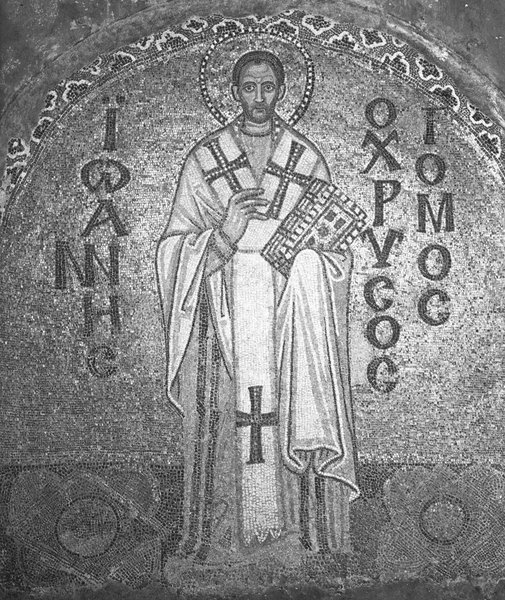
John Chrysostom was a preacher and bishop of the fourth and fifth centuries, archbishop of Constantinople, whose eloquence earned him the name 'Chrysostom,' meaning 'golden-mouthed.' One of the greatest preachers of the early church, he wrote this work early in his career, and it reflects both his high view of the ministry and his own reluctance to assume its burdens.
What is the story behind the book?
Chrysostom wrote it to defend himself after an unusual episode: he and his friend Basil had agreed to accept ordination together, but Chrysostom, judging himself unworthy, secretly evaded it while allowing his friend to be ordained. This treatise, cast as a dialogue between them, is his explanation and defence — and it grows into a profound meditation on the greatness and peril of the pastoral office.
Why did Chrysostom flee ordination?
Out of a deep sense of the office's weight and his own unworthiness. Far from despising the ministry, he fled it because he esteemed it so highly and feared the account a pastor must give for the souls in his care. The book turns this reluctance into its theme: that the very greatness of the calling should make anyone tremble to assume it lightly.
What does the book teach about the pastoral office?
That it is a work of surpassing dignity and danger — the care of souls, for which the pastor must answer to God. Chrysostom explores the qualities the office demands: skill in teaching, purity of life, wisdom, courage, and above all love, and he is unsparing about the temptations and burdens that attend it. It is a searching examination of what ministry truly requires.
Is this book only for clergy?
It is especially for pastors and those considering ministry, for whom it remains essential reading — but it also helps every Christian understand the weight of the pastoral calling and pray for those who bear it. Its meditation on responsibility, humility, and the care of souls speaks beyond the clergy to anyone who leads or serves others in the church.
Why has it lasted so long?
Because it grasps something permanent about Christian ministry — its glory, its dangers, and its cost — with unmatched eloquence and honesty. Sixteen centuries of pastors have found their own calling searched and clarified by it, and it stands with the finest treatments of the subject ever written, as relevant to the modern minister as to the ancient one.
Where should a reader begin?
At the beginning, with the story of Chrysostom and his friend, which frames the whole and draws the reader in. The dialogue then opens naturally into its great reflections on the ministry, so the book rewards being read in order, letting the personal episode lead into the profound meditation on the pastoral office it becomes.
Read in your language
More like this
Giovanni Paolo Panini, “Interior of the Pantheon, Rome” (1747). The Cleveland Museum of Art, CC0.
Cite this book
Copy a citation in the style you need.
- MLA
- Chrysostom, John. On the Priesthood. 386. Ochorus, https://ochorus.com/books/on-the-priesthood/.
- Chicago
- Chrysostom, John. On the Priesthood. 386. Reprint, Ochorus. https://ochorus.com/books/on-the-priesthood/.
- Chicago footnote
- John Chrysostom, On the Priesthood (386; repr., Ochorus), https://ochorus.com/books/on-the-priesthood/.
- BibTeX
- @book{chrysostom386priesthood, author = {Chrysostom, John}, title = {{On the Priesthood}}, year = {386}, publisher = {Ochorus}, url = {https://ochorus.com/books/on-the-priesthood/} }