
- 16 chapters
- 6 hr 56 min read
- Moderate Reading difficulty
Free to read·No account needed
Preface
Taking books where there’s no signal? See Ochorus for missionaries or chaplains
Reader’s guide
About this book
A series of sermons Torrey preached to ground his own congregation in what they believe, out of the conviction that the great need of the churches is systematic instruction. He takes up in turn the inspiration of the Bible, the being and nature of God, the deity and real humanity of Christ, the person and work of the Holy Spirit, the atonement, justification by faith, the new birth, sanctification, the resurrection of the body, and the things to come.
"All Scripture is given by inspiration of God, and is profitable for doctrine, for reproof, for correction, for instruction in righteousness; that the man of God may be perfect, thoroughly furnished unto all good works."—2 Tim. 3:16,
Contents
- 1 Preface 2 min
- 2 Inspiration, or to What Extent Is the Bible Inspired of God? 34 min
- 3 The Christian Conception of God, or the God of the Bible as Distinguished from the God of Christian Science and the God of Modern Philosophy 23 min
- 4 The Christian Conception of God—The Infinite Perfection and Unity of God 21 min
- 5 The Deity of Jesus Christ 26 min
- 6 Jesus Christ a Real Man 26 min
- 7 The Personality of the Holy Spirit 44 min
- 8 The Deity of the Holy Spirit and the Distinction Between the Father, Son and Holy Spirit 23 min
- 9 The Atonement: God's Doctrine of the Atonement vs. Unitarian and Christian Science Doctrines of the Atonement 32 min
- 10 The Distinctive Doctrine of Protestantism: Justification by Faith 26 min
- 11 The New Birth 25 min
- 12 Sanctification 25 min
- 13 The Resurrection of the Body of Jesus and of Our Bodies 24 min
- 14 The Devil 27 min
- 15 Is There a Literal Hell? 25 min
- 16 Is Future Punishment Everlasting? 34 min
Questions and Answers
What is The Fundamental Doctrines of the Christian Faith about?
It is a series of sermons R. A. Torrey preached to ground his own congregation in what they believe. Out of the conviction that the great need of the churches is systematic instruction, he takes up the central doctrines in turn — the inspiration of the Bible, the person and work of Christ, the Holy Spirit, salvation, and more — explaining each plainly and grounding it in Scripture.
Who was R. A. Torrey?
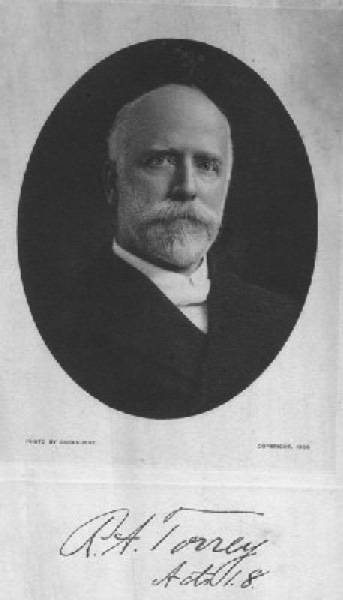
Reuben Archer Torrey was an American evangelist, pastor, and educator around the turn of the twentieth century, associated with D. L. Moody's work and known for clear, systematic Bible teaching. Convinced that many Christians were poorly grounded in doctrine, he wrote and preached to instruct them, and this book gathers his teaching on the essentials of the faith.
Why did Torrey write it?
Because he believed the great need of the churches was systematic instruction in what Christians actually believe. Torrey saw many believers vague or confused about doctrine, and set out to ground his own people, and through this book others, in the fundamental teachings of the faith, plainly explained and firmly rooted in Scripture.
What doctrines does the book cover?
The central ones: the inspiration and authority of the Bible, the person of Christ, his atoning work, the Holy Spirit, justification, the new birth, and the great themes of salvation, among others. Torrey takes each in turn, aiming to give the ordinary believer a clear, orderly grasp of the essentials rather than a technical or speculative theology.
Is this a technical theology book?
No — Torrey writes for ordinary Christians, not scholars. He explains each doctrine plainly and practically, grounding it in Scripture the reader can check, and keeping always in view why the truth matters for faith and life. It is systematic instruction made accessible, a clear introduction to Christian doctrine for the pew rather than the lecture hall.
How does Torrey ground his teaching in the Bible?
Thoroughly — Torrey builds each doctrine on cited passages of Scripture, so that the reader sees the teaching arises from the Bible itself and can test it there. Consistent with his method in all his books, he means to persuade not by his own authority but from the word of God, making the reader's Bible the foundation of their doctrine.
Who should read this book?
Any Christian wanting a clear, orderly grasp of the essential doctrines of the faith, and anyone teaching or discipling others who wants a plain, scriptural summary to work from. It is especially useful for believers who feel unsure of what they believe or why, giving them a solid, Bible-based foundation.
Where should a reader begin?
At the beginning, since Torrey arranges the doctrines in a deliberate order, often starting with the inspiration of Scripture as the foundation for all the rest. Read in sequence, the sermons build a connected understanding of the faith, so the book rewards being worked through in order, Bible in hand.
Read in your language
More like this




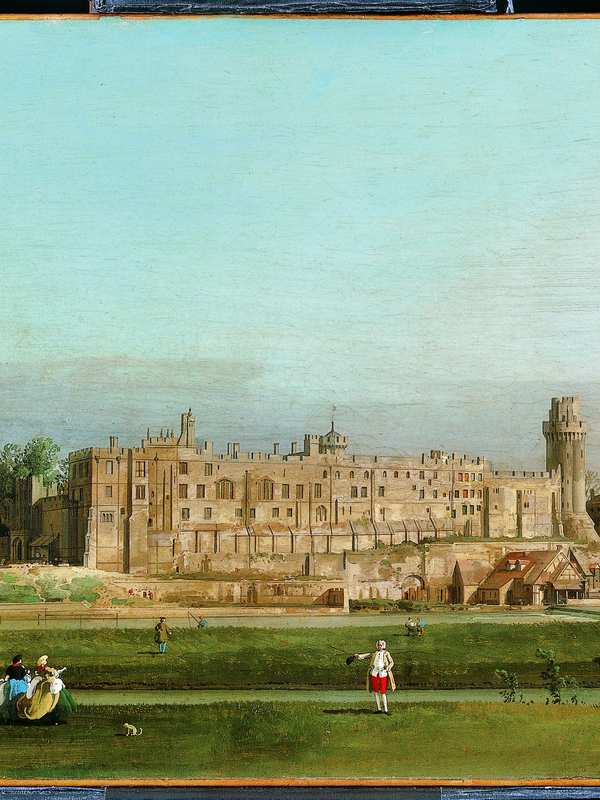
Canaletto (Giovanni Antonio Canal), “Warwick Castle” (1748). The Metropolitan Museum of Art, Open Access.
Cite this book
Copy a citation in the style you need.
- MLA
- Torrey, R. A. The Fundamental Doctrines of the Christian Faith. Ochorus, https://ochorus.com/books/the-fundamental-doctrines-of-the-christian-faith/.
- Chicago
- Torrey, R. A. The Fundamental Doctrines of the Christian Faith. Ochorus. https://ochorus.com/books/the-fundamental-doctrines-of-the-christian-faith/.
- Chicago footnote
- R. A. Torrey, The Fundamental Doctrines of the Christian Faith (Ochorus), https://ochorus.com/books/the-fundamental-doctrines-of-the-christian-faith/.
- BibTeX
- @book{torreyfundamental, author = {Torrey, R. A.}, title = {{The Fundamental Doctrines of the Christian Faith}}, publisher = {Ochorus}, url = {https://ochorus.com/books/the-fundamental-doctrines-of-the-christian-faith/} }