Book
The First Epistle of Clement to the Corinthians
The Church of Rome to the Church of Corinth
Clement of Rome · 35–99
- 59 chapters
- 1 hr 1 min read
- Moderate Reading difficulty
Free to read·No account needed
The salutation
Taking books where there’s no signal? See Ochorus for missionaries or chaplains
Reader’s guide
About this book
Written from the church at Rome to the church at Corinth around AD 96, this is the earliest Christian writing outside the New Testament. Clement, writing in the name of the Roman church, pleads with the Corinthians to end a bitter split in which younger members had deposed their faithful elders, and calls them back to humility, order, repentance, and the peace of Christ. Steeped in the Old Testament and standing only a generation behind the apostles, it is a window into the church as the apostolic age closed.
The Church of God which sojourns at Rome, to the Church of God sojourning at Corinth, to them that are called and sanctified by the will of God, through our Lord Jesus Christ: Grace unto you, and peace, from Almighty God through Jesus Christ, be multiplied.
Contents
- 1 The salutation 1 min
- 2 Praise of the Corinthians continued 1 min
- 3 The sad state of the church after sedition arose from envy 1 min
- 4 Many evils have already flowed from this source in ancient times 1 min
- 5 No less evils have arisen from the same source in the most recent times 1 min
- 6 Continuation 1 min
- 7 An exhortation to repentance 1 min
- 8 Continuation respecting repentance 1 min
- 9 Examples of the saints 1 min
- 10 Continuation of the above 2 min
- 11 Continuation 1 min
- 12 The rewards of faith and hospitality 1 min
- 13 An exhortation to humility 1 min
- 14 We should obey God rather than the authors of sedition 1 min
- 15 We must adhere to those who cultivate peace 1 min
- 16 Christ as an example of humility 3 min
- 17 The saints as examples of humility 1 min
- 18 David as an example of humility 2 min
- 19 Imitating these examples, let us seek after peace 1 min
- 20 The peace and harmony of the universe 1 min
- 21 Let us obey God, and not the authors of sedition 2 min
- 22 These exhortations are confirmed by the Christian faith 1 min
- 23 Be humble, and believe that Christ will come again 1 min
- 24 God continually shows us in nature that there will be a resurrection 1 min
- 25 The phœnix an emblem of our resurrection 1 min
- 26 We shall rise again, then, as the Scripture also testifies 1 min
- 27 In the hope of the resurrection 1 min
- 28 God sees all things: therefore let us avoid transgression 1 min
- 29 Let us also draw near to God in purity of heart 1 min
- 30 Let us do those things that please God 1 min
- 31 Let us see by what means we may obtain the divine blessing 1 min
- 32 We are justified not by our own works, but by faith 1 min
- 33 But let us not give up the practice of good works and love 1 min
- 34 Great is the reward of good works with God 1 min
- 35 Immense is this reward 2 min
- 36 All blessings are given to us through Christ 1 min
- 37 Christ is our leader, and we His soldiers 1 min
- 38 Let the members of the Church submit themselves 1 min
- 39 There is no reason for self-conceit 1 min
- 40 Let us preserve in the Church the order appointed by God 1 min
- 41 Continuation of the same subject 1 min
- 42 The order of ministers in the Church 1 min
- 43 Moses stilled the contention concerning the priestly dignity 2 min
- 44 The ordinances of the apostles 1 min
- 45 It is the part of the wicked to vex the righteous 1 min
- 46 Let us cleave to the righteous: your strife is pernicious 1 min
- 47 Your recent discord is worse than that in the times of Paul 1 min
- 48 Let us return to the practice of brotherly love 1 min
- 49 The praise of love 1 min
- 50 Let us pray to be thought worthy of love 1 min
- 51 Let the partakers in strife acknowledge their sins 1 min
- 52 Such a confession is pleasing to God 1 min
- 53 The love of Moses towards his people 1 min
- 54 He who is full of love will incur every loss 1 min
- 55 Examples of such love 1 min
- 56 Let us admonish and correct one another 2 min
- 57 Let the authors of sedition submit themselves 1 min
- 58 Blessings sought for all that call upon God 1 min
- 59 The Corinthians exhorted to send back word that peace is restored 1 min
Questions and Answers
What is The First Epistle of Clement to the Corinthians?
It is a letter written from the church at Rome to the church at Corinth around AD 96 — the earliest Christian writing we have outside the New Testament. Clement, writing in the name of the Roman church, pleads with the Corinthians to end a bitter division in which some younger members had deposed their elders, calling them to humility, order, and love.
Who was Clement of Rome?
Clement was a leader of the church at Rome at the end of the first century, traditionally counted among the earliest bishops of that church and sometimes identified with the Clement mentioned by Paul in Philippians. He wrote this letter on behalf of the Roman church, and early Christians held it in such esteem that it was read publicly in some churches alongside Scripture.
Why is this letter so important historically?
Because it is the earliest surviving Christian document outside the New Testament, written while the apostolic age had only just closed — possibly while the apostle John still lived. It gives a rare window onto the life, order, and faith of the very early church, and shows one church counselling another in matters of unity and leadership within a generation of the apostles.
What was the problem at Corinth that Clement addresses?
A division in which some younger members had risen up against the church's presbyters, or elders, and removed them from office. Clement writes to heal this strife, rebuking the pride and jealousy behind it and urging the offenders to submit, repent, and restore the deposed leaders, so that peace and order might return to the church.
What does Clement teach about church order and leadership?
That leadership in the church is not to be overthrown at will, but rests on an orderly appointment that goes back through the apostles to Christ and God. Clement appeals to this order to argue that the Corinthians had no right to depose their faithful elders, and his letter is an early and influential witness to the church's concern for orderly, God-given ministry.
What themes besides order run through the letter?
Humility, repentance, love, and harmony. Clement draws richly on the Old Testament and on the example of Christ to urge lowliness in place of pride, and he includes a famous passage on love echoing Paul's words to the same church. He points, too, to the order of creation and the resurrection as grounds for confidence and peace among believers.
Who should read this letter today?
Anyone interested in the earliest post-apostolic church, in the roots of Christian teaching on unity and leadership, or in the writings of the Apostolic Fathers. It offers a vivid, first-hand sense of the church's life just after the New Testament era, and its counsel on humility and peace still speaks to divided congregations.
Where should a reader begin?
At the beginning, reading it as the letter it is, from Rome's warm greeting to Corinth through its plea for the deposed elders. It is a single, continuous appeal, best read straight through, so that the reader follows Clement's argument from the strife he laments to the humility, order, and love he urges to heal it.
Read in your language
About the author
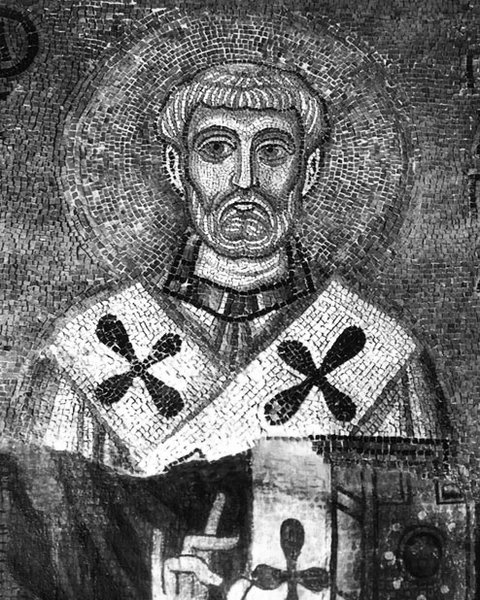
Clement of Rome
The First Epistle of Clement to the Corinthians · 96
More like this

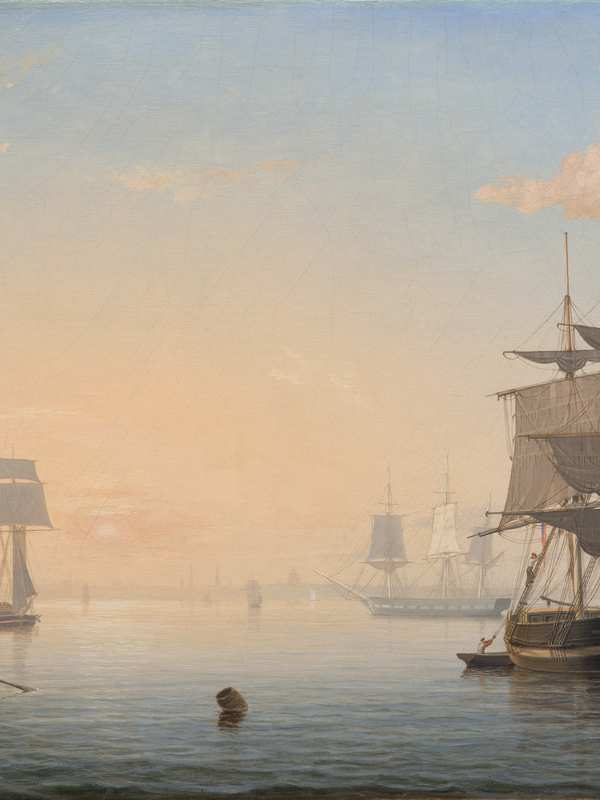
Fitz Henry Lane, “Harbor of Boston, with the City in the Distance” (c. 1846–1847). The Cleveland Museum of Art, CC0.
Cite this book
Copy a citation in the style you need.
- MLA
- Clement of Rome. The First Epistle of Clement to the Corinthians. 96. Ochorus, https://ochorus.com/books/first-epistle-of-clement/.
- Chicago
- Clement of Rome. The First Epistle of Clement to the Corinthians. 96. Reprint, Ochorus. https://ochorus.com/books/first-epistle-of-clement/.
- Chicago footnote
- Clement of Rome, The First Epistle of Clement to the Corinthians (96; repr., Ochorus), https://ochorus.com/books/first-epistle-of-clement/.
- BibTeX
- @book{clementofrome96first, author = {Clement of Rome}, title = {{The First Epistle of Clement to the Corinthians}}, year = {96}, publisher = {Ochorus}, url = {https://ochorus.com/books/first-epistle-of-clement/} }