Book
The Epistles of Ignatius and His Life's Story
Seven Letters from the Road to Martyrdom
Ignatius of Antioch · 35–108
- 12 chapters
- 1 hr 15 min read
- Accessible Reading difficulty
Free to read·No account needed
Antioch and the God-Bearer
Taking books where there’s no signal? See Ochorus for missionaries or chaplains
Reader’s guide
About this book
The seven letters of Ignatius of Antioch — written around AD 108 as he was carried under armed guard across Asia Minor to be thrown to the wild beasts at Rome — are the earliest Christian letters we have after the New Testament. In them a bishop on his way to death pleads for the unity of the church, defends the reality of Christ's flesh against those who denied it, calls the Lord's Supper “the medicine of immortality,” and longs to be “the wheat of God.” Five short chapters tell his life and set the stage; then the letters themselves, in J. B. Lightfoot's translation.
In the first century, in the great city of Antioch in Syria, there lived a man who signed his letters with a strange and beautiful name. He was called Ignatius. But when he took up his pen, he wrote himself down another way: Ignatius, who is also called Theophorus — the God-bearer, one who carries
Contents
- 1 Antioch and the God-Bearer 4 min
- 2 Condemned to the Beasts 4 min
- 3 The Road to Rome, and the Ten Leopards 4 min
- 4 The Heart of His Letters 4 min
- 5 The Wheat of God 3 min
- 6 The Epistle to the Ephesians 13 min
- 7 The Epistle to the Magnesians 8 min
- 8 The Epistle to the Trallians 7 min
- 9 The Epistle to the Romans 8 min
- 10 The Epistle to the Philadelphians 7 min
- 11 The Epistle to the Smyrnaeans 8 min
- 12 The Epistle to Polycarp 6 min
Questions and Answers
What are The Epistles of Ignatius about?
They are the seven letters of Ignatius of Antioch, written around AD 108 as he was carried under armed guard across Asia Minor to be thrown to the wild beasts at Rome. Addressed to various churches and to Polycarp, they urge unity, warn against false teaching, and pour out Ignatius's own longing to die faithfully for Christ — among the earliest and most vivid Christian letters after the New Testament.
Who was Ignatius of Antioch?
Ignatius was the bishop of Antioch in Syria at the beginning of the second century, one of the Apostolic Fathers, said to have known the apostles. Condemned to death for his faith, he was taken to Rome to be martyred in the arena, and wrote these letters along the way — making him one of the earliest Christian voices we possess after the apostles, and a martyr whose words carry the weight of his impending death.
Under what circumstances were the letters written?
As Ignatius travelled toward his execution, a prisoner in chains being escorted by soldiers to Rome. Along the road churches sent representatives to greet him, and he wrote back to them and ahead to Rome. The shadow of the arena hangs over every letter, giving them extraordinary intensity — the words of a man facing death for Christ, and embracing it.
What does Ignatius long for in the letters?
Faithful martyrdom. Famously, he begs the Roman Christians not to intervene to save him, longing to be 'ground like wheat' by the beasts and so to become truly Christ's. His desire is not morbid despair but a burning devotion — to imitate the suffering of his Lord and to attain to God through a faithful death, so that his letters glow with a startling love for Christ.
What does Ignatius teach about church unity?
He urges the churches to hold firmly together around their bishop, elders, and deacons, and to avoid division and false teaching. Ignatius stresses unity in doctrine and love as the church's safeguard against the errors threatening it, and his letters are an early and important witness to the developing structure of church leadership and the value placed on unity.
What false teaching does he warn against?
Chiefly forms of early error that denied the reality of Christ's humanity — teaching that he only seemed to have a body and to suffer. Against this Ignatius insists, with great force, that Christ was truly born, truly suffered, and truly rose; his own coming real death for Christ made the reality of Christ's real death all the more precious to him.
Why are these letters valued today?
Because they give a vivid, first-hand glimpse of the church, its faith, and its leadership at the very start of the second century, and because they are the moving testament of a martyr on his way to die. Read for history or devotion, they convey both the concerns of the early church and the burning love for Christ of a man facing the beasts.
Where should a reader begin?
With any of the seven letters, since each is short and complete, though reading them together conveys the fuller picture of Ignatius's mind and journey. The letter to the Romans, with its passionate plea to be allowed to die for Christ, is often the most striking place to start, and reveals the heart behind all the rest.
Read in your language
More like this
Public domain. Source text from the original edition.
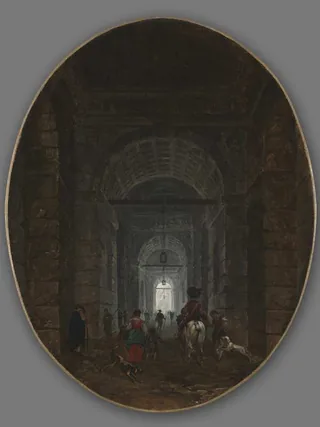
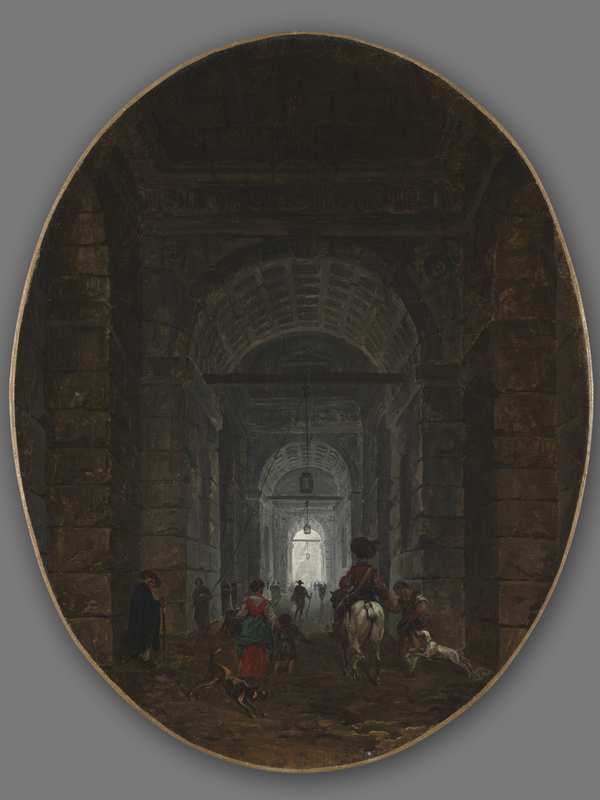
Hubert Robert, “The Grotto of Posillipo” (c. 1769). The Cleveland Museum of Art, CC0.
Cite this book
Copy a citation in the style you need.
- MLA
- Ignatius of Antioch. The Epistles of Ignatius and His Life's Story. 108. Ochorus, https://ochorus.com/books/epistles-of-ignatius/.
- Chicago
- Ignatius of Antioch. The Epistles of Ignatius and His Life's Story. 108. Reprint, Ochorus. https://ochorus.com/books/epistles-of-ignatius/.
- Chicago footnote
- Ignatius of Antioch, The Epistles of Ignatius and His Life's Story (108; repr., Ochorus), https://ochorus.com/books/epistles-of-ignatius/.
- BibTeX
- @book{ignatiusofantioch108epistles, author = {Ignatius of Antioch}, title = {{The Epistles of Ignatius and His Life's Story}}, year = {108}, publisher = {Ochorus}, url = {https://ochorus.com/books/epistles-of-ignatius/} }