

- 4 chapters
- 1 hr 18 min read
- Moderate Reading difficulty
Free to read·No account needed
Introductory
Taking books where there’s no signal? See Ochorus for missionaries or chaplains
About this book
Hudson Taylor’s exposition of Numbers 6 and 7 — the Nazarite’s separation to God, the threefold priestly blessing, and the princes’ freewill offerings — read as a pattern of consecration, blessing, and “princely service.” Written by the founder of the China Inland Mission, it turns two easily-skipped chapters of the law into a searching study of belonging wholly to God.
The first twenty-one verses of Numb. vi. give us an account of the institution and ordinances of the order of Nazarites. And let us note at the outset that this institution, like every other good and perfect gift, came from above; that God Himself gave this privilege—unasked—to His people; thereby showing His desire that "whosoever will" of His people may be brought into closest relationship…
Contents
Questions and Answers
What is Separation and Service about?
It is Hudson Taylor's exposition of Numbers 6 and 7 — the Nazarite's separation to God, the threefold priestly blessing, and the princes' freewill offerings — read as a pattern of the consecrated life. Taylor draws from these chapters three movements: separation to God, the blessing that flows from it, and the glad, princely service that follows, turning an ancient ritual into a picture of Christian devotion.
Who was Hudson Taylor?
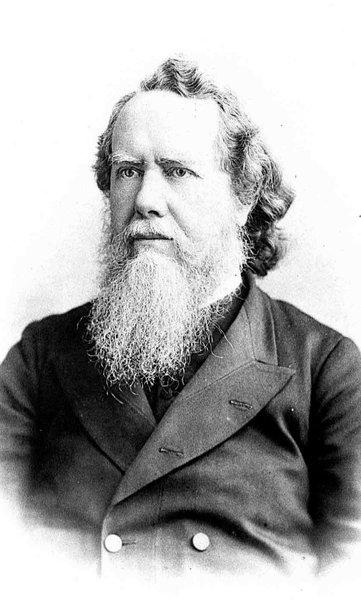
James Hudson Taylor was the founder of the China Inland Mission and one of the most influential missionaries of the nineteenth century, who gave his life to reaching inland China. Alongside his labours he was a man of deep devotion, and this little book, like his Union and Communion, opens a window onto the inner life of consecration that sustained his work.
What does 'separation' mean in the book?
It draws on the Nazarite vow of Numbers 6 — a voluntary setting-apart of oneself wholly to God. Taylor reads it not as a gloomy withdrawal but as a glad consecration: the believer separated from what would hinder and separated unto the Lord himself. Separation, in his hands, is the first movement of a devoted life, the giving of oneself entirely to God.
What is the 'threefold blessing' Taylor expounds?
The priestly blessing of Numbers 6:24-26 — 'The Lord bless thee and keep thee; the Lord make his face shine upon thee and be gracious unto thee; the Lord lift up his countenance upon thee and give thee peace.' Taylor takes it as the blessing that flows to the consecrated soul, tracing its rising notes from being kept, to grace, to peace, as the portion of those set apart to God.
What is 'princely service'?
The phrase comes from the offerings of the princes in Numbers 7, who brought their gifts freely and gladly. Taylor uses it for the service that springs from consecration and blessing — not grudging duty but the willing, generous giving of oneself and one's substance to God, the natural overflow of a heart that has been separated to him and blessed by him.
Is this a missionary book?
Not in subject, but it comes from the heart of a missionary. It is a devotional exposition about consecration, and it reveals the springs of Taylor's own life of sacrifice — a separation to God and a glad service that underlay his mission. Readers often value it as a glimpse of the inner devotion behind the outward work.
Who will find this book helpful?
Any Christian seeking a deeper consecration, or wanting to understand what it means to give oneself wholly to God. Taylor writes simply and warmly, and the movement of the book — separation, blessing, service — offers a clear pattern for anyone who longs to move beyond ordinary Christian living into whole-hearted devotion.
Where should a reader begin?
At the beginning, following Taylor's three movements in order: separation to God, the blessing that flows from it, and the princely service that follows. The book is brief and devotional, meant to be read slowly and prayerfully, and it builds a single picture of the consecrated life from the chapters of Numbers it expounds.
Read in your language
More like this


Sanford Robinson Gifford, “Autumn, a Wood Path” (1876). The Cleveland Museum of Art, CC0.
Cite this book
Copy a citation in the style you need.
- MLA
- Taylor, Hudson. Separation and Service. Ochorus, https://ochorus.com/books/separation-and-service/.
- Chicago
- Taylor, Hudson. Separation and Service. Ochorus. https://ochorus.com/books/separation-and-service/.
- Chicago footnote
- Hudson Taylor, Separation and Service (Ochorus), https://ochorus.com/books/separation-and-service/.
- BibTeX
- @book{taylorseparation, author = {Taylor, Hudson}, title = {{Separation and Service}}, publisher = {Ochorus}, url = {https://ochorus.com/books/separation-and-service/} }