New to Clement of Rome? Start with
The First Epistle of Clement to the Corinthians
All works · 1 hr 1 min read
Biography
- 35 Born
- 95 Letter
- 99 Died
Moreover, ye were all distinguished by humility, and were in no respect puffed up with pride, but yielded obedience rather than extorted it, and were more willing to give than to receive. Thus a profound and abundant…
Of all the writers in this library, Clement of Rome is the one we know least and owe most. He stands at the very hinge of the church's story, in the generation that had to learn how to be Christian without the apostles alive to ask. He wrote one letter. It survived. And because it survived we can hear, in ordinary Greek, what a pastor in Rome thought worth saying to a divided congregation while some of the men who had walked with Peter and Paul were still living.
Almost everything else about him is contested, and honesty requires saying so plainly. Irenaeus, writing around AD 180, lists him as the third to hold the office of oversight in Rome after the apostles, following Linus and Anacletus, and says that Clement had seen the blessed apostles and conferred with them. Origen and later writers identified him with the Clement whom Paul names as a fellow worker in Philippians 4:3, whose name is in the book of life. That identification is old and it is attractive, and it cannot be proved. Other traditions made him a freedman of the imperial household, or confused him with the consul Titus Flavius Clemens whom Domitian executed. The letter itself names no author at all. It is sent from the Church of God which sojourns at Rome to the Church of God sojourning at Corinth, in the plural voice of a congregation rather than the singular voice of a bishop. It was the church at Corinth, and then Dionysius of Corinth a lifetime later, who called it Clement's.
What is not contested is the occasion. Some time around AD 95 or 96, word reached Rome that the church in Corinth had done something extraordinary: it had deposed its presbyters. These were men of blameless conduct, Clement says, who had ministered faithfully and given no cause. A younger faction had simply pushed them out. Forty years after Paul had written to the same city about factions and parties, the same city was tearing itself apart again over the same thing.
The letter
Clement does not begin by scolding. He begins by remembering them at their best, and the remembering is so warm that it hurts:
Moreover, ye were all distinguished by humility, and were in no respect puffed up with pride, but yielded obedience rather than extorted it, and were more willing to give than to receive. Thus a profound and abundant peace was given to you all, and ye had an insatiable desire for doing good.
— Clement of Rome, to the Corinthians, chapter 2
Then he names the disease. He calls it jealousy, or envy, and he traces it through the whole of Scripture like a physician tracing an infection: Cain against Abel, Esau against Jacob, Joseph's brothers, Saul against David, and then, terribly and recently, envy in the church itself. In the fifth chapter he turns to his own generation, and gives us the earliest account outside the New Testament of the deaths of Peter and Paul, describing Paul as having reached the limits of the west before his witness before the rulers. He goes on to a great multitude of the elect who, having through envy endured many indignities and tortures, furnished us with a most excellent example. He is writing in a city that has recently watched Christians die, and he is telling a church that its quarrel over which men should serve at the table belongs to the same family of sins as the malice that killed them.
His remedy is not clever. It is order, humility, and love. He points to the ranks of an army, to the harmony of the body, to the seasons that keep their appointed order without complaint, to the sea that does not pass its bounds. He points, at length and with evident delight, to the resurrection, which he argues from day following night, from the sown seed that dissolves before it rises, and from the story of the phoenix, which he plainly believed to be a bird that lived in Arabia. That last argument has embarrassed his readers for nineteen centuries, and it is worth leaving in view: the earliest Christian letter we possess outside the New Testament reasons from natural history that was simply wrong, in the service of a hope that was not. The man is not infallible. He is faithful.
Then, near the end, he writes on love, and the prose lifts:
Who can describe the bond of the love of God? The height to which love exalts is unspeakable. Love unites us to God. Love covers a multitude of sins. There is nothing base, nothing arrogant in love. Love admits of no schisms: love gives rise to no seditions: love does all things in harmony.
— Clement of Rome, to the Corinthians, chapter 49
And he asks the men at the centre of the quarrel to do the hardest thing in the letter: to leave. Whoever among you is noble-minded, he writes, let him say, if it is on my account that sedition and disagreement have arisen, I will go away, only let the flock of Christ live in peace. It is a request nobody could enforce from six hundred miles away. He asks it anyway.
The prayer
The letter closes in prayer, and the prayer is the reason many readers who came for the history stay for the man. He prays for the sick, the fallen, the fainthearted, the hungry, the imprisoned; and then, astonishingly for a Christian writing while Rome was killing Christians, he prays at length for the emperor and the governing authorities, that God would direct their counsel toward what is good.
There is a strange and moving story attached to that prayer. The only manuscript known to Europe for centuries was the great fifth-century Codex Alexandrinus, and a whole leaf of it had been lost. For hundreds of years readers came to the end of chapter 57 and fell into a hole; the long intercession was known only to have existed. Then in 1873 a Greek metropolitan, Philotheos Bryennios, found a complete copy in a library in Constantinople, and the church got its oldest surviving prayer back. Older translations, including the one this library will use, still carry the gap where the leaf was lost.
What came of it
That is the measure of the man. He had no authority in Corinth that Corinth was obliged to recognise, no office anyone could have defined for him, and no weapon but Scripture, patience, and the memory of what that church had once been. He used them, and a congregation that had thrown out its elders sat down again and listened. Some churches went on reading the letter beside the Gospels for two hundred years; a few ancient manuscripts of the New Testament bind it in.
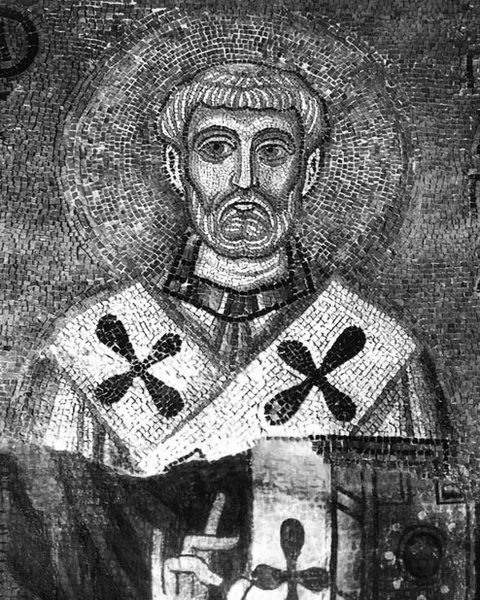
Of his death, nothing reliable is known. The stories that he was exiled to the Crimea, set to work in the marble quarries, and drowned with an anchor about his neck belong to a much later legend, and the anchor that appears beside him in art comes from that legend rather than from any early record. It is a small irony that a man who wrote so plainly about the danger of exalting oneself should have been given, centuries on, a martyrdom he probably did not have. The letter needs no embellishment. It is the sound of the church, in its second generation, discovering that the gospel would have to be lived out in the unglamorous work of keeping the peace, and choosing to do it.
Why he is worth reading
There is a particular comfort in Clement for anyone who has watched a church quarrel. He does not treat the Corinthian collapse as a scandal that disqualifies the gospel. He treats it as an illness with a known cause and a known cure, and he writes as a man who fully expects the cure to work. He assumes that ordinary Christians can be reasoned with from Scripture, that pride can be repented of, that a congregation which has behaved disgracefully can be spoken to with respect. Nothing in the letter is cynical.
His voice is also, quietly, the voice of a man who prays. The letter is stitched through with Old Testament quotation the way a life is stitched through with habit; he does not reach for the Scriptures to win an argument so much as think in them by reflex. And when he has finished arguing, he does not close with a flourish. He closes on his knees, praying for the sick and the imprisoned and the emperor who may well have been killing his friends. Whatever else is uncertain about Clement of Rome, the letter tells us what he did with his mornings.
Clement of Rome died around the end of the first century; reference works conventionally date him from about AD 35 to about AD 99, though neither end of that span rests on solid evidence and the dates beside his name here should be read as the tradition's best estimate rather than as record. He left one letter, one prayer, and a church at Corinth that stopped fighting.
Books by Clement of Rome (1)
Articles about Clement of Rome (1)
Questions and Answers
Who was Clement of Rome?
Clement led the church at Rome in the generation after the apostles — the generation that had to learn how to be Christian without the apostles alive to ask. Irenaeus, writing around AD 180, lists him as the third to hold the office of oversight at Rome after the apostles, following Linus and Anacletus, and says Clement had seen the blessed apostles and conferred with them. Of all the writers in this library he is the one we know least and owe most.
What is his one surviving work?
It is a single letter, sent around AD 96 from the church at Rome to the church at Corinth — the earliest Christian document to survive outside the New Testament. The letter names no author at all; it is sent in the plural voice of a congregation rather than the singular voice of a bishop, and it was the Corinthians, and later Dionysius of Corinth, who called it Clement's. Because it survived, we can hear what a pastor in Rome thought worth saying to a divided church while some who had walked with Peter and Paul were still living.
What was the occasion of the letter?
Word had reached Rome that the church in Corinth had done something extraordinary: it had deposed its presbyters — men of blameless conduct who had ministered faithfully and given no cause, whom a younger faction had simply pushed out. Some forty years after Paul had written to the same city about its factions and parties, Corinth was tearing itself apart again over the same thing, and Clement wrote to call it back.
How does he diagnose the trouble?
He does not begin by scolding; he begins by remembering the Corinthians at their best, warmly enough to hurt. Then he names the disease — jealousy, or envy — and traces it through the whole of Scripture like a physician following an infection: Cain against Abel, Esau against Jacob, Joseph's brothers, Saul against David, and then, terribly and recently, envy in the church itself, of the same family of sins as the malice that had killed Peter and Paul.
What does he tell us about Peter and Paul?
In the fifth chapter Clement turns to his own generation and gives the earliest account outside the New Testament of the deaths of Peter and Paul, describing Paul as having reached the limits of the west before his witness before the rulers. He adds that a great multitude of the elect, having through envy endured many indignities and tortures, furnished the church with a most excellent example — writing in a city that had recently watched Christians die.
What was his remedy for the quarrel?
It was not clever: order, humility and love. He points to the ranks of an army, the harmony of the body, the seasons that keep their appointed order and the sea that does not pass its bounds, and he writes a great passage on love — "Love covers a multitude of sins... Love admits of no schisms." Then he asks the men at the centre of the quarrel to do the hardest thing: to leave, if the strife is on their account, so that the flock of Christ may live in peace.
What is the phoenix argument?
Arguing for the resurrection, Clement reasons from day following night, from the sown seed that dissolves before it rises, and from the story of the phoenix, which he plainly believed to be a bird that lived in Arabia. That last argument has embarrassed his readers for nineteen centuries, and it is worth leaving in view: the earliest Christian letter outside the New Testament reasons from natural history that was simply wrong, in the service of a hope that was not. The man is not infallible; he is faithful.
How does the letter end?
It closes in prayer, and the prayer is why many who came for the history stay for the man. He prays for the sick, the fallen, the fainthearted, the hungry and the imprisoned — and then, astonishingly for a Christian writing while Rome was killing Christians, he prays at length for the emperor and the governing authorities, that God would direct their counsel toward what is good. Whatever else is uncertain about Clement, the letter tells us what he did with his mornings.
How was the lost part of the letter recovered?
For centuries the only manuscript known to Europe was the fifth-century Codex Alexandrinus, and a whole leaf of it had been lost; readers came to the end of chapter 57 and fell into a hole, so the long intercession was known only to have existed. Then in 1873 a Greek metropolitan, Philotheos Bryennios, found a complete copy in a library in Constantinople, and the church got its oldest surviving prayer back.
Why is Clement worth reading?
Around AD 170 Dionysius of Corinth wrote that Clement's letter was still being read aloud in the Corinthian assembly on the Lord's Day, three generations after the quarrel it settled had been forgotten — the measure of the man. There is a particular comfort in him for anyone who has watched a church quarrel: he treats the collapse not as a scandal that disqualifies the gospel but as an illness with a known cause and a known cure, and writes as a man who fully expects the cure to work.