
Book
The Treatises of Cyprian
On the Lord's Prayer, the Mortality, Works and Alms, and More
Cyprian of Carthage · 200–258
- 12 chapters
- 9 hr 57 min read
- Moderate Reading difficulty
Free to read·No account needed
On the Unity of the Church
Taking books where there’s no signal? See Ochorus for missionaries or chaplains
About this book
The pastoral writings of the bishop-martyr of Carthage. Cyprian led the North African church through plague and persecution in the third century, and these treatises show why he was so loved: a tender exposition of the Lord's Prayer, a steadying word on facing death in <em>On the Mortality</em>, a plea for generosity in <em>On Works and Alms</em>, and searching counsel on unity, patience, and envy. Plain, warm, and bracing — the voice of a shepherd who would soon give his own life for the flock.
Argument.—On the Occasion of the Schism of Novatian, to Keep Back from Him the Carthaginians, Who Already Were Not Averse to Him, on Account of Novatus and Some Other Presbyters of His Church, Who Had Originated the Whole Disturbance, Cyprian Wrote This Treatise.
Contents
- 1 On the Unity of the Church 39 min
- 2 On the Dress of Virgins 32 min
- 3 On the Lapsed 48 min
- 4 On the Lord's Prayer 47 min
- 5 An Address to Demetrianus 36 min
- 6 On the Vanity of Idols 15 min
- 7 On the Mortality 31 min
- 8 On Works and Alms 37 min
- 9 On the Advantage of Patience 32 min
- 10 On Jealousy and Envy 23 min
- 11 Exhortation to Martyrdom, Addressed to Fortunatus 48 min
- 12 Three Books of Testimonies Against the Jews 208 min
Questions and Answers
What are The Treatises of Cyprian about?
They are the pastoral writings of Cyprian, the bishop-martyr of Carthage, who led the North African church through plague and persecution in the third century. The treatises show why he was so loved: a tender exposition of the Lord's Prayer, counsel on patience, works of mercy, the unity of the church, and how to stand firm under persecution — the wisdom of a pastor caring for his flock in a time of crisis.
Who was Cyprian of Carthage?
Cyprian was the bishop of Carthage in the mid-third century, a converted teacher of rhetoric who became one of the most important early Latin church leaders. He shepherded his church through a fierce persecution and a devastating plague, and finally died a martyr himself, and these treatises reflect the pastoral heart and practical wisdom for which he was revered.
What subjects do the treatises cover?
A wide range of pastoral concerns: an exposition of the Lord's Prayer, the value of patience, the importance of works of mercy and almsgiving, the unity of the church, the danger of jealousy and envy, and how Christians should face mortality and persecution. Each addresses a real need of his people, offering practical and spiritual counsel.
What did Cyprian teach about the unity of the church?
That the church is one, and that believers must hold together in unity under their bishops rather than splitting into factions or schisms. Cyprian wrote On the Unity of the Church during controversies over how to treat those who had lapsed under persecution, insisting that division was a grave danger and that there is no salvation apart from the one, united church.
How did the plague and persecution shape his writings?
Deeply. Cyprian wrote to strengthen Christians facing death — whether by the sword of persecution or by the ravages of a great plague — teaching them to face mortality with faith and hope, to care for the sick and dying, and to stand firm rather than deny Christ. His counsel is that of a pastor guiding his flock through fear and suffering toward steadfastness.
What is his treatise on the Lord's Prayer like?
It is a tender, practical exposition, walking through the prayer Jesus taught petition by petition and drawing out its meaning for the Christian's life of prayer and obedience. One of the earliest such expositions, it reveals Cyprian's warm pastoral heart, teaching his people not only what to pray but how to live in keeping with the prayer they offer.
Who should read these treatises?
Anyone interested in the early church, in Christian responses to plague and persecution, or in warm, practical pastoral writing from the age of the martyrs. Cyprian's counsel on prayer, patience, mercy, unity, and steadfastness under trial remains strikingly relevant, and offers a vivid window onto the faith of the third-century church.
Where should a reader begin?
With whichever treatise meets a present interest or need, since each is a self-contained work — the exposition of the Lord's Prayer is a warm and accessible place to start. Read singly and reflectively, the treatises reveal both the pastoral heart of Cyprian and the concerns of a church living faithfully under the shadow of death.
Read in your language
About the author
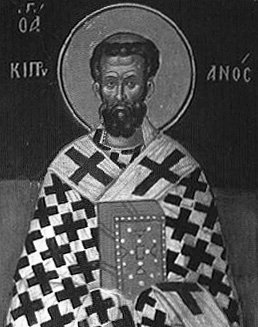
Cyprian of Carthage
The Treatises of Cyprian · 250
More like this

Public domain. Source text from the original edition.
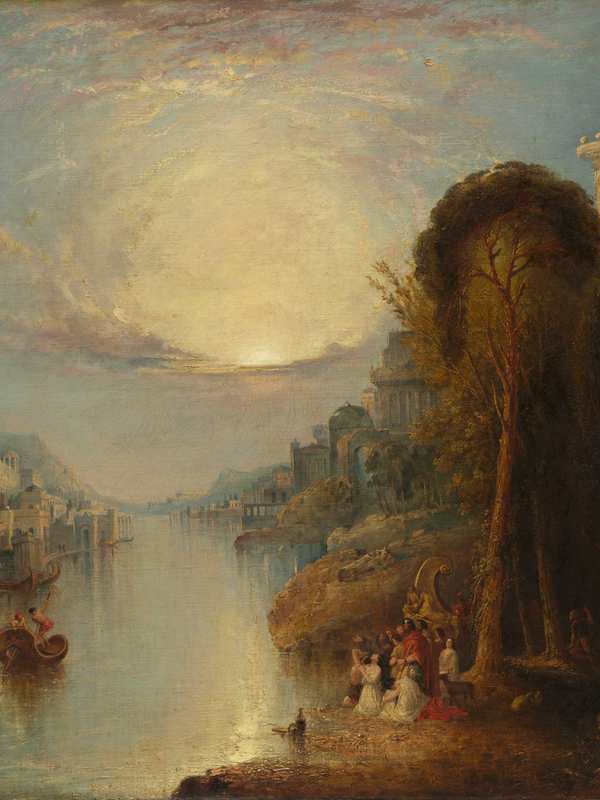
William Linton, “Carthage” (c. 1830). The Cleveland Museum of Art, CC0.
Cite this book
Copy a citation in the style you need.
- MLA
- Cyprian of Carthage. The Treatises of Cyprian. 250. Ochorus, https://ochorus.com/books/treatises-of-cyprian/.
- Chicago
- Cyprian of Carthage. The Treatises of Cyprian. 250. Reprint, Ochorus. https://ochorus.com/books/treatises-of-cyprian/.
- Chicago footnote
- Cyprian of Carthage, The Treatises of Cyprian (250; repr., Ochorus), https://ochorus.com/books/treatises-of-cyprian/.
- BibTeX
- @book{cyprianofcarthage250treatises, author = {Cyprian of Carthage}, title = {{The Treatises of Cyprian}}, year = {250}, publisher = {Ochorus}, url = {https://ochorus.com/books/treatises-of-cyprian/} }