

- 11 chapters
- 3 hr 21 min read
- Accessible Reading difficulty
Free to read·No account needed
Extract from the Preface
Taking books where there’s no signal? See Ochorus for missionaries or chaplains
About this book
An exposition of one verse — “all things work together for good to them that love God” — taken slowly enough to be worth something. Watson divides it into the best things working for good and the worst things working for good, and it is the second half that people remember: affliction, temptation, desertion and even sin's remainder pressed into service.
He published it in 1663 under the title A Divine Cordial. The year before, the Act of Uniformity had put some two thousand ministers out of their pulpits, Watson among them. A book arguing that all things work for good to those who love God is a different book when its author has just lost his living for refusing to sign, and his examples of affliction are not hypothetical.
The first half is not filler. Watson works through the best things — the attributes of God, the promises, the intercession of Christ, the ministry of angels, the communion of saints — and the effect of taking them slowly is that the second half lands on someone who has already been reminded what is on their side. He also insists on the verse's second clause: the promise is made to those who love God, and he spends a chapter asking how a person would know.
Watson is the most quotable of the Puritans — short sentences, hard images, no padding. If the length of the others has put you off, start here.
WE shall consider, first, what things work for good to the godly; and here we shall show that both the best things and the worst things work for their good. We begin with the best things. 1. God’s attributes work for good to the godly.
Contents
- 1 Extract from the Preface 1 min
- 2 Introduction 4 min
- 3 The best things work for good to the godly 20 min
- 4 The worst things work for good to the godly 48 min
- 5 Why all things work for good 24 min
- 6 Of love to God 13 min
- 7 The tests of love to God 24 min
- 8 An exhortation to love God 29 min
- 9 Effectual calling 26 min
- 10 Exhortations to those who are called 8 min
- 11 Concerning God’s purpose 5 min
Questions and Answers
What is All Things for Good about?
It is Thomas Watson's unhurried exposition of one verse — Romans 8:28, that all things work together for good to those who love God. Watson divides it into the best things that work for the believer's good and the worst things that work for good, and it is the second half that readers remember: how affliction, temptation, desertion, and even the remainder of sin are pressed into service for those who love God.
Who was Thomas Watson, and when did he write it?
Watson was a Puritan pastor in London who published this in 1663 under the title A Divine Cordial. The timing matters: the year before, the Act of Uniformity had ejected some two thousand ministers from their pulpits, Watson among them. A book arguing that all things work for good is a very different book when its author has just lost his living for conscience' sake.
How can the 'worst things' work for good?
This is Watson's boldest section. He argues that God so overrules affliction that it purifies, humbles, and weans the believer from the world; that temptation drives one to prayer and watchfulness; that God's felt withdrawal makes the soul prize his presence; and that even the believer's remaining sin, painful as it is, works humility and dependence. None of these are good in themselves — but to those who love God, all of them are made to serve.
What does the verse require of the reader?
Watson is careful with the text's condition: the promise is not to everyone, but to those who love God and are called according to his purpose. So the book spends real care on what it means to love God and on the marks of effectual calling — because the comfort of Romans 8:28 belongs only to those who can claim its terms, and Watson will not offer it more widely than the verse does.
Is this a book only for people in suffering?
It is especially for them, but not only. Watson writes to steady the believer before the trial as much as within it, so that the truth is settled in the mind before it is needed. Written by a man who had just suffered for his convictions, it carries the authority of one who is prescribing a cordial he has taken himself.
What is a 'Divine Cordial'?
A cordial, in the older sense, is a medicine that revives and strengthens the heart. Watson called the book A Divine Cordial because that is what he meant it to be — a reviving draught for fainting Christians, drawn from the promise of Romans 8:28, to be taken when the heart is sinking under affliction.
How does the book relate to God's providence?
Its whole argument rests on providence: that behind every event in a believer's life stands a God who is both sovereign and good, working all of it — pleasant and bitter alike — toward one end. Watson's confidence is not that circumstances are good, but that the God who governs them is, and that he never loses control of the worst that befalls his own.
Where should a reader begin?
At the beginning; it is short and moves in order. Watson first shows the best things working for good, then the worst, then examines the two characters named in the verse — those who love God and the called. Many readers find the section on how the worst things work for good the most striking, and return to it in seasons of trouble.
Read in your language
More like this


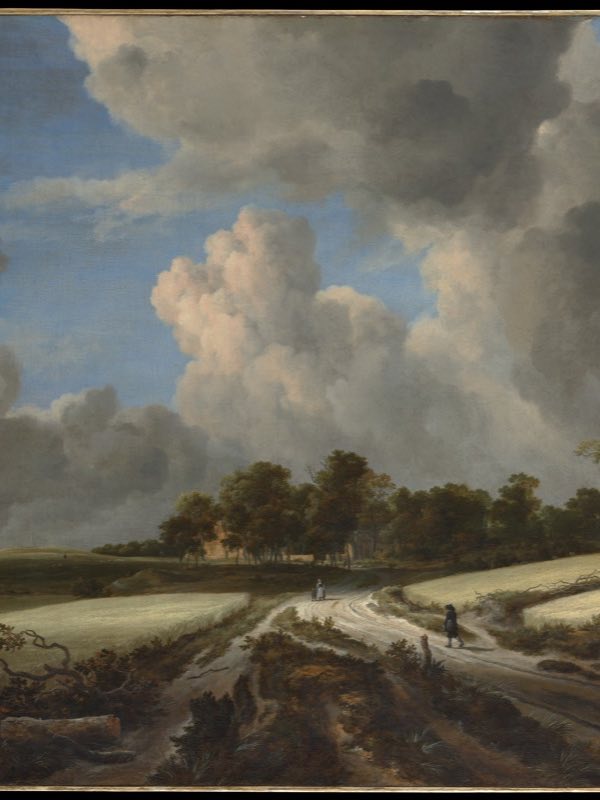



Simon de Vlieger, “Sleeping Peasants near Fields (Parable of the Weeds)” (1650–53). The Cleveland Museum of Art, CC0.
Cite this book
Copy a citation in the style you need.
- MLA
- Watson, Thomas. All Things for Good. 1663. Ochorus, https://ochorus.com/books/all-things-for-good/.
- Chicago
- Watson, Thomas. All Things for Good. 1663. Reprint, Ochorus. https://ochorus.com/books/all-things-for-good/.
- Chicago footnote
- Thomas Watson, All Things for Good (1663; repr., Ochorus), https://ochorus.com/books/all-things-for-good/.
- BibTeX
- @book{watson1663things, author = {Watson, Thomas}, title = {{All Things for Good}}, year = {1663}, publisher = {Ochorus}, url = {https://ochorus.com/books/all-things-for-good/} }