New to Thomas Watson? Start with
All Things for Good
All works · 27 hr 15 min read
Biography
- 1620 Born
- 1646 Walbrook
- 1651 Imprisoned
- 1662 Ejected
- 1672 Crosby House
- 1686 Died
I have now exercised my ministry among you for almost sixteen years; and I rejoice and bless God that I cannot say, the more I love you, the less I am loved: I have received many signal demonstrations of love from you.
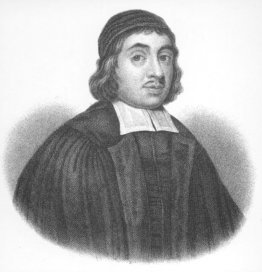
Some men are remembered for what they did; Thomas Watson is remembered for what he said. The record of his life is thin — we do not know for certain where or when he was born, and even the year of his death was long guessed at wrongly. What survives instead is his voice: warm, brief, startlingly vivid, a preacher who could put more into one sentence than most divines managed in a page. Three and a half centuries on, he is among the most widely read of all the Puritans, and almost everything we love him for is on paper.
A life thinly recorded
Watson was born around 1620 — the date is an estimate, and his birthplace is uncertain, though Yorkshire is often suggested. Of his parents, his childhood, and his conversion, we know essentially nothing. This is not the biographer’s failure but the plain state of the record; Charles Spurgeon, who edited Watson two hundred years later and hunted for details, concluded flatly that the time of his birth and of his death was “nowhere mentioned.”
He emerges into view at Emmanuel College, Cambridge — the great nursery of Puritanism, which, as one contemporary observed, bred more Puritans and Nonconformists than perhaps seven of the other colleges combined. He took his BA in 1639 and his MA in 1642, and left behind the reputation of a laborious student. That reputation is worth pausing over. The compression and ease of his later writing — the sense that he is talking to you rather than lecturing — was not the fruit of a light mind. It was hard-won learning worn lightly, Hebrew and Greek and the church fathers digested until they came out as plain English. For a time he lived in the household of Lady Mary Vere, widow of Sir Horace Vere, a well-known haven of Puritan piety.
Sixteen years at Walbrook
In 1646 Watson came to St Stephen’s, Walbrook, in the heart of the City of London, first as lecturer and afterwards as rector. He stayed nearly sixteen years, and the church was constantly full. Around 1647 he married Abigail Beadle, daughter of John Beadle, a Puritan minister of Essex; they had at least seven children within thirteen years, four of whom died young. That last detail is recorded in a single clause, and then the record closes over it — but a man who wrote so tenderly about affliction working for good had buried four of his own children before he wrote a line of it.
His hearers valued his preaching. His contemporaries, strikingly, valued his praying even more. Edmund Calamy, in his account of the ejected ministers, called him a man of considerable learning and a judicious preacher, and then singled out one gift above the rest: he was “eminent in the gift of prayer.” Calamy offered a story as proof.
The Tower, and a friend on the scaffold
Watson was a Presbyterian, and a royalist one. He protested against the execution of Charles I, and in 1651 he was drawn into the plot led by Christopher Love to bring in Charles II. He was imprisoned for it alongside Love and William Jenkyn. Love was beheaded. Watson petitioned for mercy and was released on 30 June 1652, and formally reinstated as vicar of St Stephen’s.
It is one of the sharper ironies of his life. The man who risked prison for the Stuart cause, and watched a friend die for it, would be turned out of his pulpit ten years later by the very king he had suffered to restore.
Black Bartholomew
The Act of Uniformity of 1662 required of ministers a conformity Watson could not give, and on 24 August — St Bartholomew’s Day — some two thousand were ejected from their livings. His loyalty counted for nothing. As Spurgeon put it, he had protested against the King’s execution and joined Love’s plot to bring in Charles II, “yet all this availed nothing, he was a Puritan”.
Three of his farewell sermons survive, preached to a congregation that knew it was losing him. In the second, on 2 Corinthians 7:1, he spoke of sixteen years among them with a candour that has not aged.
I have now exercised my ministry among you for almost sixteen years; and I rejoice and bless God that I cannot say, the more I love you, the less I am loved: I have received many signal demonstrations of love from you.
— Thomas Watson, Farewell Sermon at St Stephen’s, Walbrook (17 August 1662)
He would not promise to keep preaching to them, and would not promise to stop: “I desire to be guided by the silver thread of God’s word and providence.” Noting the Act’s language that ejected ministers should be as if naturally dead, he said that if he must die, he would leave them a legacy — and gave them twenty directions, urging them to treasure them “as so many jewels in the cabinet of your breasts.” Then, he told them, his strength was almost gone.
Preaching in the ruins
Ejected, Watson preached wherever he safely could — in barns, kitchens, outhouses, in dells and woods, to small illegal gatherings under threat of fine and imprisonment. Then in 1666 the Great Fire took the City, and St Stephen’s Walbrook with it. In the aftermath, with the parish churches burned, Watson and other Nonconformists fitted up large rooms for any who wished to come. There is something fitting in it: the man locked out of his church outlived the building, and went on preaching in its ruins.
Under the Declaration of Indulgence of 1672 he licensed the great hall of Crosby House in Bishopsgate Street, whose owner, Sir John Langham, favoured the Nonconformist cause. He preached there for several years, and from 1675 shared the pulpit with Stephen Charnock until Charnock’s death in 1680 — two of the finest minds of the age in one pastorate.
A cordial for hard times
In 1663, the year after he lost everything, Watson published A Divine Cordial — known now as All Things for Good — an exposition of Romans 8:28. It is worth remembering the timing. This is not comfort offered from a comfortable place; it is a newly silenced minister telling his people that the providence which had just wrecked his life was not out of control.
Several poisonous ingredients put together, being tempered by the skill of the apothecary, make a sovereign medicine, and work together for the good of the patient. So all God’s providences being divinely tempered and sanctified, do work together for the best to the saints.
— Thomas Watson, A Divine Cordial (1663)
That is Watson entire: a homely picture, exactly observed, carrying more weight than an argument. He never asks you to pretend the ingredients are not poison. He asks you to trust the apothecary.
God sweetens outward pain with inward peace. … After a bitter pill, God gives sugar. Paul had his prison songs. God’s rod has honey at the end of it.
— Thomas Watson, A Divine Cordial (1663)
On prayer — the gift his contemporaries marked in him — he was equally concrete. It is “a key that unlocks the treasury of God’s mercy”; it is “the Christian’s gun, which he discharges against his enemies”; it is “the sovereign medicine of the soul.” And, most simply: “Prayer keeps the heart open to God, and shut to sin.”
Barnston
His health at last gave way, and he retired to Barnston in Essex, his wife’s home country. He died there suddenly in 1686, and was buried on 28 July in the grave of John Beadle, his father-in-law.
The long afterlife
Watson’s greatest work appeared only after his death: A Body of Practical Divinity, one hundred and seventy-six sermons on the Westminster Shorter Catechism, published in 1692 with the attestation of twenty-five leading ministers. It became a people’s theology, found for generations in the cottages of Scottish peasants — a folio that taught the unlearned to think.
His reach ran further than he could have known. Philip Doddridge records that in July 1719, a dissolute young soldier named James Gardiner, killing an hour before a midnight assignation, idly opened a book his mother had slipped into his baggage — Watson’s The Christian Soldier; or, Heaven Taken by Storm. What Gardiner reported next — a blaze of light, a vision of Christ crucified, a voice asking “O sinner, did I suffer this for thee, and are these thy returns?” — belongs to Gardiner’s testimony rather than to Watson’s biography. But the ejected minister, thirty years in his grave, was still preaching.
Spurgeon, who did more than anyone to restore him, judged him “concise, racy, illustrative, and suggestive,” combining “sound doctrine, heart-searching experience and practical wisdom.” His college principal, George Rogers, put it more bluntly: “I know of no work with so much sermon matter within the same compass.” Where Owen and Howe and Charnock must be quarried, Watson hands you the stone already cut.
We cannot tell you where he was born, or how he came to Christ, or what he looked like across a table. The man is mostly gone. But open All Things for Good and he is entirely there — unhurried, affectionate, reaching for honey and rods and bitter pills, determined that you should not kill yourself with care. Of a life so poorly recorded, it is a strange mercy that the best of it survived.
Books by Thomas Watson (3)

Articles about Thomas Watson (2)
Questions and Answers
Who was Thomas Watson?
Thomas Watson was an English Nonconformist Puritan, lecturer and then rector of St Stephen's, Walbrook, in the heart of the City of London, ejected from his living in 1662. He is remembered for warm, brief, startlingly vivid devotional writing — a preacher who could put more into one sentence than most divines managed in a page — and three and a half centuries on he is among the most widely read of all the Puritans.
Why do we know so little about his life?
The record of his life is remarkably thin: he was born around 1620 (the date is only an estimate), his birthplace is uncertain, and of his parents, childhood and conversion we know essentially nothing. Even the year of his death was long guessed at wrongly. Charles Spurgeon, who edited him two centuries later and hunted for details, concluded flatly that the time of his birth and death was "nowhere mentioned." What survives instead is his voice.
What was his education?
He emerges into view at Emmanuel College, Cambridge — the great nursery of Puritanism — taking his BA in 1639 and his MA in 1642 and leaving the reputation of a laborious student. That is worth pausing over: the compression and ease of his later writing, the sense that he is talking to you rather than lecturing, was not the fruit of a light mind but hard-won learning worn lightly, Hebrew and Greek and the church fathers digested until they came out as plain English.
What was his ministry at Walbrook?
In 1646 Watson came to St Stephen's, Walbrook, first as lecturer and afterwards as rector, and stayed nearly sixteen years to a church that was constantly full. Around 1647 he married Abigail Beadle, daughter of a Puritan minister, and they had at least seven children within thirteen years, four of whom died young — a man who wrote so tenderly about affliction working for good had buried four of his own children before he wrote a line of it.
What was remarkable about his praying?
His hearers valued his preaching; his contemporaries valued his praying even more. Edmund Calamy called him "eminent in the gift of prayer," and told how Bishop Richardson, pleased with a sermon but moved far more by the prayer that followed, walked Watson home to ask for a written copy. "That is what I cannot give," Watson answered, "for I do not use to pen my prayers; it was no studied thing, but uttered, as God enabled me, from the abundance of my heart."
What did his royalist politics cost him?
Watson was a Presbyterian and a royalist one. He protested against the execution of Charles I and in 1651 was drawn into Christopher Love's plot to bring in Charles II, and was imprisoned for it alongside Love, who was beheaded. Watson petitioned for mercy and was released in 1652. It is one of the sharper ironies of his life that the man who risked prison for the Stuart cause would be turned out of his pulpit by the very king he had suffered to restore.
What happened to him in 1662?
The Act of Uniformity of 1662 required a conformity Watson could not give, and on 24 August — St Bartholomew's Day — some two thousand ministers were ejected from their livings. His loyalty counted for nothing; as Spurgeon put it, "yet all this availed nothing, he was a Puritan." Three of his farewell sermons survive; noting the Act's language that ejected ministers should be as if naturally dead, he left his people twenty directions, urging them to treasure them "as so many jewels in the cabinet of your breasts."
How did he go on preaching after his ejection?
Ejected, Watson preached wherever he safely could — in barns, kitchens, outhouses, and woods, to small illegal gatherings under threat of fine and imprisonment. When the Great Fire of 1666 took St Stephen's, he and other Nonconformists fitted up large rooms for any who would come. Under the 1672 Declaration of Indulgence he licensed the great hall of Crosby House and preached there for years, from 1675 sharing the pulpit with Stephen Charnock until Charnock's death in 1680.
What is "All Things for Good"?
Published in 1663 as "A Divine Cordial," the year after he lost everything, it is his exposition of Romans 8:28 — comfort offered not from a comfortable place but by a newly silenced minister telling his people that the providence which had wrecked his life was not out of control. Poisonous ingredients tempered by the apothecary's skill, he wrote, make a sovereign medicine; he never asks you to pretend the ingredients are not poison, only to trust the apothecary. "After a bitter pill, God gives sugar."
How did he die, and what became of his work?
His health failing, he retired to Barnston in Essex and died suddenly in 1686; tradition, though not eyewitness, holds that he was found dead in his closet at private prayer — the door closing on him mid-sentence, speaking to the God he had spent forty years commending to others. His greatest work appeared only after his death: "A Body of Practical Divinity," one hundred and seventy-six sermons on the Shorter Catechism, a people's theology that taught the unlearned to think.