Book
Grace Abounding to the Chief of Sinners
The Mercy of God in Christ to His Servant
Other titles: Grace Abounding
John Bunyan · 1628–1688
- 6 chapters
- 3 hr 40 min read
- Moderate Reading difficulty
Free to read·No account needed
Publisher’s Foreward
Taking books where there’s no signal? See Ochorus for missionaries or chaplains
Grow with the story

Reader’s guide
About this book
John Bunyan's account of his own conversion — the years of terror, doubt and half-heard verses that ran before The Pilgrim's Progress. Unsparing about despair, and one of the first books in English to describe an ordinary man's inner life from the inside.
1. In this my relation of the merciful working of God upon my soul, it will not be amiss, if, in the first place, I do, in a few words, give you a hint of my pedigree, and manner of bringing up; that thereby the goodness and bounty of God towards me, may be the more advanced and magnified before the sons of men.
Contents
- 1 Publisher’s Foreward 4 min
- 2 A Preface, or Brief Account of the Publishing of This Work 6 min
- 3 Grace Abounding to the Chief of Sinners; Or, a Brief Relation of the Exceeding Mercy of God in Christ, to His Poor Servant John Bunyan 166 min
- 4 A Brief Account of the Author’s Call to the Work of the Ministry 27 min
- 5 A Brief Account of the Author’s Imprisonment 14 min
- 6 Conclusion 3 min
Questions and Answers
What is Grace Abounding to the Chief of Sinners about?
It is John Bunyan's account of his own conversion — the long years of terror, doubt, and half-heard verses that ran before he wrote The Pilgrim's Progress. Unsparing about despair, it traces how grace laid hold of a tormented man, and it is one of the first books in English to describe an ordinary person's inner spiritual experience so closely.
Who was John Bunyan?
A seventeenth-century English tinker with little formal schooling who became a Puritan preacher and, after twelve years in Bedford jail for preaching without a licence, the author of The Pilgrim's Progress. Grace Abounding is his spiritual autobiography, the inside story of the conversion that lay behind his famous allegory.
Why is it subtitled 'the Chief of Sinners'?
Because Bunyan reckoned himself the worst case that grace had ever saved — echoing Paul's words in 1 Timothy that Christ came to save sinners, 'of whom I am chief.' The title is not false modesty but the settled conviction of a man overwhelmed that mercy had reached even him, and it frames the whole book as a testimony to grace's reach.
What kind of experience does Bunyan describe?
A long and stormy one — years of conviction, fear, and near-despair, in which particular Bible verses would either crush or comfort him, sometimes for weeks at a time. He records temptations, doubts about whether he had committed the unpardonable sin, and the slow, fitful dawning of assurance, with a psychological honesty rare for its age.
Why is the book historically important?
Because it is one of the earliest and most searching accounts in English of an ordinary man's inner spiritual life — a landmark of spiritual autobiography. Its close, honest tracing of doubt, terror, and grace influenced the whole tradition of Puritan and evangelical self-examination, and it gives readers a rare window into the making of the man who wrote Pilgrim's Progress.
Is Grace Abounding a discouraging book?
It is unsparing about despair, and Bunyan hides none of his darkness — but its whole point is the grace that proved greater. The title says it: grace abounding, reaching even the chief of sinners. For readers who have known their own doubts and fears, Bunyan's honesty is a comfort, and his deliverance a hope.
How does it relate to The Pilgrim's Progress?
Grace Abounding is the true, inward story behind the allegory. The burden, the terrors, the half-heard promises, and the final assurance that Bunyan describes here in his own life reappear, clothed as places and characters, in Christian's journey. Reading it deepens the allegory by showing the real experience from which it grew.
Where should a reader begin?
At the beginning, following Bunyan's story from his careless youth through his long struggle to assurance. It is a first-person narrative meant to be read in order, and read that way its record of grace laying hold of a despairing man becomes both a gripping account and, for many, a mirror of their own experience.
Read in your language
About the author
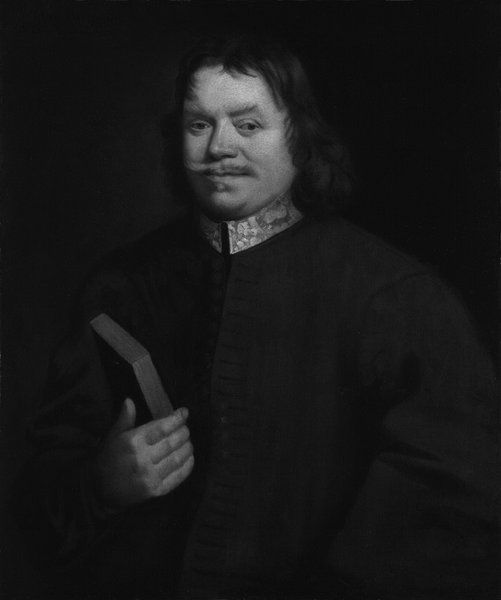
John Bunyan
Grace Abounding to the Chief of Sinners · 1666
More like this


Jacob van Ruisdael, “Wheat Fields” (ca. 1670). The Metropolitan Museum of Art, Open Access.
Cite this book
Copy a citation in the style you need.
- MLA
- Bunyan, John. Grace Abounding to the Chief of Sinners. 1666. Ochorus, https://ochorus.com/books/grace-abounding/.
- Chicago
- Bunyan, John. Grace Abounding to the Chief of Sinners. 1666. Reprint, Ochorus. https://ochorus.com/books/grace-abounding/.
- Chicago footnote
- John Bunyan, Grace Abounding to the Chief of Sinners (1666; repr., Ochorus), https://ochorus.com/books/grace-abounding/.
- BibTeX
- @book{bunyan1666grace, author = {Bunyan, John}, title = {{Grace Abounding to the Chief of Sinners}}, year = {1666}, publisher = {Ochorus}, url = {https://ochorus.com/books/grace-abounding/} }