
- 23 chapters
- 10 hr 39 min read
- Accessible Reading difficulty
Free to read·No account needed
Obedience
Taking books where there’s no signal? See Ochorus for missionaries or chaplains
Reader’s guide
About this book
Thomas Watson on the moral law — what each commandment forbids, what it requires, and how it drives a person to Christ. Part of his Body of Practical Divinity, delivered as catechism lectures to a London congregation in the years before the Great Ejection of 1662.
‘Take heed, and hearken, O Israel; this day thou art become the people of the Lord thy God. Thou shalt therefore obey the voice of the Lord thy God, and do his commandments.’ Deut 27: 9, 10. What is the duty which God requireth of man?
Contents
- 1 Obedience 14 min
- 2 1.2 Love 15 min
- 3 1.3 The Preface to the Commandments 86 min
- 4 1.4 The Right Understanding of the Law 11 min
- 5 2.1 The First Commandment 28 min
- 6 2.2 The Second Commandment 67 min
- 7 2.3 The Third Commandment 22 min
- 8 2.4 The Fourth Commandment 78 min
- 9 2.5 The Fifth Commandment 40 min
- 10 2.6 The Sixth Commandment 40 min
- 11 2.7 The Seventh Commandment 29 min
- 12 2.8 The Eighth Commandment 13 min
- 13 2.9 The Ninth Commandment 14 min
- 14 2.10 The Tenth Commandment 24 min
- 15 3.1 Man's Inability to keep the Moral Law 12 min
- 16 3.2 Degrees of Sin 14 min
- 17 3.3 The Wrath of God 14 min
- 18 4.1 Faith 15 min
- 19 4.2 Repentance 15 min
- 20 4.3 The Word 16 min
- 21 4.4 Baptism 14 min
- 22 4.5 The Lord's Supper 41 min
- 23 4.6 Prayer 16 min
Questions and Answers
What is Thomas Watson's The Ten Commandments about?
It is Thomas Watson's exposition of the moral law — taking each of the Ten Commandments in turn and showing what it forbids, what it requires, and how it drives a person to Christ. Part of his Body of Practical Divinity, it was delivered as catechism lectures to a London congregation and remains a searching, richly practical treatment of the commandments.
Who was Thomas Watson?
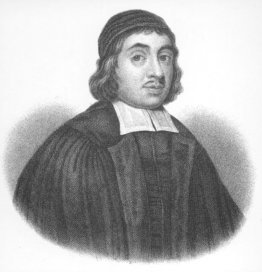
Thomas Watson was a Puritan pastor in London in the seventeenth century, ejected from his pulpit in 1662 for nonconformity, and one of the most quotable of the Puritan writers. His works on the catechism — including this one on the commandments — combine doctrinal soundness with vivid, memorable application, and have been treasured ever since.
How does Watson treat each commandment?
In the classic Puritan manner: for each commandment he shows both the sin it forbids and the duty it requires, since a command against one thing implies a command toward its opposite. So the commandment against stealing, for instance, also requires honesty and generosity. He then presses each home to the conscience with searching application.
Does Watson think we can keep the commandments?
No — and this is central to his purpose. Watson shows the law's height and our failure to reach it precisely so that the commandments will drive the reader to Christ. The law, in his hands, is a mirror that reveals sin and a schoolmaster that leads to the gospel; it cannot save, but it can expose our need of the Saviour who kept it for us.
Is the moral law still binding on Christians?
Watson, with the Puritan tradition, holds that the moral law summarized in the commandments remains the enduring standard of holiness for the believer — not as a way of salvation, which is by grace alone, but as the rule of a grateful, obedient life. The Christian is freed from the law's curse, he teaches, but not from its guidance.
What makes Watson's exposition memorable?
His gift for vivid, pithy application. Watson fills his lectures with striking images, homely comparisons, and searching questions that fasten the truth to the conscience. The doctrine is thorough but never dry; readers remember his phrases, and generations have found his treatment of the commandments both instructive and deeply convicting.
Who should read this book?
Any Christian wanting to understand the moral law deeply and to be searched by it, and anyone drawn to the practical, heart-searching divinity of the Puritans. It serves as both a doctrinal exposition of the commandments and a devotional work that examines the reader's own obedience and drives them repeatedly to Christ.
Where should a reader begin?
At the beginning, or with whichever commandment presses on the reader's own conscience, since Watson's treatment of each stands largely on its own. Read as part of his larger Body of Divinity it fits into a whole, but taken by itself it rewards slow, prayerful reading, one commandment at a time, letting each search the heart.
Read in your language
More like this




John Ruskin, “The Valley of Lauterbrunnen, Switzerland” (ca. 1866). The Metropolitan Museum of Art, Open Access.
Cite this book
Copy a citation in the style you need.
- MLA
- Watson, Thomas. The Ten Commandments. 1692. Ochorus, https://ochorus.com/books/ten-commandments/.
- Chicago
- Watson, Thomas. The Ten Commandments. 1692. Reprint, Ochorus. https://ochorus.com/books/ten-commandments/.
- Chicago footnote
- Thomas Watson, The Ten Commandments (1692; repr., Ochorus), https://ochorus.com/books/ten-commandments/.
- BibTeX
- @book{watson1692commandments, author = {Watson, Thomas}, title = {{The Ten Commandments}}, year = {1692}, publisher = {Ochorus}, url = {https://ochorus.com/books/ten-commandments/} }