New to Andrew Murray? Start with
The Inner Chamber
All works · 41 hr 15 min read
Biography
- 1828 Born
- 1848 Ordained
- 1860 Revival
- 1871 Wellington
- 1917 Died
Your son has been born again… I have cast myself on Christ.
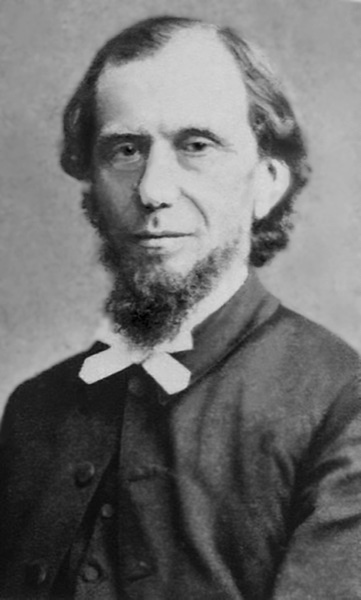
Andrew Murray was born on 9 May 1828 in Graaff-Reinet, a dusty frontier town in the Cape Colony, into a home already saturated with prayer. His father, a Scottish minister sent out by the Church of Scotland, kept a standing habit of reading revival accounts to his family and pleading, week after week, that God would pour out His Spirit upon South Africa. Andrew grew up hearing those petitions at the family altar, and though the answer would be long in coming, it would come through the son who knelt beside that father. His mother, Maria Susanna Stegmann, traced her blood to French Huguenot refugees and German Lutherans, so that in the boy's veins ran the memory of two peoples who had suffered for their faith.
A Boy Sent Across the Sea
At ten years old, in July 1838, Andrew and his elder brother John were sent across the ocean to Scotland to be schooled in Aberdeen, making the long voyage under the care of the Rev. and Mrs James Archbell and lodging with their uncle, the Rev. John Murray, who oversaw their training. It was a formidable thing to place two small boys on a ship for another hemisphere and not see them again for years, and the separation pressed on them. But Scotland gave as well as took. In the spring of 1840 the revivalist William C. Burns came to Aberdeen, and the boys saw at close range a man whose preaching and whole manner of life were given over to God; the impression Burns left on young Andrew became one of the shaping influences of his life. The brothers were caught up in the wake of the evangelical awakenings then stirring the land, breathing the same air as men like Robert Murray M'Cheyne and Horatius Bonar, and both took their degrees at Marischal College in Aberdeen in 1845. From there they went on to the University of Utrecht in the Netherlands to read theology, and fell in with Het Réveil, a Protestant revival movement that set itself against the cold rationalism of the Dutch church and prized conversion, inward piety, and experiential religion.
For all his devout upbringing, Murray did not presume upon his own religion. By his own account he had first aimed at the ministry as a respectable career rather than as an act of faith. It was during the Utrecht years that his own faith came to a settled assurance, and he wrote home of the change with the plainness of a man who knew the difference between inherited creed and personal surrender.
Your son has been born again… I have cast myself on Christ.
— Andrew Murray, in a letter to his parents from Utrecht
The change went deeper than a single decision; it became a lifelong thirst for the presence of God, caught in his own prayer that not a single moment of my life be spent outside the light, love, and joy of God's presence. On 9 May 1848, his twentieth birthday, he and his brother were ordained by the Hague Committee of the Dutch Reformed Church, and set their faces homeward to Africa.
A Ministry of the Saddle
His first charge was Bloemfontein, a parish that was less a town than a territory — some hundred thousand square miles of it, stretching beyond the Orange and Vaal Rivers. Installed in 1849 at barely twenty-one, he became the first settled minister north of the Orange River, responsible for scattered Voortrekker communities spread across immense and roadless distances. He rode for weeks at a stretch to reach lonely farms, baptising, catechising, marrying, burying, and preaching to people who might not see a minister again for a year; in one stretch of two consecutive years he baptised more than six hundred children. The trekkers came to trust the young minister with more than their souls, and he stood beside them as a friend and go-between in their negotiations for freedom from British rule. It was a ministry of the saddle and the open veld, and it taught him early that the work was God's and not his own.
On 2 July 1856 he married Emma Rutherford in Cape Town, a marriage of deep and durable affection that would give them eleven children, nine of whom lived to adulthood. Then, in 1860, came the hinge of his life. Murray accepted a call to Worcester, and there walked straight into the answer to his father's decades of prayer.
The Revival of 1860
The revival of 1860 did not begin with Murray. On a farm near Worcester, a handful of believers had been meeting weekly for months, pleading for an outpouring of the Spirit; one woman among them grew so burdened that she prayed almost without ceasing for a week. When the Spirit fell, it fell with a force that overturned all the ordinary decencies of a Dutch Reformed service. Murray himself, presiding at one such gathering, gave his careful instructions and invited the people to pray one at a time — and instead the whole assembly broke at once into simultaneous, weeping prayer for mercy. When Murray tried to restore order, one of the farmers told him plainly to stand back: no man could throw a dam wall around what God was doing. It was a lesson the ordered, cautious young minister took to heart. He learned to loosen his grip on the reins, and God used him to shepherd an awakening he could not have manufactured and dared not quench.
Out of that revival came Murray the writer. His pastoral care for the flood of new converts, his anxiety that their first love not cool into formality, drove him to write Abide in Christ — first in Dutch as Blijf in Jezus — and with it he found the vein he would work for the rest of his life. From Worcester he moved to Cape Town's Groote Kerk in 1864, standing there against the rising tide of theological liberalism, and in 1871 to Wellington, where he settled for the longest and most fruitful season of his ministry, thirty-five years in one pulpit.
Wellington and a Widening Vision
Wellington became the seedbed of his wider vision. His church knew his worth: six times over the years the Dutch Reformed Church in South Africa called him to serve as moderator of its Synod, and few men did more to turn that inward-looking body into a missionary church. Convinced that the church must turn outward, he laboured to found institutions that would outlast him. In 1874, inspired by the pioneering work of the American educator Mary Lyon, he established the Huguenot Seminary for the Christian education of women, recruiting its teachers from America; rooted in prayer, the school grew into the Huguenot University College and lives on today as Huguenot College, still training Christian workers and social leaders. As a member of his church's foreign missions committee he raised the funds to found three societies at Wellington in 1877 — the Ministers' Missionary Union, the Bible and Prayer Union, and the Layman's Mission League — and in 1889, with Martha Osborn and Spencer Walton, he helped form the South African General Mission, a work that outlived them all, becoming the Africa Evangelical Fellowship in 1965 and folding into SIM International in 1998.
His pen never rested. By the end he had produced more than 240 books, testimonies, and sermons — on prayer above every other theme, but also on the confession of sin, on knowing the will of God, on daily fellowship with God, on Christian victory — written in English and Dutch and translated into more than fifteen languages, until his quiet Afrikaans devotion was being read on every continent. His best writing grew out of the preacher's eye for a living illustration. In the summer of 1898 he acquired a brown vine stump, and out of long meditation on it wrote The Mystery of the True Vine, dedicating it to struggling Christians the world over; by the time it was published the old stump had taught him another lesson, and he wrote The Fruit of the Vine after it.
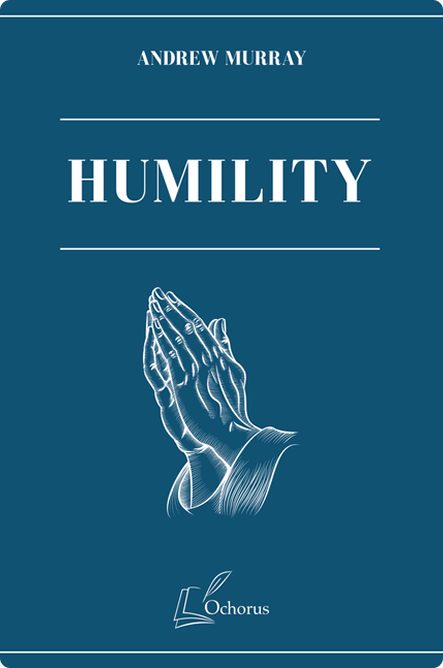
Humility, the place of entire dependence on God, is, from the very nature of things, the first duty and the highest virtue of the creature, and the root of every virtue.
— Andrew Murray, Humility
Trials and the Silent Years
His faith was not spared its trials, and he did not pretend otherwise. In 1879 his throat failed him; he lost his voice and entered what he called his “silent years,” two years in which the preacher could not preach. Even writing became a labour, so he dictated his meditations to his wife and daughter — and at the close of each one he would fold his hands, shut his eyes, and pray the final lines aloud before they were set down, so that his books ended where his heart did, in prayer. He sought out those who taught the theology of divine healing, and in 1882 travelled to a faith home in London, from which he returned convinced that healing belonged within Christ's redemptive work and restored to his pulpit. Yet he never made his healing a stick to beat the sick with, nor a rejection of ordinary care. Later, in 1893, a carriage accident in Natal left him with a permanently injured back and a bent frame; in his last decades he often preached seated, an old man folded over his infirmity but not silenced by it.
It was out of one such season of pain that he left the church its most beloved word of counsel. In 1895, resting in a friend's home in Wimbledon, in physical pain and stung the night before by a sharp letter attacking his teaching, he took up a pen and wrote a note not for publication but for his own soul.
First, He brought me here; it is by His will I am in this strait place: in that fact I will rest. Next, He will keep me here in His love, and give me grace to behave as His child. Then, He will make the trial a blessing, teaching me the lessons He intends me to learn, and working in me the grace He means to bestow. Last, In His good time He can bring me out again — how and when He knows.
— Andrew Murray, “In Time of Trouble Say,” written at Wimbledon, 1895
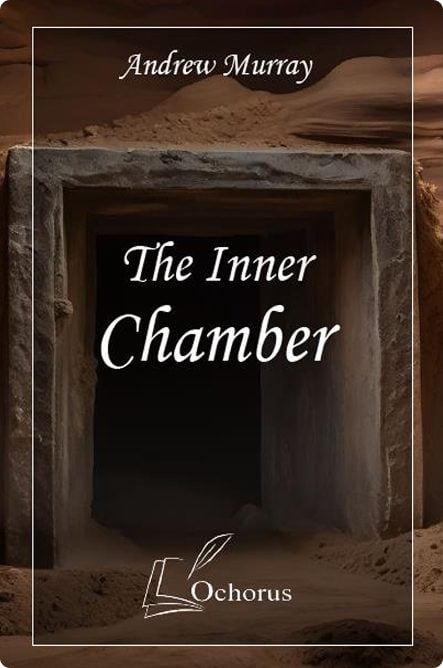
The Inner Chamber
The habit beneath all of it was prayer. Murray — called by some the leading student of Christ's school of prayer — taught that prayer is at once the simplest thing a child can do and the highest work to which a man can rise, and he practised what he taught, guarding the “inner chamber” of secret prayer as the source from which everything else flowed. He rose to meet God before he met men, and counselled others that to know how to speak to God is a greater thing than to know how to speak to man.
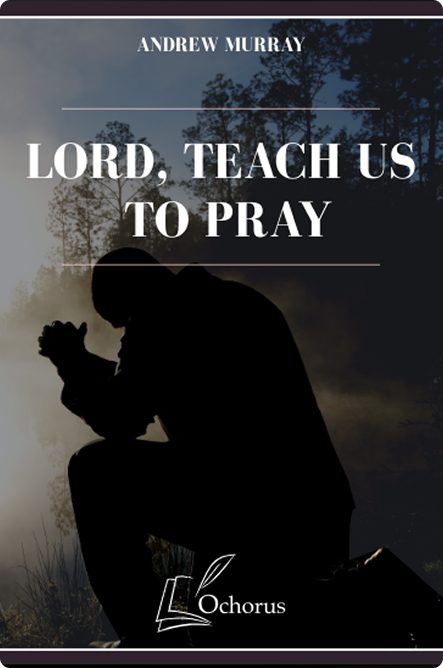
Though in its beginnings prayer is so simple that the feeble child can pray, it is at the same time the highest and holiest work to which man can rise.
— Andrew Murray, Lord, Teach Us To Pray
Legacy
Andrew Murray died at Wellington on 18 January 1917, in his eighty-ninth year, having outlived by more than half a century the revival that made him and having given the church a shelf of books that still teach believers to abide, to humble themselves, and to pray. His influence ran far beyond his own communion: readers as different as Watchman Nee in China and Jessie Penn-Lewis in Wales drew deeply from his teaching and carried it on into movements of their own. He never asked to be remembered as a great man; his own writing pressed relentlessly the opposite point — that the creature's glory is its nothingness, and that only the soul emptied of self leaves God free to be all. Statues stand to him in Wellington and outside the Groote Kerk in Cape Town, but the truer monument is the man on his knees, anywhere in the world, who opens one of Murray's little books and learns again to say, “Lord, teach us to pray.”
Books by Andrew Murray (14)


Books about Andrew Murray (1)
Also appears in
Articles about Andrew Murray (22)
Questions and Answers
Where did Andrew Murray come from, and what were his roots?
Andrew Murray was born on 9 May 1828 in Graaff-Reinet, a frontier town in South Africa's Cape Colony, into a devout Dutch Reformed household. His father was a Scottish minister sent out by the Church of Scotland who read revival accounts to his family and prayed for years that God would pour out His Spirit on South Africa. His mother, Maria Susanna Stegmann, descended from French Huguenot refugees and German Lutherans, so that two persecuted Protestant traditions met in his upbringing.
Where was Murray educated, and when did his own faith become his own?
At ten he and his elder brother John were sent across the sea to Scotland, schooling in Aberdeen and taking their degrees at Marischal College in 1845 before going on to the University of Utrecht in the Netherlands to read theology. In Aberdeen the revivalist William C. Burns made a deep impression on him, and at Utrecht he was drawn into Het Réveil, a Protestant revival movement set against the cold rationalism of the day. It was during the Utrecht years that his inherited religion became a personal surrender, and he wrote home, "Your son has been born again… I have cast myself on Christ."
What was his first pastorate like as a young minister?
Ordained in 1848 on his twentieth birthday, Murray took up his first charge at Bloemfontein in 1849, becoming the first settled minister north of the Orange River. His parish was less a town than a territory of roughly a hundred thousand square miles, and he rode for weeks at a stretch to reach lonely farms, baptising, marrying, catechising and burying. In one stretch of two consecutive years he baptised more than six hundred children.
What part did Murray play in the revival of 1860?
The awakening began before him, in a farm prayer meeting near Worcester where believers had pleaded for months for an outpouring of the Spirit. Presiding at one such gathering, the careful young minister gave orderly instructions, only for the whole assembly to break at once into simultaneous, weeping prayer for mercy; when he tried to restore order, a farmer told him plainly that no man could throw a dam wall around what God was doing. Murray took the lesson to heart, learning to shepherd an awakening he could neither manufacture nor quench.
How did Andrew Murray come to write so many books?
His writing grew straight out of the 1860 revival: anxious that the flood of new converts not let their first love cool into formality, he wrote Abide in Christ, first in Dutch as Blijf in Jezus. He found in it the vein he would work for the rest of his life, and by the end had produced more than 240 books, sermons and testimonies, translated into over fifteen languages. His best writing kept the preacher's eye for a living illustration, as when a brown vine stump he acquired in 1898 became The Mystery of the True Vine.
What did Murray teach about prayer and abiding in Christ?
Prayer was the discipline at the root of his whole life and the theme he returned to more than any other, and he guarded the "inner chamber" of secret prayer as the source from which everything else flowed. He held that prayer is at once the simplest thing a child can do and the highest work to which anyone can rise: "Though in its beginnings prayer is so simple that the feeble child can pray, it is at the same time the highest and holiest work to which man can rise." On humility, the companion note of that teaching, he wrote that it is "the first duty and the highest virtue of the creature, and the root of every virtue."
Is it true that Murray once lost his voice for two years?
It is. Around 1879 his throat failed him and he entered what he called his "silent years," some two years in which the preacher could not preach. Even writing was a labour, so he dictated meditations to his wife and daughter, and at the close of each he would fold his hands, shut his eyes and pray the final lines aloud before they were written down. He later sought out those who taught divine healing, travelled to a faith home in London in 1882, and returned to his pulpit convinced that healing belonged within Christ's redemptive work.
How did Murray meet his own seasons of pain and difficulty?
A carriage accident in Natal in 1893 left him with a permanently injured back and a bent frame, so that in his last decades he often preached seated, folded over his infirmity but not silenced by it. In 1895, resting in a friend's home in Wimbledon in physical pain and stung the night before by a sharp letter attacking his teaching, he took up a pen and wrote a private note for his own soul. It began, "First, He brought me here; it is by His will I am in this strait place: in that fact I will rest," and became one of the church's most beloved words of counsel in trouble.
What did Murray do for missions and Christian education?
Called six times to moderate the Synod of the Dutch Reformed Church in South Africa, he did much to turn an inward-looking body into a missionary church. In 1874, inspired by the American educator Mary Lyon, he founded the Huguenot Seminary for the Christian education of women at Wellington, a work that lives on today as Huguenot College. He also helped raise funds for missionary societies and, in 1889, joined Martha Osborn and Spencer Walton to form the South African General Mission, which long outlived them all.
How is Andrew Murray remembered?
Murray died at Wellington on 18 January 1917 in his eighty-ninth year, having outlived by more than half a century the revival that made him. His influence reached far beyond his own communion, drawing readers as different as Watchman Nee in China and Jessie Penn-Lewis in Wales. He never wished to be remembered as a great man; his own writing pressed the opposite point, that the soul emptied of self leaves God free to be all.