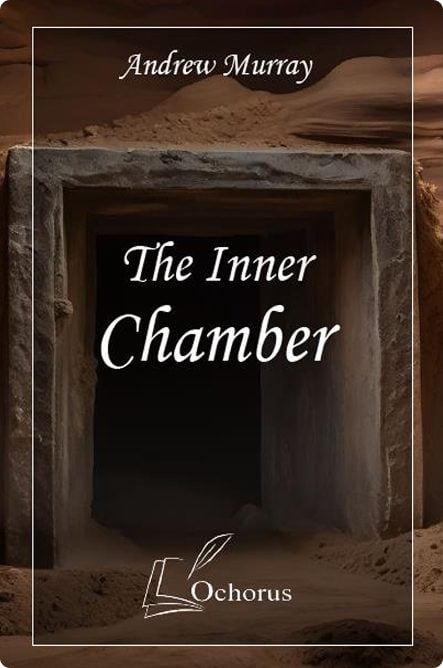
Few Christian books press so gently and so persistently on one small, closed door: the door of the room where you meet God alone. Andrew Murray’s The Inner Chamber takes its title and its whole burden from a single verse — “But when you pray, go into your room and shut the door and pray to your Father who is in secret” (Matthew 6:6). This study guide walks through what the book is, how it is arranged, what it keeps returning to, and how a reader today might use it. You can read the complete text free on Ochorus at The Inner Chamber; what follows is a map for the journey, not a substitute for the walk itself.
What the book is, and what Murray is after
Andrew Murray (1828–1917) was a South African pastor and one of the most beloved devotional writers of his age — a man whose books on prayer and the deeper Christian life have never gone out of print. The Inner Chamber gathers thirty-six short meditations, each one turning a reader back toward the place Jesus named: the shut room, the secret prayer, the Father who sees where no one else does.
Murray’s aim is not to add another technique to a busy Christian’s day. It is to recover something he feared his readers were quietly losing — a living daily communion with God that had thinned into duty. His warning is unusually frank, and it is the hinge of the whole book:
Christian, there is a terrible danger to which you stand exposed in your inner chamber. You are in danger of substituting Prayer and Bible Study for living fellowship with God, the living interchange of giving Him your love, your heart, and your life, and receiving from Him His love, His life, and His spirit.
Andrew Murray
That sentence sets the register for everything else. Murray is not against method; he is against a method that has quietly emptied itself of God. The whole book is an invitation back into the room — not to do more there, but to meet Someone there.
How the book is structured
The thirty-six chapters are brief — most can be read in a sitting — and they move in loose but discernible movements rather than a rigid outline. The opening meditations set the scene of the secret place itself: “The Morning Hour,” “The Door Shut — Alone with God,” and “The Open Door — The Open Reward” draw straight from Matthew 6:6 and its surrounding verses, including the parallel promise about secret fasting in Matthew 6:17.
From there Murray dwells at length on the Word of God as the food of that hidden life — a long central run of chapters (“The Power of God’s Word,” “Doing and Knowing,” “Meditation,” “Feeding on the Word,” “The Bible Student,” and a meditation on the whole of Psalm 119) that treats Scripture not as information to master but as bread to eat. Later chapters turn toward daily renewal, holiness, and the life of Christ within — “The Daily Renewal” meditations, “Himself Alone,” “In Christ” — before the book closes on its outward fruit in “Soul-winning,” “The Power of Intercession,” and “The Intercessor.” The shape is deliberate: the secret place feeds the soul, and the fed soul is sent out to pray for others.
The central themes
Four threads run through every chapter, and holding them together is the best way to read the book.
The inner chamber itself
The “inner chamber” is Murray’s name for the private, shut-door place of prayer that Jesus commanded. It is a real practice — a real room, a real closed door, a real hour — but Murray insists it is above all a relationship. Solitude is not withdrawal for its own sake; it is the condition under which love can be exchanged. As he puts it, the secret place is “the sure, and the only way to live in oneness with men in the power of God’s blessing.”
The Father who sees in secret
Murray never lets Matthew 6:6 shrink into a rule about privacy. Its heart is the God who is there in the secret place, watching not to catch us out but to meet us. The reward is not a transaction earned by hiddenness; it is the Father Himself.
The Father who sees in secret takes charge and rewards openly. Separation from men, in solitude with God is the sure, and the only way to live in oneness with men in the power of God’s blessing.
Andrew Murray
Time with God, fed by the Word
A striking amount of the book is about how we hold Scripture in the secret place. Murray asks for meditation — the slow, warm chewing-over of a word until it becomes life — and points to Psalm 1:2 and to the psalmist’s repeated vow to meditate on God’s precepts (Psalm 119:15). Reading is not the goal; feeding is:
Eating here is the central thought. It is preceded by the searching and finding: it is accompanied and followed by the rejoicing. It is the only aim and use of the one; it is the only cause and life of the other. In the secrecy of the inner chamber how much depends on this- I did eat them!
Andrew Murray
The morning hour recurs as the natural setting for this feeding — Murray leans on “LORD, in the morning you hear my voice” (Psalm 5:3) and on the servant who is wakened “Morning by morning” to hear as one who is taught (Isaiah 50:4), and he echoes Joshua 1:8 and Paul’s charge to be immersed in these things (1 Timothy 4:15).
Intercession — the room’s outward door
For Murray the shut door is never the whole story; the secret place opens outward into prayer for others. He grounds intercession not in a special gift but in the Christian’s very design:
“For we are his workmanship, created in Christ Jesus for good works.” The eye was created to see: how beautifully fitted it is for its work! You are created in Christ to pray.
Andrew Murray
The closing chapters hold up Elijah as the pattern intercessor and press the reader toward a life whose power is unmistakably not its own — like Peter and John, who were recognized as men who “had been with Jesus” (Acts 4:13).
Who should read it
The Inner Chamber is for the Christian who senses that their devotional life has become mechanical — the reader who keeps the habit but has lost the Presence. It is for the busy and the tired, since Murray writes tenderly for those who can spare only a quarter of an hour as much as for those who guard a full one. It is for anyone learning to pray for others and wondering whether their intercession matters, and for the believer who wants Scripture to move from the head to the heart.
Because the chapters are short and self-contained, the book also serves well as a daily devotional over about a month, or as a companion for a small group willing to sit with one meditation at a time. Readers who have loved Murray’s other work on the hidden life will find this among his warmest.
How to read it today
Resist reading it fast. Murray himself diagnoses why we so often gain nothing from eternal truths: “they are often so powerless because we do not give them the time to reveal themselves.” The book is built for slowness — one meditation a day, read in the very inner chamber it describes.
A few practical suggestions. First, read it with a Bible open; Murray expects you to turn to the verses he cites rather than take his word for them. Second, keep a notebook for the single sentence in each chapter that convicts or comforts you, and carry it into the day. Third, treat the “feeding” chapters as instructions, not just reflections — Murray commends George Müller’s practice of not leaving the Word each morning until the heart is “happy in God.” Finally, do not skip the intercession chapters as an appendix; they are where the whole book is heading. Let the shut door open onto real names and real needs.
Above all, receive Murray’s central counsel as he meant it:
Let us learn the lesson: personal fellowship with God in secret alone can make the word be life and power.
Andrew Murray
For reflection
These questions work for a private journal or a group. Sit with one at a time.
- Murray warns that we can substitute prayer and Bible study for living fellowship with God. Where do you feel that substitution happening in your own habits — and what would it look like to meet God rather than merely to perform the routine?
- Jesus promises that “your Father who sees in secret will reward you” (Matthew 6:6). What do you actually expect from the secret place — an achievement, or the Father Himself?
- Murray distinguishes reading the Word from feeding on it. Recall a passage you have truly “eaten.” What made the difference, and how could you feed rather than merely read this week?
- The morning hour recurs through the book (Psalm 5:3; Isaiah 50:4). What is the first thing that claims your attention each day, and what would change if God did?
- Murray says you are “created in Christ to pray.” Whose names would you carry into the inner chamber if you took intercession as seriously as he does?
Read next
If The Inner Chamber stirs a hunger to go deeper with Murray, two of his companion classics carry the same themes further, and all three are free to read in full on Ochorus.
- Waiting on God — a month of short meditations on the quiet, expectant posture the inner chamber requires, drawing out what it means to wait on God rather than merely to petition Him.
- The Ministry of Intercession — Murray’s fuller treatment of the prayer for others that The Inner Chamber ends on, calling the church back to intercession as its true work.
- More of the author’s life and writings: Andrew Murray.