- 35 chapters
- 2 hr 18 min read
- Accessible Reading difficulty
Free to read·No account needed
Introduction
Taking books where there’s no signal? See Ochorus for missionaries or chaplains
Reader’s guide
About this book
Thirty-one short daily readings on a single theme: that in all our religion, personal and public, we need more of God. Murray wrote them after finding how deeply the thought met an answering hunger in others — that Christians must learn to cultivate a deeper sense of God’s presence and an entire dependence on Him. Each day takes one aspect of waiting — for supplies, for instruction, in times of darkness, patiently, quietly, continually — and turns it into prayer.
IF salvation indeed comes from God, and is entirely His work, just as our creation was, it follows, as a matter of course, that our first and highest duty is to wait on Him to do that work as it pleases
Contents
- 1 Introduction 4 min
- 2 Preface 3 min
- 3 The God of Our Salvation 4 min
- 4 The Keynote of Life 4 min
- 5 The True Place of the Creature 4 min
- 6 For Supplies 3 min
- 7 For Instruction 4 min
- 8 For All Saints 4 min
- 9 A Plea in Prayer 4 min
- 10 Strong and of Good Courage 4 min
- 11 With the Heart 5 min
- 12 In Humble Fear and Hope 5 min
- 13 Patiently 4 min
- 14 Keeping His Ways 4 min
- 15 For More Than We Know 4 min
- 16 The Way to the New Song 4 min
- 17 For His Counsel 4 min
- 18 For His Light in the Heart 5 min
- 19 In Times of Darkness 4 min
- 20 To Reveal Himself 4 min
- 21 As a God of Judgment 4 min
- 22 Who Waits on Us 4 min
- 23 The Almighty One 4 min
- 24 Its Certainty of Blessing 5 min
- 25 For Unlooked-for Things 4 min
- 26 To Know His Goodness 4 min
- 27 Quietly 4 min
- 28 In Holy Expectancy 4 min
- 29 For Redemption 4 min
- 30 For the Coming of His Son 5 min
- 31 For the Promise of the Father 5 min
- 32 Continually 4 min
- 33 Moment by Moment 1 min
- 34 Only 5 min
- 35 Note 2 min
Questions and Answers
What is Waiting on God about?
It is a set of thirty-one short daily readings by Andrew Murray on a single theme: that in all our religion, personal and public, we need more of God himself. Murray teaches the believer to cultivate a deep, habitual dependence on God — to wait on him not as a last resort but as the settled posture of the soul — and to expect that such waiting is never in vain.
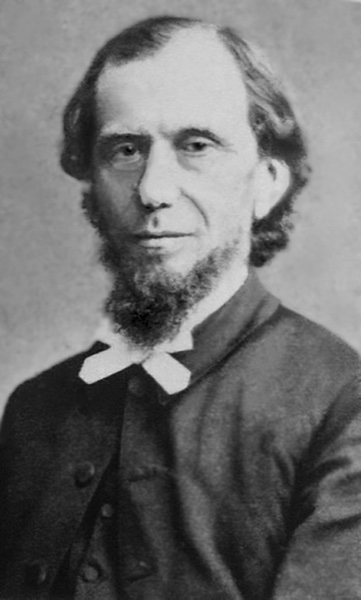
Who was Andrew Murray?
A South African pastor and writer of Scottish descent, one of the most beloved devotional authors of the deeper Christian life. He wrote scores of short books on prayer, faith, and abiding in Christ; Waiting on God, published in 1896, is among the most treasured, arranged as a month of daily meditations.
What does it mean to 'wait on God'?
For Murray it is far more than waiting for an answer to a particular request. It is the whole soul's turning to God in stillness and expectancy — resting in him, depending on him, looking to him for everything and hurrying him for nothing. Waiting is the acknowledgement that we have nothing and can do nothing apart from him, and the confidence that he will not fail those who wait.
Why did Murray write it as daily readings?
Because the lesson is not learned by being understood once but by being practised daily. Murray arranged thirty-one brief chapters, one for each day of a month, so that the reader would return to the single theme morning after morning until waiting on God became not an idea but a habit of the heart.
What does Murray say waiting produces?
Renewed strength, clearer light, and a deeper knowledge of God. Drawing on passages like Isaiah's promise that those who wait on the Lord shall renew their strength, Murray teaches that the waiting soul is quietly changed — made humble, restful, and strong — and that God reveals himself to those who give him the time and the stillness in which to do it.
Is this book about a particular need, or about God himself?
About God himself. Murray gently turns the reader away from waiting merely for God's gifts toward waiting for the Giver — teaching that the deepest blessing of waiting is God's own presence. The needs that first drive us to wait become, in his hands, occasions for learning to want God more than his benefits.
Who will find this book helpful?
The anxious, the hurried, and the spiritually dry — anyone who senses they are living on their own resources rather than on God. Murray writes with unusual tenderness, and the book has long been a companion to Christians seeking to deepen their prayer life and their trust, especially in seasons of waiting and uncertainty.
Where should a reader begin?
With the first day's reading, and then one each day for a month, unhurried — the book is designed to be taken slowly and prayerfully rather than read straight through. Read this way, the repeated theme sinks in by degrees, until waiting on God becomes less a discipline to remember than an instinct of the soul.
Read in your language
More like this




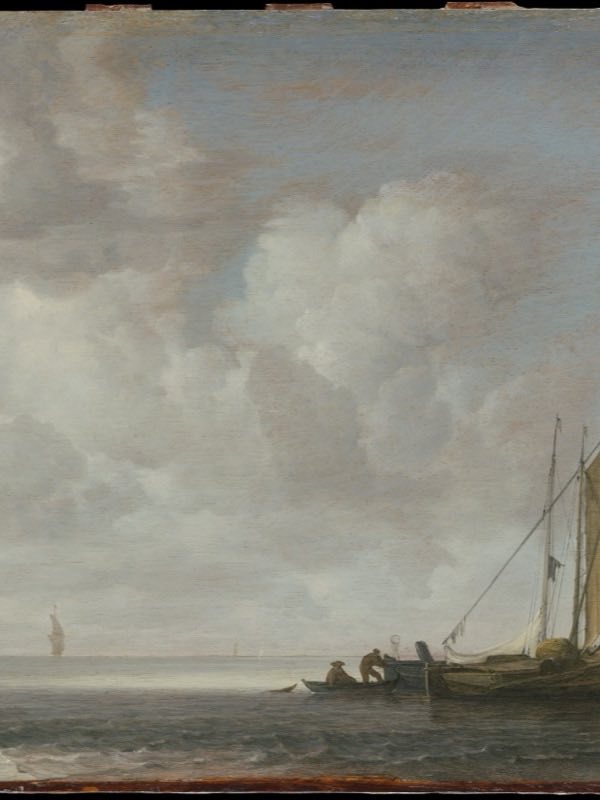
Simon de Vlieger, “Calm Sea” (after 1640). The Metropolitan Museum of Art, Open Access.
Cite this book
Copy a citation in the style you need.
- MLA
- Murray, Andrew. Waiting on God. 1896. Ochorus, https://ochorus.com/books/waiting-on-god/.
- Chicago
- Murray, Andrew. Waiting on God. 1896. Reprint, Ochorus. https://ochorus.com/books/waiting-on-god/.
- Chicago footnote
- Andrew Murray, Waiting on God (1896; repr., Ochorus), https://ochorus.com/books/waiting-on-god/.
- BibTeX
- @book{murray1896waiting, author = {Murray, Andrew}, title = {{Waiting on God}}, year = {1896}, publisher = {Ochorus}, url = {https://ochorus.com/books/waiting-on-god/} }