- 32 chapters
- 2 hr 48 min read
- Moderate Reading difficulty
Free to read·No account needed
Pardon and Healing
Taking books where there’s no signal? See Ochorus for missionaries or chaplains
Reader’s guide
About this book
Andrew Murray published these meditations as, in his own words, “a testimony of my faith in divine healing” — written after more than two years away from his ministry ended in his own recovery in answer to prayer. Working passage by passage through Scripture, he joins pardon and healing as two sides of one redemption, weighs the familiar objections honestly, and comes at last to the prayer of faith and anointing in the name of the Lord.
In man two natures are combined. He is at the same time spirit and matter, heaven and earth, soul and body. For this reason, on one side he is the son of God, and on the other he is doomed to destruction because of the Fall; sin in his soul and sickness in his body bear witness to the right which death has over him.…
Contents
- 1 Pardon and Healing 5 min
- 2 Because of Your Unbelief 6 min
- 3 Jesus and the Doctors 5 min
- 4 Health and Salvation by the Name of Jesus 5 min
- 5 Not by Our Own Power 5 min
- 6 According to the Measure of Faith 5 min
- 7 The Way of Faith 5 min
- 8 Your Body Is the Temple of the Holy Ghost 5 min
- 9 The Body for the Lord 5 min
- 10 The Lord for the Body 5 min
- 11 Do Not Consider Your Body 4 min
- 12 Discipline and Sanctification 5 min
- 13 Sickness and Death 4 min
- 14 The Holy Spirit the Spirit of Healing 4 min
- 15 Persevering Prayer 4 min
- 16 Let Him That Is Healed Glorify God 4 min
- 17 The Need for a Manifestation of God’s Power 4 min
- 18 Sin and Sickness 4 min
- 19 Jesus Bore Our Sickness 5 min
- 20 Is Sickness a Chastisement? 5 min
- 21 God’s Prescription for the Sick 4 min
- 22 The Lord That Healeth Thee 5 min
- 23 Jesus Heals the Sick 4 min
- 24 Fervent and Effectual Prayer 5 min
- 25 Intercessory Prayer 4 min
- 26 The Will of God 5 min
- 27 Obedience and Health 5 min
- 28 Job’s Sickness and Healing 5 min
- 29 The Prayer of Faith 5 min
- 30 Anointing in the Name of the Lord 4 min
- 31 Full Salvation Our High Privilege 12 min
- 32 Ye Are the Branches 17 min
Questions and Answers
What is Andrew Murray's Divine Healing about?
It is a series of meditations Murray published as, in his own words, 'a testimony of my faith in divine healing.' Written after more than two years away from his ministry ended in his own recovery in answer to prayer, the book works through the biblical passages on healing and sets out Murray's conviction that Christ heals the body as well as the soul, in answer to faith.
Who was Andrew Murray?
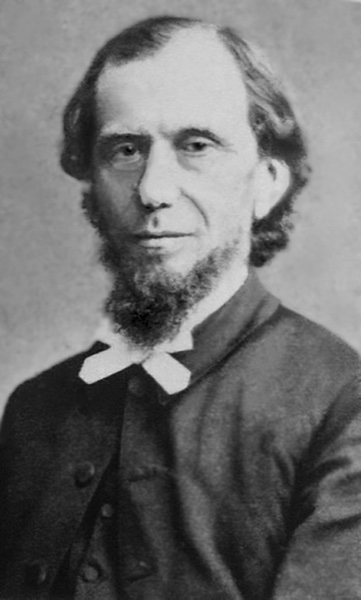
A South African pastor and one of the most beloved devotional writers of the deeper Christian life, author of many books on prayer, holiness, and abiding in Christ. Divine Healing, published in 1900, grew out of his own experience of restoration and reflects his lifelong emphasis on faith and the fullness of Christ.
What personal experience lies behind the book?
Murray's own healing. He had been laid aside from ministry for more than two years by a serious ailment, and his recovery came in answer to prayer and trust in God as Healer. That experience moved him to study the Scriptures on healing and to publish this testimony, so the book is written not as theory but as the fruit of what he had lived.
What does Murray teach about divine healing?
That healing of the body belongs to the redemptive work of Christ and is available to faith — that the same Lord who forgives sins also heals, and that believers may trust him for their bodies as for their souls. Murray roots this in Scripture and in union with Christ, presenting healing as one expression of the fullness of life God offers his people.
How is the book arranged?
As a series of short meditations working through the biblical passages that bear on healing, each unfolding some aspect of the theme. Rather than a single treatise, it moves Scripture by Scripture, building Murray's case for divine healing devotionally and drawing the reader to trust Christ as Healer through the word.
Is Murray reckless or sensational about healing?
No — he writes soberly and devotionally, grounding healing in Scripture, faith, and union with Christ rather than in sensationalism. His concern is the believer's trust in God and enjoyment of the fullness of Christ's life, and he treats healing as part of a whole life of faith and consecration, not as a spectacle or a formula.
Who should read this book?
Any Christian interested in the biblical case for divine healing, or in Murray's own testimony of restoration, and anyone weighing what it means to trust Christ for the body. It sits alongside works like Simpson's Gospel of Healing in the deeper-life tradition, offering Murray's warm, scriptural, experience-tested treatment of the subject.
Where should a reader begin?
At the beginning, letting Murray set out his testimony and then work through the Scriptures on healing meditation by meditation. Because the book builds its case from the word devotionally, it rewards being read in order and prayerfully, as the personal witness of faith Murray intended it to be.
Read in your language
More like this
Public domain. Source text from the original edition.
Théodore Rousseau, “A River in a Meadow” (ca. 1840). The Metropolitan Museum of Art, Open Access.
Cite this book
Copy a citation in the style you need.
- MLA
- Murray, Andrew. Divine Healing. 1900. Ochorus, https://ochorus.com/books/divine-healing/.
- Chicago
- Murray, Andrew. Divine Healing. 1900. Reprint, Ochorus. https://ochorus.com/books/divine-healing/.
- Chicago footnote
- Andrew Murray, Divine Healing (1900; repr., Ochorus), https://ochorus.com/books/divine-healing/.
- BibTeX
- @book{murray1900divine, author = {Murray, Andrew}, title = {{Divine Healing}}, year = {1900}, publisher = {Ochorus}, url = {https://ochorus.com/books/divine-healing/} }