Book
Freedom of the Will
A Careful and Strict Inquiry
Other titles: A Careful and Strict Enquiry into the Modern Prevailing Notions of That Freedom of Will Which Is Supposed to Be Essential to Moral Agency
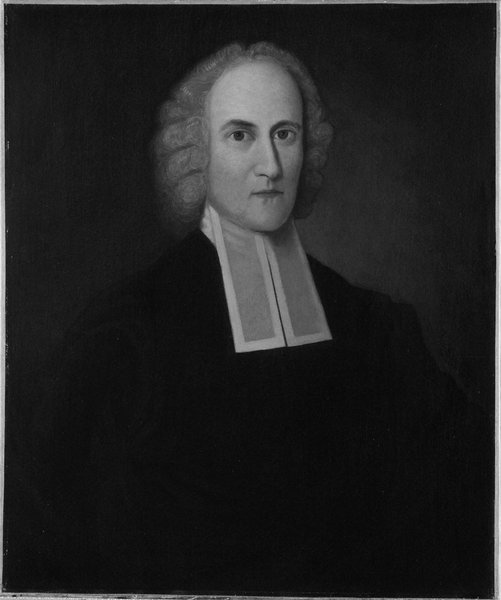
Jonathan Edwards · 1703–1758
- 32 chapters
- 8 hr 4 min read
- Moderate Reading difficulty
Free to read·No account needed
Section I. Concerning the Nature of the Will
Taking books where there’s no signal? See Ochorus for missionaries or chaplains
Reader’s guide
About this book
Jonathan Edwards's most rigorous piece of philosophy: an argument that the will is never indifferent but always follows what the mind finds most compelling, so that a person is free to do as they please and yet not free to please otherwise. Written against the idea of a will that determines itself out of nothing.
IT may possibly be thought, that there is no great need of going about to define or describe the Will; this word being generally as well understood as any other words we can use to explain it: and so perhaps it would be, had not philosophers, metaphysicians, and polemic divines, brought the matter into obscurity by the things they have said of
Contents
- 1 Section I. Concerning the Nature of the Will 8 min
- 2 Section II. Concerning the Determination of the Will 18 min
- 3 Section III. Concerning the Meaning of the Terms, Necessity, Impossibility, Inability, &c and of Contingence 14 min
- 4 Section IV. Of the Distinction of Natural and Moral Necessity, and Inability 15 min
- 5 Section V. Concerning the Notion of Liberty, and of Moral Agency 8 min
- 6 Section I. Showing the Manifest Inconsistence of the Arminian Notion of Liberty of Will, Consisting in the Will’s Self-Determing Power 8 min
- 7 Section II. Several Supposed Ways of Evading the Foregoing Reasoning Considered 11 min
- 8 Section III. Whether Any Event Whatsoever, and Volition in Particular, Can Come to Pass Without a Cause of Its Existence 13 min
- 9 Section IV. Whether Volition Can Arise Without a Cause, Through the Activity of the Nature of the Soul 8 min
- 10 Section V. Showing, That If the Things Asserted in These Evasions Should Be Supposed to Be True, They Are Altogether Impertinent, and Cannot Help the Cause of Arminian Liberty; and How, This Being the State of the Case, Arminian Writers Are Obliged to Talk Inconsistently 9 min
- 11 Section VI. Concerning the Will Determining in Things Which Are Perfectly Indifferent in the View of the Mind 15 min
- 12 Section VII. Concerning the Notion of Liberty of Will, Consisting in Indifference 20 min
- 13 Section VIII. Concerning the Supposed Liberty of the Will, as Opposite to All Necessity 7 min
- 14 Section IX. Of the Connexion of the Acts of the Will with the Dictates of the Understanding 15 min
- 15 Section X. Volition Necessarily Connected with the Influence of Motives: with Particular Observations on the Great Inconsistence of Mr. Chubb’s Assertions and Reasonings about the Freedom of the Will 30 min
- 16 Section XI. The Evidence of Gods Certain Foreknowledge of the Volitions of Moral Agents 40 min
- 17 Section XII. God’s Certain Foreknowledge of the Future Volitions of Moral Agents, Inconsistent with Such a Contingence of Those Volitions as Is without All Necessity 27 min
- 18 Section XIII. Whether We Suppose the Volitions of Moral Agents to Be Connected with Any Thing Antecedent, or Not, Yet They Must Be Necessary in Such a Sense as to Overthrow Arminian Liberty 7 min
- 19 Section I. God’s Moral Excellency Necessary, Yet Virtuous and Praiseworthy 7 min
- 20 Section II. The Acts of the Will of the Human Soul of Jesus Christ, Necessarily Holy, Yet Truly Virtuous, Praise-worthy, Rewardable, &c 30 min
- 21 Section III. The Case of Such as Are Given up to God to Sin, and of Fallen Man in General, Proves Moral Necessity and Inability to Be Consistent with Blameworthiness 14 min
- 22 Section IV. Command and Obligation to Obedience, Consistent with Moral Inability to Obey 21 min
- 23 Section V. That Sincerity of Desires and Endeavours, Which, Is Supposed to Excuse in the Non-performance of Things in Themselves Good, Particularly Considered 16 min
- 24 Section VI. Liberty of Indifference, Not Only Not Necessary to Virtue, But Utterly Inconsistent with It; and All, Either Virtuous or Vicious Habits or Inclinations, Inconsistent with Arminian Notions of Liberty and Moral Agency 16 min
- 25 Section VII. Arminian Notions of Moral Agency Inconsistent with All Influence of Motive and Inducement, in Either Virtuous or Vicious Actions 13 min
- 26 Section I. The Essence of the Virtue and Vice of Dispositions of the Heart and Acts of the Will, Lies Not in Their Cause, But Their Nature 13 min
- 27 Section II. The Falseness and Inconsistence of That Metaphysical Notion of Action and Agency Which Seems to Be Generally Entertained by the Defenders of the Arminian Doctrine Concerning Liberty, Moral Agency, &c 15 min
- 28 Section III. The Reasons Why Some Think It Contrary to Common Sense, to Suppose Those Things Which Are Necessary, to Be Worthy of Either Praise or Blame 13 min
- 29 Section IV. It is Agreeable to Common Sense, and the Natural Notions of Mankind, to Suppose Moral Necessity to Be Consistent with Praise and Blame, Reward and Punishment 17 min
- 30 Section V. Concerning Those Objections, That This Scheme of Necessity Renders All Means and Endeavours for the Avoiding of Sin, or the Obtaining Virtue and Holiness, Vain and to No Purpose; and That It Makes Men No More Than Mere Machines in Affairs of Morality and Religion 14 min
- 31 Section VI. Concerning That Objection Against the Doctrine Which Has Been Maintained, That It Agrees with the Stoical Doctrine of Faith, and the Opinions of Mr. Hobbes 6 min
- 32 Section VII. Concerning the Necessity of the Divine Will 14 min
Questions and Answers
What is Freedom of the Will about?
It is Jonathan Edwards's most rigorous work of philosophy and theology: a sustained argument that the will is never neutral or indifferent but always follows what the mind finds most compelling. From this Edwards concludes that a person is free to do as they please, yet not free to please otherwise — a defence of God's sovereignty and human responsibility against the notion of an uncaused, self-determining will.
Who was Jonathan Edwards?
Jonathan Edwards was an eighteenth-century New England pastor and theologian, a leader of the Great Awakening, and often regarded as the greatest philosophical mind in American history. Alongside his revival writings and his Religious Affections, this treatise shows his rigorous, closely reasoned side, applied to one of the hardest questions in theology and philosophy.
What is Edwards's central argument?
That the will always chooses according to the strongest motive — that a person acts on whatever, at the moment of choice, appears most desirable to the mind. So the will is not a neutral power that could equally go either way, but is determined by the person's own inclinations and perceptions. We do what we most want, and in that sense are free, but we cannot want otherwise than we do.
What is the difference between 'natural' and 'moral' ability that Edwards draws?
Edwards distinguishes natural inability — being physically or externally prevented from doing something — from moral inability, which is simply the lack of will or inclination to do it. A sinner is not naturally unable to come to God, as if chained, but morally unable, in that his own heart will not; and this, Edwards argues, leaves him fully responsible, since nothing outside himself compels his refusal.
Why did Edwards write it?
To defend the Calvinist understanding of God's sovereignty and human responsibility against the growing view that true freedom requires a will undetermined by anything, even by one's own character or God's decree. Edwards aimed to show that such a self-determining will is both incoherent and unbiblical, and that real moral responsibility rests instead on our acting from our own strongest desires.
Is this a difficult book to read?
Yes — it is Edwards's most demanding work, closely and abstractly argued, and it repays patience and careful attention. But its logic is powerful and its influence immense; readers willing to follow its reasoning find one of the most formidable defences of divine sovereignty and a searching analysis of what human freedom really means.
Why has the book been so influential?
Because it framed the debate over free will, sovereignty, and responsibility for generations of theologians, and remains a landmark in both American philosophy and Reformed theology. Its distinctions have shaped how many Christians reconcile God's sovereignty with human accountability, and it is still studied and argued over more than two and a half centuries later.
Where should a reader begin?
At the beginning, where Edwards defines his terms — the will, motives, ability — since his whole argument is built precisely upon them. This is a book to be read slowly and in order, following the chain of reasoning link by link; readers who take the time find its rigor rewarding and its conclusions difficult to evade.
Read in your language
More like this




John Frederick Kensett, “Passing off of the Storm” (1872). The Metropolitan Museum of Art, Open Access.
Cite this book
Copy a citation in the style you need.
- MLA
- Edwards, Jonathan. Freedom of the Will. 1754. Ochorus, https://ochorus.com/books/freedom-of-the-will/.
- Chicago
- Edwards, Jonathan. Freedom of the Will. 1754. Reprint, Ochorus. https://ochorus.com/books/freedom-of-the-will/.
- Chicago footnote
- Jonathan Edwards, Freedom of the Will (1754; repr., Ochorus), https://ochorus.com/books/freedom-of-the-will/.
- BibTeX
- @book{edwards1754freedom, author = {Edwards, Jonathan}, title = {{Freedom of the Will}}, year = {1754}, publisher = {Ochorus}, url = {https://ochorus.com/books/freedom-of-the-will/} }