New to Ignatius of Antioch? Start with
The Epistles of Ignatius and His Life's Story
All works · 1 hr 15 min read
Biography
- 35 Born
- 108 Died
From Syria even unto Rome I fight with beasts, both by land and sea, both by night and day, being bound to ten leopards, I mean a band of soldiers, who, even when they receive benefits, show themselves all the worse.
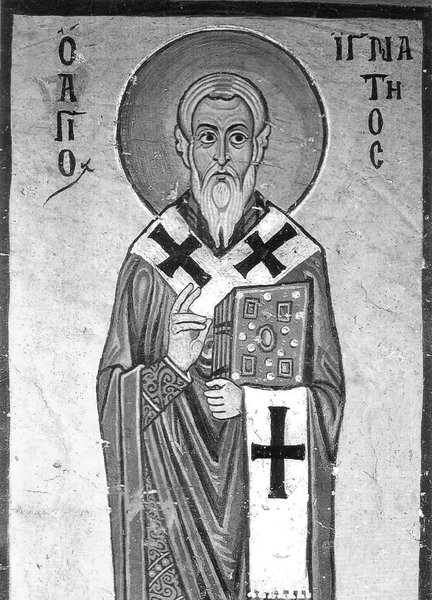
Ignatius of Antioch wrote seven short letters in the last few weeks of his life, in snatched hours, under guard, on a forced march across Asia Minor to the arena. They are among the most urgent documents in Christian literature. Nothing in them is theoretical. A man who knows exactly how he is going to die is writing to churches he will never see again, and he spends the letters not on himself but on them.
He was born around AD 35, probably in Syria, and he was bishop of Antioch when he was arrested, most likely in the reign of Trajan, around AD 107 to 110. Antioch mattered: it was the third city of the empire, the church where the disciples were first called Christians, the base from which Paul and Barnabas had been sent out. Later writers said Ignatius was the second or third to hold the oversight there after Peter, and a tradition that cannot be verified made him a hearer of the apostle John. He called himself Theophorus, God-bearer, and he seems to have used it as a name rather than a boast.
Why he was condemned, we do not know. There was no empire-wide persecution at the time; Trajan's own correspondence with Pliny shows a policy of not hunting Christians down but punishing those brought before the courts who would not recant. Something local brought Ignatius before a magistrate, and the sentence was the beasts at Rome. That in itself is odd enough to be worth noticing: it would have been simpler to kill him in Antioch. Instead he was sent fifteen hundred miles to die as public entertainment in the capital.
The journey
The road went overland through Asia Minor, and it is the road that gave us the letters. At Smyrna his guards halted long enough for delegations from the surrounding churches to reach him: Ephesus, Magnesia, Tralles all sent their bishops and deacons to greet a condemned man. He wrote back to each of them, and then wrote ahead to the church at Rome. Further on, at Troas, he wrote three more, to the Philadelphians, to the Smyrnaeans, and to Polycarp, the young bishop of Smyrna who had come to see him and who would himself be burned alive half a century later.
The conditions were not gentle, and he describes them with a flash of dry humour that has kept its edge for nineteen centuries:
From Syria even unto Rome I fight with beasts, both by land and sea, both by night and day, being bound to ten leopards, I mean a band of soldiers, who, even when they receive benefits, show themselves all the worse.
— Ignatius, to the Romans, chapter 5
The letter to Rome is the strangest of the seven, and the one people remember. He had heard that the Christians in the capital, who had influence, intended to use it to get his sentence commuted. He writes to beg them not to. The plea is not bravado; it is closer to a man pleading for water:
I am the wheat of God, and let me be ground by the teeth of the wild beasts, that I may be found the pure bread of Christ. I do not, as Peter and Paul, issue commandments unto you. They were apostles; I am but a condemned man.
— Ignatius, to the Romans, chapter 4
Modern readers find this difficult, and they should. There is a hunger for martyrdom in Ignatius that later Christian teaching deliberately reined in; the church came to insist that no one should seek death, and it was right to. But it is worth reading him closely before judging him. He is not in love with pain, and he never recommends his path to anyone else. What he wants is Christ, with an appetite he can barely put into words, and the arena is simply the door that has been opened in front of him. He is afraid of one thing only: that he will be spared and go on living as a half-hearted man.
What he actually wrote about
Given the circumstances, the astonishing thing about the letters is how little they are about Ignatius. Six of the seven are pastoral letters about ordinary church problems, written by a man with weeks to live.
He writes about unity, again and again, because the congregations were fragmenting. His remedy is to gather everything around the bishop, the presbyters and the deacons, and around the one table: do nothing without the bishop, hold one Eucharist, sing together like a choir with one voice. These are the earliest letters in which the threefold ministry appears as a settled fact, and they have been fought over by every church since. Read devotionally rather than constitutionally, the concern underneath is simpler and harder to argue with. He has seen what a divided church looks like from the inside, and he is spending his last strength trying to prevent it.
He writes against a teaching that was already circulating: that Christ only appeared to have a body, and only seemed to suffer. Ignatius has no patience with it whatsoever. If the Lord only seemed to suffer, he says, then I am only seeming to be in chains, and why have I given myself over to death? A man in irons has a shortcut to the heart of that argument that no scholar can match.
And he writes about prayer, constantly, in the form of requests. He asks nearly every church to pray for him, and he asks with no dignity at all, as a man asks for help.
That sentence is the pastoral heart of the whole collection. He has been taken away from his congregation and he cannot get back to them, and what he does about it is hand them to God and beg other churches to hold them up.
The man in the letters
Ignatius is easy to admire and hard to like at first meeting. He interrupts himself. He piles up images faster than he can develop them, calling the Ephesians stones of the temple of the Father, prepared for the building, hoisted into place by the cross as by a builder's hoist, with the Holy Spirit for a rope, faith for the ascent and love for the road. It is four metaphors deep before the sentence ends, and it holds together anyway. He apologises for his own vehemence and then does it again a paragraph later. There is nothing polished here, and the roughness is part of the evidence: nobody composing a devotional forgery would write this badly and this fast.
He is also, for all his talk of beasts, tender. He tells Polycarp to bear the ailments of everyone, to be patient with the difficult ones, to not be overwhelmed by those who seem worth little, to stand firm like an anvil under the hammer. He remembers the slaves in the congregations and warns that they must not be despised, and equally that they must not grow proud. He asks after named individuals and sends greetings to a widow and her household. A man three weeks from the arena is worrying about whether a young bishop is being too hard on himself. He tells Polycarp not to let the widows be neglected, to speak to the congregation one by one as an athlete's trainer does, and to seek out those nobody else has time for. Whatever the arena did to his imagination, it did not make him grand. The last recorded instincts of Ignatius of Antioch are the instincts of a parish minister making sure the difficult people are not forgotten.
Rome
Of his death we have no eyewitness account. The later Acts of his martyrdom are legendary in their details, and the honest summary is that he was taken to Rome and executed, almost certainly in the arena, some time between AD 107 and 110. Polycarp, writing to Philippi shortly afterward, refers to Ignatius and to the letters, and asks for any further news of him, which suggests the end came soon and the word travelled slowly.
A word about the texts themselves, because it matters for anyone reading him. Ignatius' letters were popular enough to be enlarged: an ancient editor padded the seven genuine letters and forged six more, and for centuries the church read the inflated version. Nineteenth-century scholarship, above all J. B. Lightfoot's, sorted it out, and the shorter recension of the seven letters is what scholars now regard as authentic. Older editions print both side by side, which is why a reader can meet the same sentence twice in slightly different clothes.
What survives is a small book, readable in an evening. It is the sound of a man walking toward his death with his mind entirely on other people's churches, other people's quarrels, other people's faith. He asked to be remembered as the least of them. He is remembered because, at the end, he was thinking about them and not about himself.
Books by Ignatius of Antioch (1)
Books about Ignatius of Antioch (1)

Articles about Ignatius of Antioch (1)
Questions and Answers
Who was Ignatius of Antioch?
Ignatius was bishop of Antioch in Syria — the third city of the empire, where the disciples were first called Christians and from which Paul and Barnabas had been sent out. Born around AD 35, he was arrested most likely in the reign of Trajan, around AD 107 to 110. He called himself Theophorus, "God-bearer," apparently as a name rather than a boast, and a tradition that cannot be verified made him a hearer of the apostle John.
What did he write, and under what conditions?
He wrote seven short letters in the last few weeks of his life, in snatched hours, under guard, on a forced march across Asia Minor to be killed in the arena at Rome. They are among the most urgent documents in Christian literature — nothing in them is theoretical. A man who knows exactly how he is going to die is writing to churches he will never see again, and he spends the letters not on himself but on them.
Why was he condemned?
We do not know. There was no empire-wide persecution at the time; Trajan's own correspondence shows a policy of not hunting Christians down but punishing those brought before the courts who would not recant. Something local brought Ignatius before a magistrate, and the sentence was the beasts at Rome — odd enough to notice, since it would have been simpler to kill him in Antioch than to send him fifteen hundred miles to die as public entertainment.
Where and to whom were the letters written?
The road gave us the letters. At Smyrna his guards halted long enough for delegations from Ephesus, Magnesia and Tralles to reach him, and he wrote back to each, then wrote ahead to the church at Rome. Further on, at Troas, he wrote three more — to the Philadelphians, to the Smyrnaeans, and to Polycarp, the young bishop of Smyrna who had come to see him and who would himself be burned alive half a century later.
What did he mean by the "ten leopards"?
He described his guards with a flash of dry humour that has kept its edge for nineteen centuries: "From Syria even unto Rome I fight with beasts, both by land and sea, both by night and day, being bound to ten leopards, I mean a band of soldiers, who, even when they receive benefits, show themselves all the worse."
Why did he beg the Roman Christians not to save him?
He had heard that the Christians in the capital, who had influence, meant to use it to get his sentence commuted, and he wrote to beg them not to: "I am the wheat of God, and let me be ground by the teeth of the wild beasts, that I may be found the pure bread of Christ. I do not, as Peter and Paul, issue commandments unto you. They were apostles; I am but a condemned man."
How should modern readers weigh his hunger for martyrdom?
With difficulty, and they should. There is a hunger in Ignatius that later Christian teaching deliberately reined in, insisting rightly that no one should seek death. But he never recommends his path to anyone else and is not in love with pain; what he wants is Christ, with an appetite he can barely put into words, and the arena is simply the door opened in front of him. He is afraid of one thing only: that he will be spared and go on living as a half-hearted man.
What are the letters mostly about?
Given the circumstances, the astonishing thing is how little they are about Ignatius. Six of the seven are pastoral letters about ordinary church problems. He writes about unity again and again, because the congregations were fragmenting — gather everything around the bishop, the presbyters and the deacons, and around one table. These are the earliest letters in which the threefold ministry appears as a settled fact, and he also writes fiercely against the teaching that Christ only seemed to have a body and only seemed to suffer.
How did he ask to be prayed for?
Constantly, and with no dignity at all, as a man asks for help. He asks nearly every church to remember the congregation he has been taken from: "Remember in your prayers the Church in Syria, which now has God for its shepherd, instead of me." When word reached him on the road that the persecution at Antioch had lifted, he wrote back to the Smyrnaeans, "Your prayers have reached to the Church of Antioch, and it is at peace."
What was he like, and how did he die?
He is easy to admire and hard to like at first — he interrupts himself and piles up images faster than he can develop them — yet he is tender: he tells Polycarp to bear everyone's ailments, to stand firm like an anvil under the hammer, not to let the widows be neglected, and to seek out those nobody else has time for. Of his death we have no eyewitness account; he was executed at Rome, almost certainly in the arena, some time between AD 107 and 110. He asked to be remembered as the least of them.