- 15 chapters
- 2 hr 39 min read
- Accessible Reading difficulty
Free to read·No account needed
Foreword
Taking books where there’s no signal? See Ochorus for missionaries or chaplains
Reader’s guide
About this book
Bounds takes prayer and sets it beside the things it cannot live without — faith, trust, desire, fervency, importunity, obedience, vigilance, the Word of God — a chapter or two to each, and argues that prayer divorced from any of them is not prayer at all. The teaching is carried on stories: a hunted fawn that runs to the one man who will not shoot it, saints who prayed until the answer came. Posthumous, and the most systematic of his books on the subject.
Contents
- 1 Foreword 2 min
- 2 Prayer and Faith 12 min
- 3 Prayer and Faith (Continued) 16 min
- 4 Prayer and Trust 13 min
- 5 Prayer and Desire 13 min
- 6 Prayer and Fervency 8 min
- 7 Prayer and Importunity 10 min
- 8 Prayer and Importunity (Continued) 8 min
- 9 Prayer and Character and Conduct 11 min
- 10 Prayer and Obedience 15 min
- 11 Prayer and Obedience (Continued) 7 min
- 12 Prayer and Vigilance 13 min
- 13 Prayer and the Word of God 12 min
- 14 Prayer and the Word of God (Continued) 9 min
- 15 Prayer and the House of God 9 min
Questions and Answers
What is The Necessity of Prayer about?
It is E. M. Bounds's argument that prayer cannot be separated from the graces that make it real. He sets prayer beside the things it cannot live without — faith, trust, desire, fervency, importunity, obedience, vigilance, and the Word of God — giving a chapter or two to each, and contends that prayer divorced from any of them is not prayer at all but an empty form.
How is this different from Bounds's other prayer books?
Where some of his books press the duty of prayer or tell of men who prayed, this one anatomizes the inner conditions that make prayer genuine. Its distinctive angle is that prayer never stands alone: it is bound up with faith, obedience, fervency, and the rest, so that to neglect those is to lose prayer itself. It examines prayer by examining what it must be joined to.
Why does Bounds tie prayer so closely to faith?
Because he holds that faith is the very life of prayer — that prayer without faith is words without power, since it is faith that lays hold of God's promises and expects an answer. Bounds argues that the measure of real prayer is the measure of its faith, and that a prayerless life is at bottom a faithless one; the two rise and fall together.
What does Bounds mean by 'importunity' in prayer?
He means a holy persistence — the refusal to be put off, the pressing of one's case with God until the answer comes, as the widow wearied the unjust judge and Jacob would not let go until he was blessed. Bounds treats importunity not as irreverence but as a mark of earnestness and faith, and he presses believers to a praying that will not easily take no for an answer.
What place does the Word of God have in this book?
A vital one — Bounds joins prayer and the Scriptures as inseparable companions. The Word feeds prayer with its promises and directs it according to God's will, while prayer opens the heart to receive the Word. He warns that prayer cut off from Scripture drifts, and that Scripture unaccompanied by prayer stays cold; the two are meant to work together.
Who was E. M. Bounds?
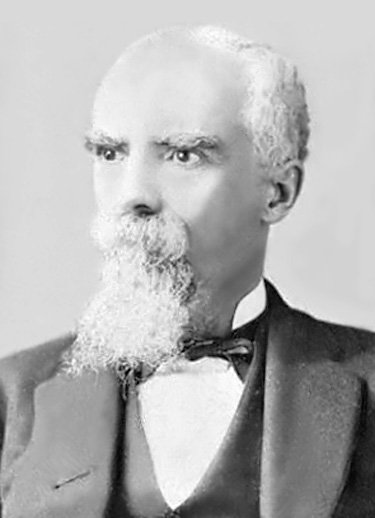
Edward McKendree Bounds was an American Methodist minister who, in his later years, rose before dawn to pray for hours and poured his life into writing about prayer. Most of his prayer books, including this one, were published after his death; together they form a sustained and passionate call to the ministry of intercession.
Who is this book for?
For any Christian dissatisfied with a shallow prayer life and wanting to know why their praying seems to lack power. By showing what prayer must be joined to, Bounds helps the reader diagnose what is missing — faith, fervency, obedience, or persistence — and calls them to the wholehearted praying that God answers.
Where should a reader begin?
At the beginning and through the graces in order, since each chapter takes up one of prayer's indispensable companions. The chapters are short and pointed, meant to search the reader's own praying, and are best read a little at a time and turned into prayer rather than merely studied.
Read in your language
More like this


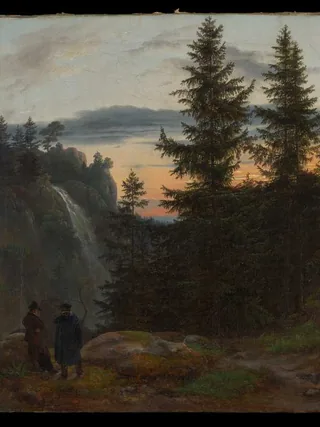
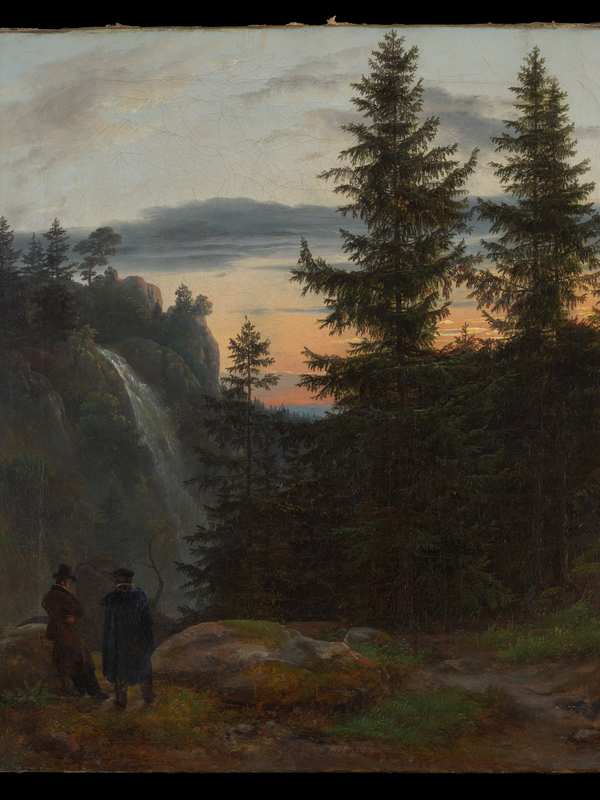
Johan Christian Dahl, “Two Men before a Waterfall at Sunset” (1823). The Metropolitan Museum of Art, Open Access.
Cite this book
Copy a citation in the style you need.
- MLA
- Bounds, E. M. The Necessity of Prayer. 1929. Ochorus, https://ochorus.com/books/necessity-of-prayer/.
- Chicago
- Bounds, E. M. The Necessity of Prayer. 1929. Reprint, Ochorus. https://ochorus.com/books/necessity-of-prayer/.
- Chicago footnote
- E. M. Bounds, The Necessity of Prayer (1929; repr., Ochorus), https://ochorus.com/books/necessity-of-prayer/.
- BibTeX
- @book{bounds1929necessity, author = {Bounds, E. M.}, title = {{The Necessity of Prayer}}, year = {1929}, publisher = {Ochorus}, url = {https://ochorus.com/books/necessity-of-prayer/} }