
- 16 chapters
- 2 hr 52 min read
- Moderate Reading difficulty
Free to read·No account needed
The Ministry of Prayer
Taking books where there’s no signal? See Ochorus for missionaries or chaplains
About this book
Bounds's fullest case for what prayer can actually do. Ranging over the promises of Scripture, the recorded facts of answered prayer, and the history of God's dealings with praying men, he argues that prayer is no pious formality but a real force that moves the hand of God — reaching into providence, working wonders, and shaping the world. The companion volume to his other books on prayer, and the one most given to proof by story and instance.
“Prayer should be the breath of our breathing, the thought of our thinking, the soul of our feeling, and the life of our living, the sound of our hearing, the growth of our growing.” Prayer in its magnitude is length without end, width without bounds, height without top, and depth without bottom.
Contents
- 1 The Ministry of Prayer 5 min
- 2 Prayer and the Promises 9 min
- 3 Prayer and the Promises (Continued) 11 min
- 4 Prayer—Its Possibilities 13 min
- 5 Prayer—Its Possibilities (Continued) 8 min
- 6 Prayer—Its Possibilities (Continued) 9 min
- 7 Prayer—Its Wide Range 9 min
- 8 Prayer—Facts and History 9 min
- 9 Prayer—Facts and History (Continued) 9 min
- 10 Answered Prayer 12 min
- 11 Answered Prayer (Continued) 8 min
- 12 Answered Prayer (Continued) 11 min
- 13 Prayer Miracles 16 min
- 14 Wonders of God Through Prayer 19 min
- 15 Prayer and Divine Providence 15 min
- 16 Prayer and Divine Providence (Continued) 10 min
Questions and Answers
What is The Possibilities of Prayer about?
It is E. M. Bounds's fullest case for what prayer can actually accomplish. Ranging over the promises of Scripture, the recorded facts of answered prayer, and the history of God's dealings with praying men, he argues that prayer is no pious formality but a real force that moves the hand of God and changes what happens in the world.
What is the distinctive emphasis of this book?
Its focus is on prayer's power and results — not merely the duty or the discipline of prayer, but what prayer can do. Bounds sets out to enlarge the reader's expectation, contending that Scripture and history alike show prayer accomplishing things otherwise impossible, and that most Christians ask far too little of a God who has promised so much.
Does Bounds think prayer really changes things?
Emphatically. He rejects the idea that prayer only changes the one praying, arguing from the plain promises of Scripture that prayer moves God to act — that God has bound himself to answer, and that real prayer brings real results in the world. For Bounds prayer is a genuine transaction with a God who hears and does, not a mere spiritual exercise.
How does Bounds use Scripture's promises?
He piles them up as evidence, pointing to the sweeping breadth of Christ's assurances — whatsoever ye ask, ask and it shall be given — and insisting they mean what they say. Bounds refuses to explain the promises away or shrink them to fit our small experience; instead he presses the reader to take God at his word and to expect that prayer can do what the promises declare.
What examples of answered prayer does the book give?
Bounds appeals to the recorded facts of Scripture and the history of praying men, holding up cases where prayer plainly changed the course of events. He treats these not as exceptions but as illustrations of a standing rule, meant to persuade the reader that the God who answered then answers still, and that the possibilities of prayer are as wide as his promises.
Who was E. M. Bounds?
An American Methodist minister who spent his later years in long hours of morning prayer and in writing about it. His prayer books, mostly published after his death, are marked by an unusual confidence in what prayer can do — a confidence this volume presses harder than any other of his.
Who is this book for?
For the Christian whose faith in prayer has grown small, and who prays without expecting much. Bounds writes to enlarge that expectation — to convince the reader that prayer is a real power and that God's promises are meant to be believed and drawn upon — and so to send them back to prayer with hope.
Where should a reader begin?
At the beginning, letting Bounds build his case from the promises of Scripture through the facts of answered prayer. The book is meant to stir faith and expectation, so it rewards being read with an open Bible and a willingness to take its argument to heart, and then to prove it in prayer.
Read in your language
More like this


Public domain. Source text from the original edition.
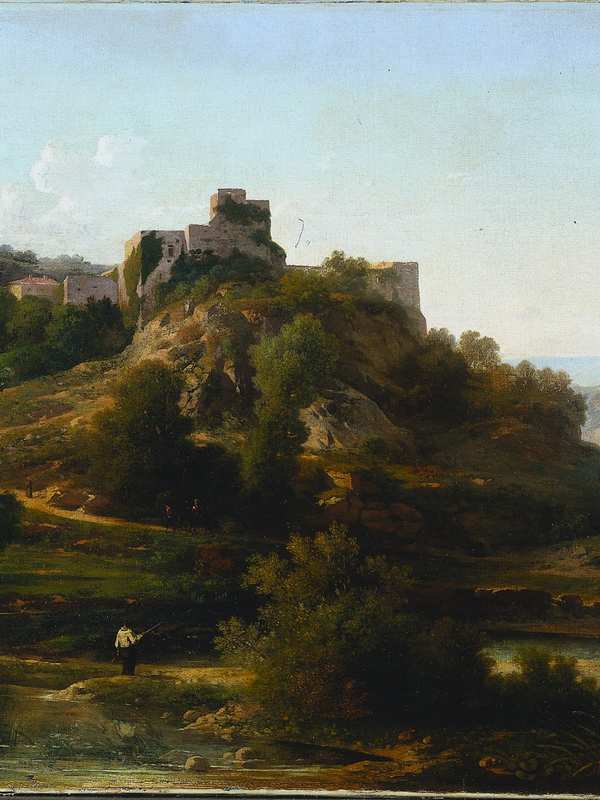
Antoine-Claude Ponthus-Cinier, “Châteauvieux-sur-Suran” (1848). The Cleveland Museum of Art, CC0.
Cite this book
Copy a citation in the style you need.
- MLA
- Bounds, E. M. The Possibilities of Prayer. Ochorus, https://ochorus.com/books/possibilities-of-prayer/.
- Chicago
- Bounds, E. M. The Possibilities of Prayer. Ochorus. https://ochorus.com/books/possibilities-of-prayer/.
- Chicago footnote
- E. M. Bounds, The Possibilities of Prayer (Ochorus), https://ochorus.com/books/possibilities-of-prayer/.
- BibTeX
- @book{boundspossibilities, author = {Bounds, E. M.}, title = {{The Possibilities of Prayer}}, publisher = {Ochorus}, url = {https://ochorus.com/books/possibilities-of-prayer/} }