- 17 chapters
- 2 hr 53 min read
- Accessible Reading difficulty
Free to read·No account needed
Introduction
Taking books where there’s no signal? See Ochorus for missionaries or chaplains
Reader’s guide
About this book
Rather than argue for prayer, Bounds introduces the men who prayed. After two chapters on the praying saints of the Old Testament generally, he takes them one at a time — Abraham, Moses, Elijah, Hezekiah, Ezra, Nehemiah, Samuel, Daniel, and then Paul at length — asking of each what he asked for, what it cost him, and what came of it. A book of examples rather than arguments, and the easiest of Bounds to read straight through.
The Holy Spirit will give to the praying saint the brightness of an immortal hope, the music of a deathless song, in His baptism and communion with the heart, He will give sweeter and more enlarged visions of heaven until the taste for other things will pall, and other visions will grow dim and distant.
Contents
- 1 Introduction 4 min
- 2 Praying Saints of the Old Testaments 9 min
- 3 Praying Saints of the Old Testaments (Continued) 9 min
- 4 Abraham, the Man of Prayer 4 min
- 5 Moses, the Mighty Intercessor 11 min
- 6 Elijah, the Praying Prophet 14 min
- 7 Hezekiah, the Praying King 14 min
- 8 Ezra, the Praying Reformer 6 min
- 9 Nehemiah, the Praying Builder 9 min
- 10 Samuel, the Child of Prayer 10 min
- 11 Daniel, the Praying Captive 9 min
- 12 Faith of Sinners in Prayer 11 min
- 13 Paul, the Teacher of Prayer 16 min
- 14 Paul and His Praying 12 min
- 15 Paul and His Praying (Continued) 13 min
- 16 Paul and His Requests for Prayer 10 min
- 17 Paul and His Requests for Prayer (Continued) 12 min
Questions and Answers
What is Prayer and Praying Men about?
Rather than argue for prayer in the abstract, E. M. Bounds introduces the men of Scripture who prayed. After opening chapters on the praying saints of the Old Testament, he takes them one at a time — Abraham, Moses, Elijah, Hezekiah, Ezra, Nehemiah, Samuel, Daniel, and Paul at length — showing from their lives what prayer is and what it accomplishes.
How does this book differ from Bounds's others?
Its method is biographical. Where his other prayer books reason about prayer's necessity, essentials, or power, this one lets the Bible's praying men make the case by example. Bounds walks through their stories, drawing from each the lessons of a life given to prayer, so the reader learns prayer by watching those who practised it.
Which biblical figures does Bounds study?
Chiefly the great intercessors of the Old Testament — Abraham pleading for Sodom, Moses standing in the breach, Elijah praying down fire and rain, Hezekiah turning his face to the wall, Ezra, Nehemiah, Samuel, and Daniel — and then, at length, the apostle Paul, whose letters are steeped in prayer. Each becomes a study in some aspect of praying.
What does Bounds draw from the example of Moses?
He points to Moses as a supreme intercessor — the man who stood between God and a sinning people, who pleaded for Israel when judgement threatened, and whose prayers turned aside destruction. Bounds uses him to show the power of intercessory prayer and the weight that a single praying man can carry for a whole nation before God.
What does the book teach about Paul and prayer?
Bounds gives Paul extended treatment, showing how thoroughly prayer saturated the apostle's life and letters — his constant thanksgiving, his intercession for the churches, his requests for their prayers, and the great prayers recorded in his epistles. Paul stands as the model of a prayer-soaked ministry, proof that the mightiest gospel labour rests on prayer.
Who was E. M. Bounds?
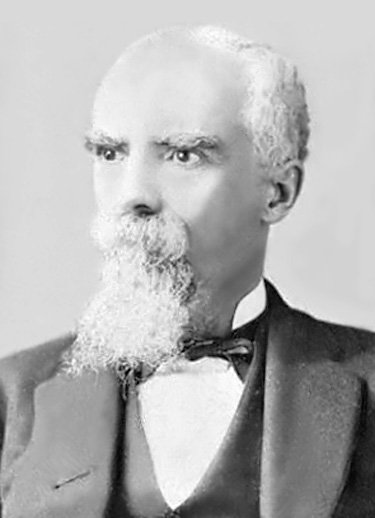
An American Methodist minister who devoted his later life to early-morning prayer and to writing about it. His prayer books, published mostly after his death, remain classics of the subject; this one gathers the Bible's praying men to let their examples teach what Bounds elsewhere argues.
Who is this book for?
For any Christian who learns best from example, and who wants to see prayer lived out rather than merely explained. By following the praying men of Scripture, the reader is both instructed and stirred — encouraged to believe that the God who heard them hears still, and moved to pray as they did.
Where should a reader begin?
At the beginning, with the Old Testament intercessors, and on through to Paul. Because each chapter studies a different figure, the book can be read straight through or dipped into by name, but taken together the lives build a cumulative portrait of what it means to be a man or woman of prayer.
Read in your language
More like this
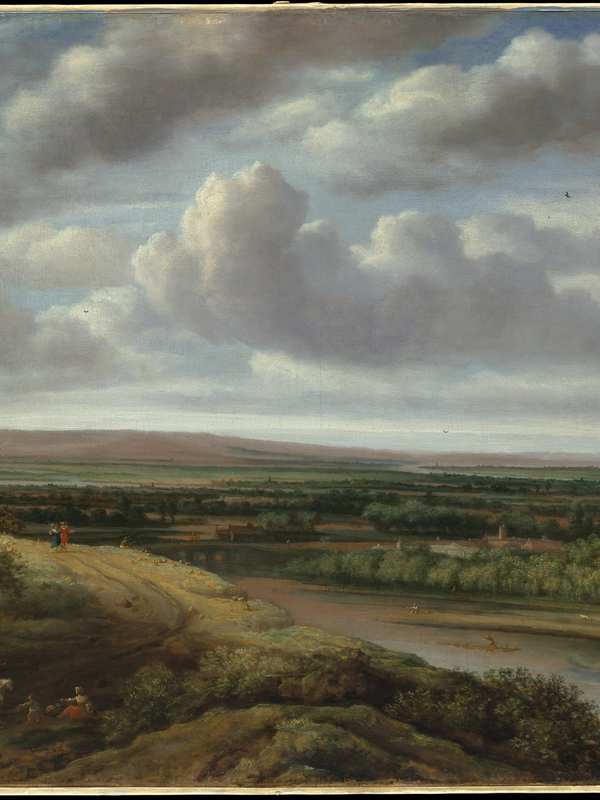
Philips Koninck, “An Extensive Wooded Landscape” (1670s). The Metropolitan Museum of Art, Open Access.
Cite this book
Copy a citation in the style you need.
- MLA
- Bounds, E. M. Prayer and Praying Men. 1921. Ochorus, https://ochorus.com/books/prayer-and-praying-men/.
- Chicago
- Bounds, E. M. Prayer and Praying Men. 1921. Reprint, Ochorus. https://ochorus.com/books/prayer-and-praying-men/.
- Chicago footnote
- E. M. Bounds, Prayer and Praying Men (1921; repr., Ochorus), https://ochorus.com/books/prayer-and-praying-men/.
- BibTeX
- @book{bounds1921prayer, author = {Bounds, E. M.}, title = {{Prayer and Praying Men}}, year = {1921}, publisher = {Ochorus}, url = {https://ochorus.com/books/prayer-and-praying-men/} }