
Book
The Bruised Reed
And Smoking Flax
Other titles: The Bruised Reed and Smoking Flax
Richard Sibbes · 1577–1635
- 28 chapters
- 3 hr 11 min read
- Accessible Reading difficulty
Free to read·No account needed
The Text opened and divided. What the Reed is, and what the bruising
Taking books where there’s no signal? See Ochorus for missionaries or chaplains
Grow with the story

Reader’s guide
About this book
Sibbes takes a single line from Isaiah, quoted by Matthew about Christ — “a bruised reed shall he not break, and smoking flax shall he not quench” — and writes an entire book to people who are afraid they are too far gone. His argument is that the bruising is not evidence against them, and that a faith which is all smoke and no flame is still fire.
Sibbes preached in London in the 1620s, to a generation raised on a searching kind of self-examination that could tip over into despair — believers taught to look for evidence of grace in themselves and finding little. This is the pastoral correction to that, from inside the same tradition: not less seriousness about sin, but a different place to look for assurance.
Both halves of the image matter to him. A bruised reed is not a broken one, and smoking flax is a wick that has gone out but still has fire in it: what looks like failure is, in his reading, the thing being kept alight. He is careful not to make this cheap — he has a great deal to say about not mistaking sloth for weakness — but the direction of the whole book is that Christ does not finish off what is already damaged.
Richard Baxter read it at fifteen and said it made the difference: “Sibbes opened more the love of God to me, and gave me a livelier apprehension of the mystery of redemption and how much I was beholden to Jesus Christ.” It has done the same for readers in that condition ever since, and it is short.
THE prophet Isaiah being lifted up, and carried with the wing of prophetical spirit, passeth over all the time between him and the appearing of Jesus Christ in the flesh, and seeth with the eye of prophecy, and with the eye of faith, Christ as present, and presenteth him in the name of God to the spiritual eye of others, in these words, Behold my…
Contents
- 1 The Text opened and divided. What the Reed is, and what the bruising 5 min
- 2 Those that Christ hath to do withal are bruised 3 min
- 3 Christ will not break the Bruised Reed 5 min
- 4 Signs of one truly bruised. Means and measure of bruising, and comfort to such 8 min
- 5 Grace is little at first 3 min
- 6 Grace is mingled with Corruption 3 min
- 7 Christ will not quench small and weak beginnings 8 min
- 8 Tenderness required in ministers toward young beginners 7 min
- 9 Governors should be tender of weak ones, and also private Christians 7 min
- 10 Rules to try whether we be such as Christ will not quench 5 min
- 11 Signs of smoking flax which Christ will not quench 10 min
- 12 Scruples hindering comfort removed 8 min
- 13 Set upon Duties notwithstanding Weaknesses 4 min
- 14 The case of Indisposition resolved, and Discouragements 7 min
- 15 Of infirmities. No cause of discouragement, in whom they are, and how to recover peace lost 7 min
- 16 Satan not to be believed, as he representeth Christ unto us 8 min
- 17 Reproof of such as sin against this merciful disposition in Christ. Of quenching the Spirit 16 min
- 18 Of Christ's judgment in us, and his victory: what it is 3 min
- 19 Christ is so mild that yet he will govern those that enjoy the comfort of his mildness 4 min
- 20 The spiritual government of Christ is joined with judgment and wisdom 7 min
- 21 Where true wisdom and judgment is, there Christ sets up his government 5 min
- 22 Christ's government is victorious 14 min
- 23 Means to make Grace victorious 9 min
- 24 All should side with Christ 3 min
- 25 Christ's government shall be openly victorious 6 min
- 26 Christ alone advanceth this government 7 min
- 27 Victory not to be had without fighting 6 min
- 28 Be encouraged to go on cheerfully, with confidence of prevailing 11 min
Questions and Answers
What is The Bruised Reed about?
Richard Sibbes takes a single line from Isaiah, quoted by Matthew about Christ — a bruised reed he will not break, and smoking flax he will not quench — and writes a whole book to people who are afraid they are too far gone. Published in 1630, it argues that the bruising is not evidence against them, and that a faith which is all smoke and no flame is still fire.
What do the images of the bruised reed and smoking flax mean?
Both halves of the picture matter to Sibbes. A bruised reed is not a broken one, and smoking flax is a wick that has gone out but still has fire in it. What looks to the discouraged like failure is, in his reading, the very thing being kept alight — and the promise is that Christ does not finish off what is already damaged.
Who is the book written for?
It is written for the discouraged, the half-converted, and the spiritually exhausted — the gentlest of the Puritan classics, unwilling at any point to press harder on someone already bent. Sibbes writes to readers barely alight, and refuses to add weight to a burden that is already close to putting the fire out.
Why was such a book needed in Sibbes's day?
Sibbes preached in London in the 1620s to a generation raised on a searching kind of self-examination that could tip over into despair — believers taught to look for evidence of grace in themselves and finding little. The Bruised Reed is the pastoral correction to that, offered from inside the same tradition: not less seriousness about sin, but a different place to look for assurance.
Does the book make grace cheap?
No. Sibbes is careful not to, and has a great deal to say about not mistaking sloth for weakness or excusing sin as mere frailty. The tenderness is not indulgence; it is aimed precisely at the person who takes sin seriously and is being crushed by it, and the whole direction of the book is that Christ will not extinguish a faith that still has any fire in it.
How did the book affect Richard Baxter?
Richard Baxter read it at about fifteen and said it made the difference in his life: it "opened more the love of God to me," he wrote, "and gave me a livelier apprehension of the mystery of redemption and how much I was beholden to Jesus Christ." It has done the same for readers in that condition ever since.
What is its main argument about assurance?
Sibbes redirects where a struggling believer should look for assurance — away from the strength of their own faith and toward the gentleness of Christ toward weak faith. Assurance rests not on how brightly the flame burns but on the promise that he will not quench even the faintest fire, which frees the reader from measuring themselves into despair.
Is it a long book?
No — it is short, which is part of its usefulness. Its brevity makes it easy to put into the hands of someone in the very discouragement it addresses, and easy to return to when that discouragement comes back.
Read in your language

More like this
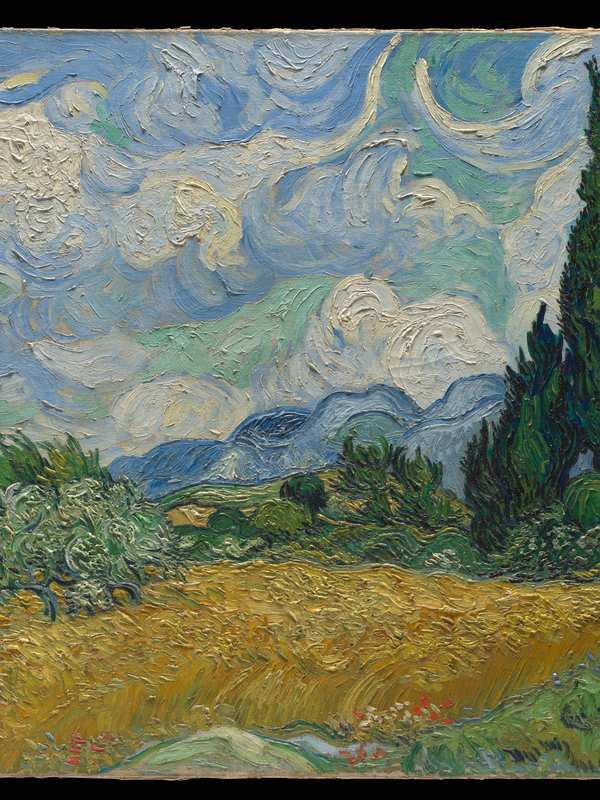
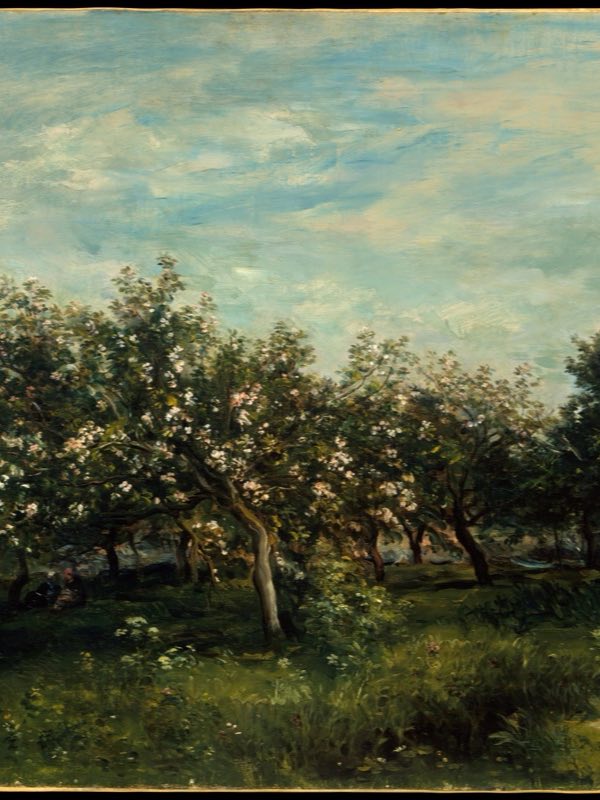
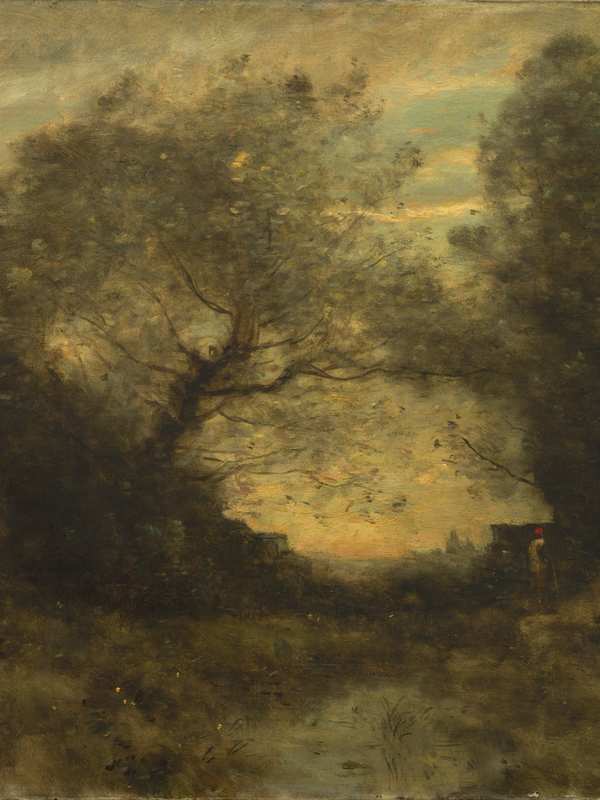
Jules Dupré, “Marshland” (1860s-1870s). The Cleveland Museum of Art, CC0.
Cite this book
Copy a citation in the style you need.
- MLA
- Sibbes, Richard. The Bruised Reed. 1630. Ochorus, https://ochorus.com/books/the-bruised-reed/.
- Chicago
- Sibbes, Richard. The Bruised Reed. 1630. Reprint, Ochorus. https://ochorus.com/books/the-bruised-reed/.
- Chicago footnote
- Richard Sibbes, The Bruised Reed (1630; repr., Ochorus), https://ochorus.com/books/the-bruised-reed/.
- BibTeX
- @book{sibbes1630bruised, author = {Sibbes, Richard}, title = {{The Bruised Reed}}, year = {1630}, publisher = {Ochorus}, url = {https://ochorus.com/books/the-bruised-reed/} }