New to Richard Sibbes? Start with
The Bruised Reed
All works · 3 hr 41 min read
Biography
- 1577 Born
- 1595 Cambridge
- 1603 Converted
- 1617 Gray's Inn
- 1627 Doctorate
- 1635 Died
There is more mercy in Christ than sin in us.
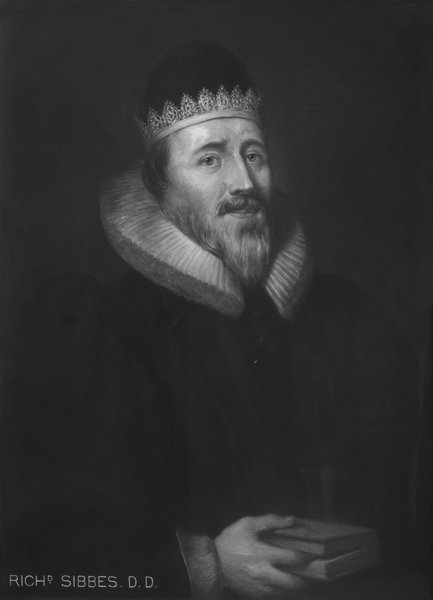
Richard Sibbes preached in one of the harshest religious ages England has known, and became famous for gentleness. Where much of the Puritan pulpit pressed hard on the conscience, Sibbes went looking for the people who had already given up on themselves — the doubting, the downcast, the believer so bruised he could barely pray — and spoke to them with such tenderness that his own century nicknamed him “the sweet dropper,” and, after his doctorate, “the Heavenly Doctor Sibbes.” His most enduring book takes its title and its whole spirit from a single promise of Isaiah, carried over into the Gospels: that the Messiah will not break the bruised reed nor quench the smoking flax.
There is more mercy in Christ than sin in us.
— Richard Sibbes, The Bruised Reed
A wheelwright’s son
He was born in 1577 at Tostock, a village in Suffolk, the son of Paul Sibbes, a wheelwright — a maker and mender of wheels. It was not a home from which scholars were expected to come, and his father is said to have wished the boy would take up the family trade rather than bury himself in books. But the local minister and friends saw the promise in him. From the grammar school at Bury St Edmunds he went up to St John’s College, Cambridge, in 1595, took his degree in 1599, and was elected a Fellow of the college in 1601. The wheelwright’s son had become a Cambridge man.
Converted under a quiet preacher
Learning, though, is not the same as life, and the decisive turn came around 1603 under the preaching of Paul Baynes — the man who had succeeded the great William Perkins in the pulpit of St Andrew’s, Cambridge. Baynes was no celebrity; he lived and died in relative obscurity and difficulty. But under his plain, searching ministry Sibbes was converted, and he never forgot the debt, speaking of Baynes ever after as his father in the gospel. It placed Sibbes in a remarkable spiritual lineage — Perkins to Baynes to Sibbes — and Sibbes would extend that line further than any of them, becoming spiritual father to a whole generation.
The Heavenly Doctor
Ordained in his early thirties, Sibbes became a lecturer at Holy Trinity Church, Cambridge, around 1610, and the town discovered a preacher. His ministry drew crowds and, inevitably in the reign of the anti-Puritan bishops, suspicion; the old story that he was formally stripped of his posts for nonconformity has been overturned by modern research, but there is no doubt he preached under pressure and watchful eyes. Through it all he kept his footing. In 1617 he was chosen preacher to the lawyers of Gray’s Inn in London, one of the most influential pulpits in the country. In 1626 Cambridge called him back as Master of St Catharine’s Hall, which he set about restoring, and in 1627 he was made Doctor of Divinity — the title that fixed his nickname forever. In 1633 the Crown itself presented him to the vicarage of Holy Trinity, the very church where he had begun. A man supposedly ruined for his Puritanism had instead been entrusted, again and again, with the care of souls.
The ministry of the bruised reed
What made Sibbes Sibbes was not his rise but his tone. He built his most famous book on the words of Matthew 12:20 — “A bruised reed shall he not break, and smoking flax shall he not quench” — and turned it into a sustained, patient argument that Christ does not despise weak, struggling, half-extinguished faith, but tends it. He read the two images with a physician’s care. The bruised reed is the soul crushed by a sense of its own sin, and Sibbes held that such bruising is not a sign of Christ’s absence but the very ground He works on. The smoking flax is faith reduced to a barely glowing wick, all smoke and little flame; and the whole burden of the book is that Christ comes not to snuff that smoke but to fan it back into fire. To the believer convinced that his repentance was too shallow and his grace too faint, Sibbes insisted that the smallest true spark is Christ’s own kindling, and that Christ will not blow it out. “This bruising is required before conversion,” he wrote, “that so the Spirit may make way for himself into the heart by levelling all proud, high thoughts.” And he was as shrewd as he was tender: “Weakness with watchfulness will stand,” he warned, “when strength with too much confidence fails.”
This gentleness was not softness of temperament but a settled conviction about how God actually saves people. Sibbes believed that harsh, hectoring preaching drove wounded consciences away from the very Christ they needed, and that the gospel wins its way by drawing rather than driving — by wooing the soul to the loveliness of Christ until it comes willingly. It earned him the affectionate name of “the sweet dropper,” for a ministry that fell on hearers like a gentle, steady rain. His companion treatise, The Soul’s Conflict with Itself, is a whole book on the discipline the psalmist practised when he turned on his own despondency and demanded, “Why art thou cast down, O my soul?”
Father to a generation
Sibbes sat at the warm centre of a wide circle of friendships — ministers, students, and London gentry — that historians call the Puritan “spiritual brotherhood,” much of it hubbed at Gray’s Inn. Through his preaching John Cotton was converted, later carrying that faith to New England. Thomas Goodwin was turned by him from Arminianism toward a warmer, experiential Calvinism, and John Preston was drawn from clever, ornamental preaching to the plain proclamation of Christ. But the most famous fruit of his ministry Sibbes never lived to see, and it came through a book, not a sermon. A poor travelling pedlar sold a copy of The Bruised Reed at the door of a Shropshire household, and the father of the family bought it. His teenage son read it — a boy named Richard Baxter, who would become one of the greatest pastors England ever produced. Baxter recorded what it did:
It opened the love of God to me, and gave me a livelier apprehension of the mystery of redemption, and how much I was beholden to Jesus Christ.
— Richard Baxter, on reading Sibbes’s The Bruised Reed
It is a fair picture of Sibbes’s whole legacy: a gentle book, quietly sold, opening the love of God to a soul the author would never meet. Because he published little himself, much of what we have of Sibbes was gathered from his sermon notes by friends and printed after his death; the standard collection runs to seven volumes, and nearly all of it carries the same errand — to draw the wavering to Christ rather than drive them.
Heaven in him before he was in heaven
Sibbes died in the summer of 1635, on the 5th of July, at Gray’s Inn, unmarried, having spent himself on the souls in his care. About a week before the end he had preached to the lawyers on the fourteenth chapter of John — “Let not your heart be troubled” — fitting last words for the great comforter of troubled hearts. When someone at his bedside asked how his soul stood, he gave an answer that only a lifetime of nearness to God could make sound humble rather than presumptuous: he said he should do God much wrong if he did not say, very well. His will, dictated the day before he died, bequeathed his soul “into the hands of my gracious Saviour, who hath redeemed it with his most precious blood.”
Among those who loved him was Izaak Walton, the writer, who kept a copy of Sibbes’s sermons and wrote in it two lines that have outlived every controversy of the age:
Of this blest man, let this just praise be given, / Heaven was in him, before he was in heaven.
— Izaak Walton, of Richard Sibbes
Nearly four centuries later that is still the truest word on him. Sibbes left no great institution and courted no power; he left books that go on doing gently what he did — finding the bruised reed, and refusing to break it. To anyone who has feared that his faith is too weak to count, the Heavenly Doctor still says what he said to Cambridge and to Gray’s Inn: that there is more mercy in Christ than sin in us, and that the One who lit even the faintest spark has promised never to let it go out.
Books by Richard Sibbes (2)

Articles about Richard Sibbes (1)
Questions and Answers
Who was Richard Sibbes?
Richard Sibbes (1577–1635) was an English Puritan preacher known in his own day as "the heavenly Doctor." He preached in one of the harshest religious ages England has known and became famous for gentleness: where much of the Puritan pulpit pressed hard on the conscience, Sibbes went looking for the people who had already given up on themselves — the doubting, the downcast, the believer so bruised he could barely pray — and spoke to them with such tenderness that his century nicknamed him "the sweet dropper."
What were his origins?
He was born in 1577 at Tostock in Suffolk, the son of Paul Sibbes, a wheelwright — a maker and mender of wheels — who is said to have wished the boy would take up the family trade rather than bury himself in books. But the local minister and friends saw the promise in him, and from the grammar school at Bury St Edmunds he went up to St John's College, Cambridge, in 1595, took his degree in 1599, and was elected a Fellow in 1601.
How was he converted?
Learning is not the same as life, and the decisive turn came around 1603 under the preaching of Paul Baynes, who had succeeded the great William Perkins in the pulpit of St Andrew's, Cambridge. Baynes was no celebrity and lived in relative obscurity, but under his plain, searching ministry Sibbes was converted, and he spoke of Baynes ever after as his father in the gospel — placing him in the lineage Perkins to Baynes to Sibbes.
What was his ministry?
Ordained in his early thirties, he became a lecturer at Holy Trinity Church, Cambridge, around 1610 and drew crowds. In 1617 he was chosen preacher to the lawyers of Gray's Inn in London, one of the most influential pulpits in the country; in 1626 Cambridge called him back as Master of St Catharine's Hall; in 1627 he was made Doctor of Divinity, the title that fixed his nickname; and in 1633 the Crown presented him to the vicarage of Holy Trinity, where he had begun.
What is The Bruised Reed about?
He built his most famous book on Matthew 12:20 — "A bruised reed shall he not break, and smoking flax shall he not quench" — and turned it into a sustained, patient argument that Christ does not despise weak, struggling, half-extinguished faith but tends it. Its keynote is one of the most quoted sentences in Puritan devotion: "There is more mercy in Christ than sin in us."
What do the two images mean?
He read them with a physician's care. The bruised reed is the soul crushed by a sense of its own sin, and Sibbes held that such bruising is not a sign of Christ's absence but the very ground he works on. The smoking flax is faith reduced to a barely glowing wick, all smoke and little flame, and the whole burden of the book is that Christ comes not to snuff that smoke but to fan it back into fire — the smallest true spark is his own kindling.
Why was he so gentle?
This gentleness was not softness of temperament but a settled conviction about how God actually saves people. Sibbes believed that harsh, hectoring preaching drove wounded consciences away from the very Christ they needed, and that the gospel wins its way by drawing rather than driving — by wooing the soul to the loveliness of Christ until it comes willingly. He was as shrewd as he was tender: "Weakness with watchfulness will stand, when strength with too much confidence fails."
What is The Soul's Conflict?
Its companion treatise is a whole book on the discipline the psalmist practised when he turned on his own despondency and demanded, "Why art thou cast down, O my soul?" Sibbes taught the downcast believer to do the same — to reason with his own sinking heart rather than sink with it, preaching to himself and arguing his soul back from despair to God until the question gives way to renewed hope.
How was he father to a generation?
He sat at the warm centre of the Puritan "spiritual brotherhood." Through his preaching John Cotton was converted and later carried that faith to New England; Thomas Goodwin was turned toward a warmer, experiential Calvinism, and John Preston from ornamental preaching to the plain proclamation of Christ. His most famous fruit came through a book: a pedlar sold a copy of The Bruised Reed to a Shropshire household, whose son Richard Baxter said it "opened the love of God to me."
How did he die?
He died on 5 July 1635 at Gray's Inn, unmarried, having spent himself on the souls in his care. About a week before the end he had preached to the lawyers on the fourteenth chapter of John — "Let not your heart be troubled" — fitting last words for the great comforter of troubled hearts. Asked how his soul stood, he said he should do God much wrong if he did not say, very well. Izaak Walton wrote of him: "Heaven was in him, before he was in heaven."