- 11 chapters
- 54 min read
- Moderate Reading difficulty
Free to read·No account needed
Why We Ought to Love God
Taking books where there’s no signal? See Ochorus for missionaries or chaplains
About this book
On Loving God is Bernard of Clairvaux's great little treatise on why and how we should love God. Writing in the twelfth century, Bernard answers that we love God because of who He is and all He has given — and he traces the soul's ascent through four degrees of love, from loving self, to loving God for our own sake, to loving God for God's sake, and at last to loving even ourselves for God alone. Tender, searching, and short, it has fed the devotion of Christians for eight hundred years.
You wish me to explain for what reason and in what measure we should love God. I should say that God Himself is the motive of our love to Him, and that the measure of due love is to be without measure. Is this clear enough?
Contents
- 1 Why We Ought to Love God 3 min
- 2 God's Right to Our Love 7 min
- 3 The Christian's Greater Motive to Love 6 min
- 4 Who Finds Comfort in God 6 min
- 5 The Duty to Love God 4 min
- 6 A Summary 2 min
- 7 The Reward of Loving God 9 min
- 8 The First Degree of Love 4 min
- 9 The Second and Third Degrees of Love 2 min
- 10 The Fourth Degree of Love 5 min
- 11 Perfect Love After the Resurrection 7 min
Questions and Answers
What is On Loving God about?
It is Bernard of Clairvaux's great little treatise on why and how we should love God. Writing in the twelfth century, Bernard answers the question of why God is to be loved by saying: because of who he is and all he has given — and the question of how much, with his famous reply, that the measure of loving God is to love him without measure. He then traces the soul's ascent through degrees of love.
Who was Bernard of Clairvaux?
A twelfth-century French abbot, the founder of the monastery of Clairvaux and one of the most influential figures of the medieval church — a reformer, preacher, and mystic whose warmth of devotion earned him the title 'the honey-sweet doctor.' On Loving God is among his best-known works and a classic of Christian spirituality.
What is Bernard's answer to why we should love God?
That God deserves our love for his own sake, because of who he is, and that we owe it to him for all he has given — first the gifts of creation and life, and above all the gift of himself in redemption. God loved us first and gave himself for us; the only fitting response is to love him in return, and to love him because he is worthy of it, not merely for his benefits.
What does Bernard mean by loving God 'without measure'?
Asked what the measure of loving God should be, Bernard replies that the measure is to love without measure — that is, there is no limit at which love for God becomes excessive. Because God's own love and worth are boundless, the love we owe him knows no proper ceiling; we are always to love him more, never to decide we have loved him enough.
What are the 'degrees of love' Bernard describes?
Bernard traces the soul's ascent through stages: first a man loves himself for his own sake; then he loves God for his own benefit; then he comes to love God for God's own sake; and at last, rarely and only in part in this life, he loves even himself for God's sake, wholly caught up in the love of God. It is a map of how self-love may be transformed into pure love of God.
Is this a difficult medieval book to read?
It is short and, for its depth, remarkably warm and readable. Bernard writes as a lover of God rather than a mere theologian, and much of the treatise has the tone of devotion rather than argument. Its images and its ardour have kept it alive for eight centuries, and it remains one of the most accessible doorways into medieval Christian spirituality.
Why read a twelfth-century monk on love today?
Because the question he answers — why and how to love God — is permanent, and few have answered it with such clarity and fire. Bernard cuts beneath sentiment to the reasons love is owed to God and charts a path by which cold hearts may be warmed, making the book as searching for the modern reader as for the medieval one.
Where should a reader begin?
At the beginning; the treatise is brief and moves as a single argument, from why God is to be loved to how far, and then up through the degrees of love. Read slowly, as Bernard's own devotion invites, it is less a lesson to be finished than a fire to be warmed at.
Read in your language
More like this



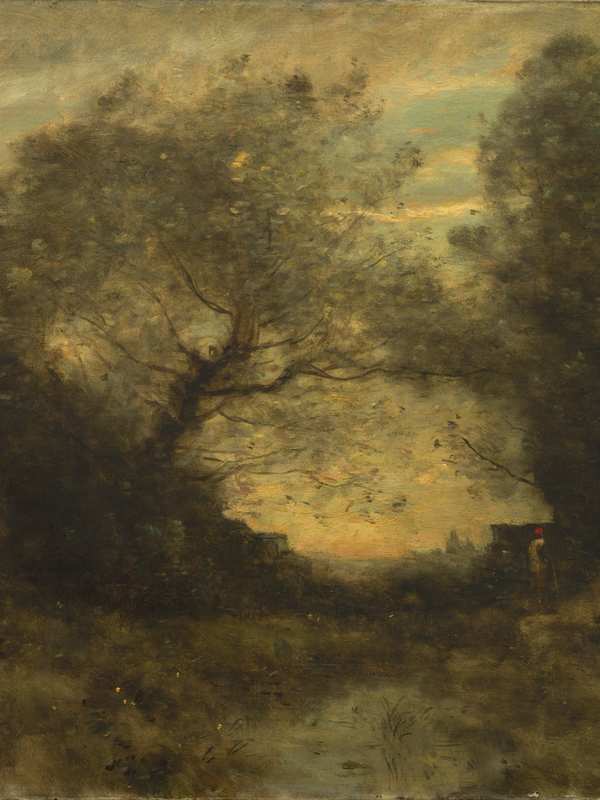
Jean Baptiste Camille Corot, “The Pond at the Entrance of the Woods” (c. 1860–75). The Cleveland Museum of Art, CC0.
Cite this book
Copy a citation in the style you need.
- MLA
- Bernard of Clairvaux. On Loving God. 1128. Ochorus, https://ochorus.com/books/on-loving-god/.
- Chicago
- Bernard of Clairvaux. On Loving God. 1128. Reprint, Ochorus. https://ochorus.com/books/on-loving-god/.
- Chicago footnote
- Bernard of Clairvaux, On Loving God (1128; repr., Ochorus), https://ochorus.com/books/on-loving-god/.
- BibTeX
- @book{bernardofclairvaux1128loving, author = {Bernard of Clairvaux}, title = {{On Loving God}}, year = {1128}, publisher = {Ochorus}, url = {https://ochorus.com/books/on-loving-god/} }