Book
On the Incarnation
Translated by Archibald Robertson
Other titles: De Incarnatione Verbi Dei · Περὶ τῆς Ἐνανθρωπήσεως τοῦ Λόγου · On the Incarnation of the Word
Athanasius of Alexandria · 296–373
- 57 chapters
- 2 hr 22 min read
- Moderate Reading difficulty
Free to read·No account needed
Introductory
Taking books where there’s no signal? See Ochorus for missionaries or chaplains
Reader’s guide
About this book
A short treatise on a single question: why did God become man? Athanasius answers it not as a puzzle but as a rescue. Humanity was made in the image of God and was sliding back into the nothing it came from; no one but the Word who made that image could restore it, and he could not restore it from outside. So he took a body — and the treatise follows that logic out through the cross, the resurrection, and the strange fact that ordinary Christians of his own day had stopped being afraid of death.
When it was written is not settled. Scholars have placed it anywhere from about 318 to the 330s, and the difficulty is itself revealing: the book never mentions Arius. The controversy that consumed the rest of Athanasius's life — five exiles, decades of argument over whether the Son was of one substance with the Father — leaves no mark on these pages. What is here instead is the positive case, argued before or apart from the fight, which may be why it has outlived the fight.
It is the best door into the early church for a reader who has never opened a Father before: short, unhurried, and written in a Greek that translates plainly. C. S. Lewis's introduction to a 1944 English edition — the essay arguing that old books are easier, not harder, than new ones — was written for this one, and sent generations of English readers to it.
Contents
- 1 Introductory 2 min
- 2 Erroneous views of Creation rejected 3 min
- 3 The true doctrine 3 min
- 4 Our creation and God's Incarnation most intimately connected 2 min
- 5 For God has not only made us out of nothing 2 min
- 6 The human race then was wasting 2 min
- 7 On the other hand there was the consistency of God's nature 2 min
- 8 The Word, then, visited that earth in which He was yet always present 3 min
- 9 The Word, since death alone could stay the plague 2 min
- 10 By a like simile, the reasonableness of the work of redemption is shewn 3 min
- 11 Second reason for the Incarnation 3 min
- 12 For though man was created in grace 2 min
- 13 Here again, was God to keep silence? 3 min
- 14 A portrait once effaced must be restored from the original 3 min
- 15 Thus the Word condescended to man's engrossment in corporeal things 2 min
- 16 He came then to attract man's sense-bound attention to Himself as man 2 min
- 17 How the Incarnation did not limit the ubiquity of the Word 3 min
- 18 How the Word and Power of God works in His human actions 3 min
- 19 Man, unmoved by nature, was to be taught to know God by that sacred 2 min
- 20 None, then, could bestow incorruption 3 min
- 21 Death brought to nought by the death of Christ 3 min
- 22 But why did He not withdraw His body from the Jews 2 min
- 23 Necessity of a public death for the doctrine of the Resurrection 2 min
- 24 Further objections anticipated 2 min
- 25 Why the Cross, of all deaths? 3 min
- 26 Reasons for His rising on the Third Day 3 min
- 27 The change wrought by the Cross in the relation of Death to Man 2 min
- 28 This exceptional fact must be tested by experience 2 min
- 29 Here then are wonderful effects 3 min
- 30 The reality of the resurrection proved by facts 3 min
- 31 If Power is the sign of life 3 min
- 32 But who is to see Him risen, so as to believe? 3 min
- 33 Unbelief of Jews and scoffing of Greeks 2 min
- 34 Prophecies of His passion and death in all its circumstances 2 min
- 35 Prophecies of the Cross 3 min
- 36 Prophecies of Christ's sovereignty, flight into Egypt, &c 2 min
- 37 Psalm xxii 3 min
- 38 Other clear prophecies of the coming of God in the flesh 3 min
- 39 Do you look for another? 2 min
- 40 Argument (1) from the withdrawal of prophecy and destruction of 4 min
- 41 Answer to the Greeks 2 min
- 42 His union with the body is based upon His relation to Creation as a 3 min
- 43 He came in human rather than in any nobler form 3 min
- 44 As God made man by a word, why not restore him by a word? 4 min
- 45 Thus once again every part of creation manifests the glory of God 3 min
- 46 Discredit, from the date of the Incarnation 2 min
- 47 The numerous oracles,--fancied apparitions in sacred places 2 min
- 48 Further facts 3 min
- 49 His Birth and Miracles 2 min
- 50 Impotence and rivalries of the Sophists put to shame by the Death of 2 min
- 51 The new virtue of continence 2 min
- 52 Wars, &c., roused by demons, lulled by Christianity 2 min
- 53 The whole fabric of Gentilism levelled at a blow by Christ secretly 2 min
- 54 The Word Incarnate, as is the case with the Invisible God 2 min
- 55 Summary of foregoing 2 min
- 56 Search then, the Scriptures, if you can, and so fill up this sketch 2 min
- 57 Above all, so live that you may have the right to eat of this tree of 2 min
Questions and Answers
What is On the Incarnation about?
It answers a single question: why did God become man? Athanasius treats it not as a philosophical puzzle but as a rescue. Humanity, made in the image of God, was sliding back toward the nothing it was made from, and no one but the Word who first made that image could restore it — and he could not restore it from outside. So he took a real body, and the treatise follows that logic through the cross, the resurrection, and the new fearlessness of ordinary Christians before death.
Who was Athanasius?
A young deacon, and later bishop, of Alexandria in the fourth century, who would spend some seventeen of his later years in exile for defending the full deity of Christ against Arianism. He wrote this treatise early, as a positive statement of the church's faith in the incarnate Word — the confession he would spend the rest of his life contending for.
Why did God have to become man, according to Athanasius?
Because the problem was twofold: humanity was under a sentence of death and corruption that God's own truthfulness would not simply revoke, and the image of God in humanity was being effaced. Only the Word who is himself the image could renew it in us, and only by taking a mortal body could he pay death's due on our behalf. Repentance alone could not undo corruption; it took the Author of life entering it.
What is the famous saying from this book?
Athanasius writes that the Word became man so that we might be made divine — that he took what is ours to give us what is his. The phrase became a summary of the whole Christian doctrine of salvation: not that we become God by nature, but that in Christ human beings are lifted into the life of God, sharing by grace what the Son is by right.
When was it written?
The date is not settled — scholars place it anywhere from about 318 to the 330s. The difficulty is itself revealing: the book never mentions Arius, whose controversy would soon consume Athanasius's life. It reads as a statement of the faith held before the great argument, which is part of why it has been valued as a clear window onto the early church's settled belief.
Does the book argue for the resurrection?
Yes — Athanasius points to the plain evidence of his own day: that ordinary Christians, including children and women, no longer feared death but met it calmly, even eagerly. A dead man cannot do this to his followers; a living Lord can. He treats the changed relationship of Christians to death as visible proof that the one who died is alive.
Is it difficult reading for a modern reader?
It is remarkably short and clear for a work of theology — one of the reasons it is so often recommended as a first patristic text. C. S. Lewis, who wrote a well-known preface to one translation, urged readers of old books to start here precisely because it is accessible, and argued that its very strangeness to modern ears is part of its value.
Where should a reader begin?
At the beginning; the treatise is meant to be read straight through as a single argument. Follow its logic from the making of humanity in God's image, through the dilemma of corruption, to the taking of a body and the defeat of death. Read this way, it is not a collection of doctrines but one sustained account of why the whole faith stands or falls on the reality of the incarnation.
Read in your language
About the author
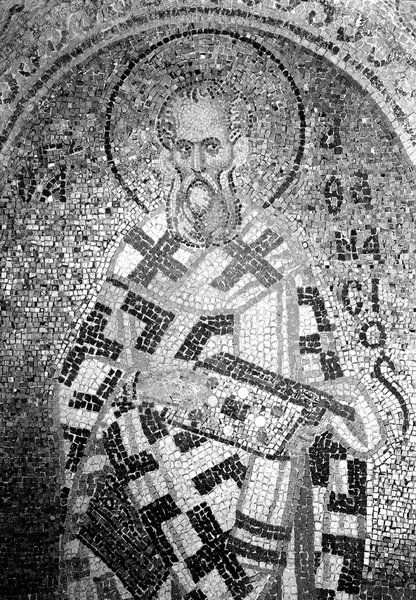
Athanasius of Alexandria
On the Incarnation · 318
More like this
Thomas Cole, “New England Scenery” (1839). The Art Institute of Chicago, CC0.
Cite this book
Copy a citation in the style you need.
- MLA
- Athanasius of Alexandria. On the Incarnation. 318. Ochorus, https://ochorus.com/books/on-the-incarnation/.
- Chicago
- Athanasius of Alexandria. On the Incarnation. 318. Reprint, Ochorus. https://ochorus.com/books/on-the-incarnation/.
- Chicago footnote
- Athanasius of Alexandria, On the Incarnation (318; repr., Ochorus), https://ochorus.com/books/on-the-incarnation/.
- BibTeX
- @book{athanasiusofalexandria318incarnation, author = {Athanasius of Alexandria}, title = {{On the Incarnation}}, year = {318}, publisher = {Ochorus}, url = {https://ochorus.com/books/on-the-incarnation/} }