New to Julia A. J. Foote? Start with
A Brand Plucked from the Fire
All works · 1 hr 56 min read
Biography
- 1823 Born
- 1878 Lodi meeting
- 1879 Memoir
- 1900 Died
In this severe trial I had constant access to God, and a clear consciousness that he heard me.
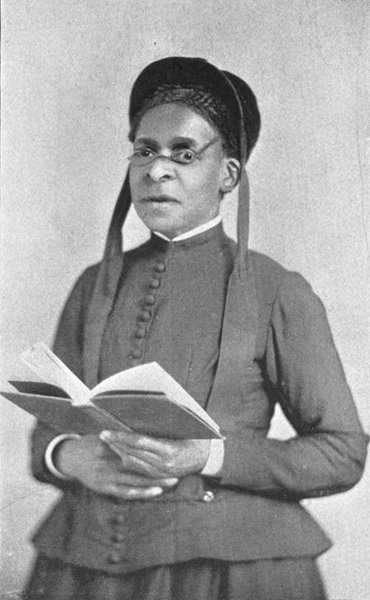
Julia A. J. Foote was born on May 21, 1823, in Schenectady, New York, the fourth child of parents who had known slavery firsthand. Her father was born free but was stolen as a child and enslaved; her mother was born a slave in the State of New York and served a cruel master and mistress before the family won its freedom. Out of that hard inheritance came a girl of fierce conscience and quick mind, sent out at ten to work as a servant in a family some miles from home, and hungry — long before she could name it — for God.
Her childhood was marked by the casual cruelties of a world built on slavery even where slavery was ending. She was whipped, once, for a theft she had not committed; a beloved schoolteacher was hanged for a crime; and everywhere she felt the weight of being poor, Black, and a girl. Yet she also remembered mercies — a family that treated her, for a time, almost as their own, and above all a growing sense that God was near. She learned to read chiefly so that she could read the Testament for herself, sounding out its words by firelight.
At fifteen she was converted. It happened, as she tells it, on a Sunday evening at a quarterly meeting, in a rush of assurance she never doubted afterward. But conversion only opened a deeper hunger. She had heard the Methodists speak of a second work of grace — entire sanctification, a heart made clean and wholly Christ's — and she would not rest until she had it. In an age when many Christians treated the new birth as the end of the matter, Foote believed the gospel promised more: not only forgiveness for what one had done, but cleansing for what one was.
The work of full salvation
She did not have to wait long. One May morning an old saint — "that dear old mother in Israel," she called her — came to the house in Albany and opened the Scriptures to her, and two days later, as she waited on the Lord, the longing was answered. She entered into what she called, all her life, "the work of full salvation" — sanctification as a distinct, definite gift of the Holy Spirit — and from that day holiness was the burden of her testimony. It cost her old friends at once. She carried it into her marriage to George Foote, a sailor, and with him to Boston, and when she rose at her first class-meeting there to tell of it, some crowded round to ask how they too might find it; others stood off in groups, talking. That division would follow her for the rest of her life. To preach holiness in her day, and to be a Black woman doing it, was to feel, in her own words, that "every man's hand is against us" — and to answer that not with bitterness but with communion.
In this severe trial I had constant access to God, and a clear consciousness that he heard me.
— Julia A. J. Foote
A call she fought, then obeyed
The call to preach came slowly and against her will. For months she found herself drawn out in prayer and exhortation from house to house, her "whole soul seemed drawn out for the salvation of souls." Friends warned that she was too forward. And when the conviction sharpened into a summons, she resisted it as Jonah had.
When she began to preach, the minister of her own African Methodist Episcopal Zion congregation in Boston moved against her. She asked only to be heard; he refused, put her name before the church, and had her cut off. She was tried and expelled from the church she loved — excommunicated for the double offense of preaching holiness and preaching as a woman. She appealed to the conference of ministers, trusting that a body of Christian men would judge righteously, and was disappointed again. It was a wound that never fully closed. Yet she refused to let it stop her, and refused, too, to let it turn her bitter. She simply kept preaching, now as an independent evangelist with no denomination behind her and no salary before her, trusting God alone to open the doors and supply the way.
Women in the Gospel
Out of that cost came one of the clearest defenses of women's preaching in nineteenth-century America. Foote had searched the Scriptures for herself, and she could not find the God who had so plainly called and used her forbidding her to speak. Her argument was disarmingly simple: whatever the Spirit gives, he gives to women and men alike.
If the power to preach the Gospel is short-lived and spasmodic in the case of women, it must be equally so in that of men; and if women have lost the gift of prophecy, so have men.
— Julia A. J. Foote
For decades she carried that conviction across the country — through New England and New York, into Ohio and the Midwest, up into Canada — travelling constantly, often poor, often ill, preaching in churches when they would have her and in halls, homes, and camp meetings when they would not. She became one of the best-known evangelists of the Wesleyan-Holiness movement. In 1878 she preached to an estimated five thousand people at a holiness meeting in Lodi, Ohio. Everywhere she went she pressed the same message: not merely pardon, but purity; not merely a first work of grace, but a full salvation that cleanses the heart and fits it for God.
The life cost her dearly. She travelled when she was sick and when she had no money for the fare; she preached in places where a Black woman in a pulpit drew scorn or worse; she was parted, for long stretches, from home and from her husband, whose work at sea already kept them apart, and she outlived him. She met opposition not only from white congregations but from her own people's leaders, who feared that a woman preacher would bring their churches into disrepute. Through all of it she held that the hardship was fellowship with a suffering Saviour, and that the call which had cost her so much was worth more than the cost.
Her travels were sustained, as her memoir records on nearly every page, by unceasing prayer. She prayed her way into hostile meetings and prayed her way through sickness and want; she asked God for her daily bread and her next appointment and wrote down how he supplied them. The trials she met she counted as the fellowship of Christ's sufferings, and the deliverances she met she counted as proof that the God who called her would not abandon her.
Vindicated at the last
Foote grounded her whole ministry in Scripture, not in defiance of it. She pointed to the prophet Joel's promise, fulfilled at Pentecost, that God would pour out his Spirit on daughters as well as sons, so that they too would prophesy; she pointed to the women who followed Christ and the women who labored beside Paul. If God had once spoken through such women, she reasoned, he had not fallen silent — and the same Spirit who sanctified a heart could surely fill a mouth. It was, for her, not a matter of rights to be demanded but of a gift to be obeyed.
In 1879, settled in Cleveland, Ohio, Foote published her autobiography, A Brand Plucked from the Fire — the title taken from the prophet Zechariah's vision of a soul snatched from the flames. It is a plain, fervent book, unashamed of visions and holy joy, and it stands among the most important spiritual narratives left by a Black woman of her century. She wrote it, she said, not for her own name but so that her testimony to full salvation might outlast her and lead others into the same liberty.
Vindication came slowly, and then fully. In 1894 the African Methodist Episcopal Zion Church — the same communion that had once excommunicated her — ordained Julia Foote a deacon, the first woman it had ever so ordained. In 1900, not long before her death, she was ordained an elder, only the second woman to reach that office in the denomination. The church that had cast her out as a young woman received her, at the last, as one of its own ministers. She died that same year, in her late seventies, a brand indeed plucked from the fire — and one that had set many others alight.
Books by Julia A. J. Foote (1)
Books about Julia A. J. Foote (1)

Articles about Julia A. J. Foote (1)
Questions and Answers
Who was Julia Foote?
Born to formerly enslaved parents in 1823, Julia A. J. Foote was a holiness evangelist who was excommunicated for preaching as a woman and later became the first woman ordained a deacon in the A.M.E. Zion Church. She carried a message of full salvation across the North and into Canada for decades, and the very church that had cast her out received her, near the end of her life, as one of its own ministers.
What was her hard inheritance?
She was born on 21 May 1823 in Schenectady, New York, to parents who had known slavery firsthand: her father, born free, had been stolen as a child and enslaved, and her mother was born a slave in New York and served a cruel master before the family won its freedom. Sent out at ten to work as a servant, whipped once for a theft she had not committed, she learned to read chiefly so that she could read the Testament for herself, sounding out its words by firelight.
How was she converted?
At fifteen she was converted on a Sunday evening at a quarterly meeting, in a rush of assurance she never doubted afterward. But conversion only opened a deeper hunger: she had heard the Methodists speak of a second work of grace — entire sanctification, a heart made clean and wholly Christ's — and she would not rest until she had it, believing the gospel promised not only forgiveness for what one had done but cleansing for what one was.
What was "the work of full salvation"?
As a young woman at home in Albany, two days after an old saint — "that dear old mother in Israel," she called her — had opened the Scriptures to her, the longing was answered. She entered into what she called all her life "the work of full salvation" — sanctification as a distinct, definite gift of the Holy Spirit — and from that day holiness was the burden of her testimony. She carried it into her marriage to George Foote, a sailor, and with him to Boston; when she rose at her first class-meeting there to tell of it, some crowded round to ask how they too might find it, while others stood off in groups — a division that would follow her for the rest of her life.
What was the call she fought?
The call to preach came slowly and against her will. For months she was drawn out in prayer and exhortation from house to house, her whole soul, she said, seemed drawn out for the salvation of souls; friends warned she was too forward. When the conviction sharpened into a summons she resisted it as Jonah had, recoiling at her own unfitness — "I thought it could not be that I was called to preach — I, so weak and ignorant" — and answering, "No, Lord, not me," until she could no longer refuse.
Why was she excommunicated?
When she began to preach, the minister of her own African Methodist Episcopal Zion congregation in Boston moved against her. She asked only to be heard; he refused, put her name before the church, and had her cut off. She was tried and expelled from the church she loved — excommunicated for the double offense of preaching holiness and preaching as a woman — and her appeal to the conference of ministers was disappointed again. It was a wound that never fully closed, yet she refused to let it stop her or turn her bitter.
How did she defend women's preaching?
Out of that cost came one of the clearest defenses of women's preaching in nineteenth-century America. Searching the Scriptures for herself, she could not find the God who had so plainly called and used her forbidding her to speak, and her argument was disarmingly simple: "If the power to preach the Gospel is short-lived and spasmodic in the case of women, it must be equally so in that of men; and if women have lost the gift of prophecy, so have men."
What was her preaching life?
For decades she carried her message across New England and New York, into Ohio and the Midwest, up into Canada — travelling constantly, often poor and often ill, preaching in churches when they would have her and in halls, homes and camp meetings when they would not. In 1878 she preached to an estimated five thousand people at a holiness meeting in Lodi, Ohio, becoming one of the best-known evangelists of the Wesleyan-Holiness movement — sustained, her memoir records on nearly every page, by unceasing prayer.
What is A Brand Plucked from the Fire?
In 1879, settled in Cleveland, Ohio, Foote published her autobiography, taking its title from the prophet Zechariah's vision of a soul snatched from the flames. It is a plain, fervent book, unashamed of visions and holy joy, and it stands among the most important spiritual narratives left by a Black woman of her century. She wrote it, she said, not for her own name but so that her testimony to full salvation might outlast her and lead others into the same liberty.
How was she vindicated?
Vindication came slowly, and then fully. In 1894 the African Methodist Episcopal Zion Church — the same communion that had once excommunicated her — ordained Julia Foote a deacon, the first woman it had ever so ordained; in 1900, not long before her death, she was ordained an elder, only the second woman to reach that office in the denomination. The church that had cast her out as a young woman received her, at the last, as one of its own ministers, and she died that same year.