New to Dwight L. Moody? Start with
The Way to God
All works · 16 hr 46 min read
Biography
- 1837 Born
- 1855 Converted
- 1873 Britain tours
- 1889 Bible Institute
- 1899 Died
The world has yet to see what God will do with, and for, and through, and in, and by the man who is fully and wholly consecrated to Him.
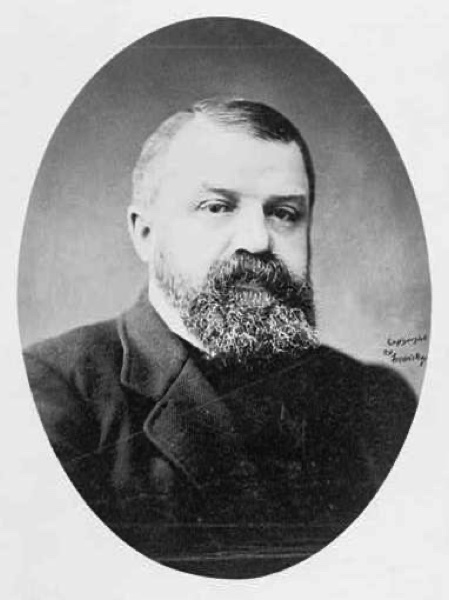
Dwight Lyman Moody never finished grade school, never learned to spell with confidence, and was never ordained. Yet in the second half of the nineteenth century this stocky, fast-talking former shoe salesman preached the gospel, by sober estimate, to as many as a hundred million people — without radio, television, or a single microphone — and founded schools, conferences, and a publishing work whose fruit continues to this day. His secret was no mystery to those who knew him. He believed God meant exactly what He said, and he acted on it with all the energy of his big, warm, restless heart.
The Boy from Northfield
Moody was born on 5 February 1837 on a small farm at Northfield, Massachusetts, the sixth of nine children. When he was four his father died suddenly, leaving the family in debt; creditors took even the kindling from the woodshed. His mother, Betsey, refused to break up the family, and the children grew up poor, hard-working, and only lightly schooled. Dwight had perhaps five years of formal education, and his letters bore the scars of it all his life. At seventeen he walked away from the farm to make his fortune, and talked his way into his uncle Samuel’s shoe store in Boston — on the condition, his uncle insisted, that he attend church and Sunday school every week.
A Shoe Store in Boston
The condition proved to be the hinge of his life. His Sunday school teacher at Mount Vernon Congregational Church, a quiet man named Edward Kimball, resolved to speak to each of his boys personally about Christ. On 21 April 1855 Kimball walked into the shoe store, found young Moody in the back wrapping shoes, put a hand on his shoulder, and told him simply of the love of Christ for him. There, among the shelves, Moody gave his heart to the Saviour. Kimball later admitted he had seldom seen anyone whose mind was spiritually darker than his new convert’s — the church examiners, in fact, turned Moody away at his first application for membership because he knew so little doctrine. Heaven measured him differently.
“Crazy Moody”
In 1856 he moved to Chicago, sold shoes with the same drive he did everything, and began renting pews in church — then filling them with young men he had rounded up off the streets. In 1858 he started a Sunday school in a slum district so rough it was called “Little Hell,” holding classes in an old market hall and recruiting scholars with candy, pony rides, and sheer persistence. Within a few years fifteen hundred children were coming, and in 1860 the president-elect himself, Abraham Lincoln, visited the school. That same year Moody made the decision his friends thought mad: he gave up a flourishing business career — and with it his ambition to be worth a hundred thousand dollars — to give God all his time. During the Civil War he ministered tirelessly to soldiers at the front and in the camps; in 1862 he married Emma Revell, whose steady wisdom balanced his impetuosity for the rest of his days; and in 1864 his mission school grew into a church of its own.
Fire and Power
Two events in 1871 broke Moody’s ministry open. On the night of 8 October, preaching to his largest Chicago audience yet, he closed by asking the crowd to go home and consider what they would do with Jesus — and to come back next week with their answer. That night the Great Chicago Fire destroyed the hall, his church, his home, and much of the city; some of his hearers were never seen again. He never forgot it: to the end of his life he refused to let an audience leave without pressing them to decide for Christ that very night.
Weeks after the fire, walking down a street in New York where he had gone to raise relief funds, the answer came. God’s presence broke upon him so overwhelmingly that he hurried to a friend’s house and asked to be alone; he rarely spoke of that hour afterwards, except to say that he had to ask God to stay His hand. The sermons, he said, were the same sermons — yet now hundreds were converted where dozens had been before.
Two Nobodies Across the Sea
Moody had already learned, from the young English preacher Harry Moorhouse — who once preached to his Chicago congregation seven nights running on John 3:16 — to preach a God who loves sinners rather than one who merely thunders at them. And he carried in his heart a remark made in his hearing by the evangelist Henry Varley:
The world has yet to see what God will do with, and for, and through, and in, and by the man who is fully and wholly consecrated to Him.
— Henry Varley, words Moody resolved to answer: “By the grace of God, I will be that man.”
In June 1873 Moody sailed for England with a young singer named Ira Sankey, two children in tow and scarcely any invitations worth the name. What followed astonished everyone but God. From York and Newcastle the meetings spread to Edinburgh, where the city’s famously careful divines were won over; then Glasgow, Belfast, and Dublin; then four months in London in 1875, where attendance was counted in the millions. Britain’s newspapers could not explain how an unlettered American, preaching plain anecdotes in a rapid Yankee voice while his companion sang hymns from a little organ, was filling the largest halls in the kingdom. Moody could. “The world has yet to see…” He came home in 1875 the best-known evangelist alive, and gave the next quarter-century to campaign after campaign across America and Britain — Brooklyn, Philadelphia, the New York Hippodrome, and beyond.
Schools and Cheap Books
Moody the evangelist is remembered best, but Moody the builder may have reached further. The man with five years of schooling founded the Northfield Seminary for girls in 1879 and Mount Hermon School for boys in 1881, filling them with students too poor for other doors. His summer conferences at Northfield, begun in 1880, kindled the Student Volunteer Movement, which sent thousands of young missionaries around the world. In 1886 he founded the school that would bear his name, the Moody Bible Institute in Chicago, to train “gap men” who could stand between the pulpit and the crowd. And in 1894 — convinced that good books should not be a luxury — he launched a colportage association printing solid Christian paperbacks cheap enough for a farmhand’s wages, and sent them out by the wagonload.
The Coronation
In November 1899, midway through a campaign in Kansas City, his great heart began to fail. He was brought home to Northfield, to the room where he had been born sixty-two years before within sight of the hills he loved. On the morning of 22 December 1899, drifting between sleep and waking, he was heard to say, clearly and without fear:
Earth recedes; heaven opens before me… This is my triumph; this is my coronation day! God is calling me, and I must go.
— D. L. Moody, 22 December 1899
Months earlier he had told an audience what to make of the news when it came:
Some day you will read in the papers that D. L. Moody, of East Northfield, is dead. Don’t you believe a word of it! At that moment I shall be more alive than I am now.
— D. L. Moody
He was buried on Round Top at Northfield, behind the seminary he built. The shoe clerk whom a Sunday school teacher sought out in a back room had been used to move two continents toward heaven — and his plain, warm gospel addresses still do their work wherever they are read.
Books by Dwight L. Moody (5)


Sermons by Dwight L. Moody (11)
Books about Dwight L. Moody (1)
Also appears in
Articles about Dwight L. Moody (4)
Questions and Answers
Where did D. L. Moody come from?
He was born on 5 February 1837 on a small farm at Northfield, Massachusetts, the sixth of nine children. When he was four his father died suddenly, leaving the family so deep in debt that creditors took even the kindling from the woodshed; his mother, Betsey, refused to break up the family, and the children grew up poor, hard-working and only lightly schooled. Dwight had perhaps five years of formal education, and his letters bore the scars of it all his life — he never learned to spell with confidence, and was never ordained.
How was he converted?
At seventeen he left the farm for Boston and talked his way into his uncle Samuel's shoe store, on the condition that he attend church and Sunday school every week. His Sunday-school teacher, a quiet man named Edward Kimball, resolved to speak personally to each of his boys about Christ. On 21 April 1855 Kimball walked into the store, found Moody in the back wrapping shoes, put a hand on his shoulder and told him simply of the love of Christ for him — and there, among the shelves, Moody gave his heart to the Saviour.
Why was he first refused church membership?
Kimball later admitted he had seldom seen anyone whose mind was spiritually darker than his new convert's, and the church examiners turned Moody away at his first application for membership because he knew so little doctrine. Heaven, as his life would show, measured him differently: the barely-schooled shoe clerk who could not pass a doctrine examination would within twenty years be the best-known evangelist alive, having preached, by sober estimate, to as many as a hundred million people without radio, television or a single microphone.
What did his early work in Chicago look like?
Moving to Chicago in 1856, he sold shoes with the same drive he did everything, rented pews and filled them with young men he rounded up off the streets. In 1858 he started a Sunday school in a slum so rough it was called "Little Hell," recruiting scholars with candy, pony rides and sheer persistence until fifteen hundred children were coming; in 1860 the president-elect, Abraham Lincoln, visited. That year Moody gave up a flourishing business career, and his ambition to be worth a hundred thousand dollars, to give God all his time — friends thought him mad and called him "Crazy Moody."
What happened the night of the Great Chicago Fire?
On 8 October 1871, preaching to his largest Chicago audience yet, he closed by asking the crowd to go home and consider what they would do with Jesus, and to come back next week with their answer. That night the Great Fire destroyed the hall, his church, his home and much of the city, and some of his hearers were never seen again. He never forgot it: to the end of his life he refused to let an audience leave without pressing them to decide for Christ that very night, rather than trusting a next week that might never come.
What was the experience of power he received in 1871?
Two praying women, Sarah Cooke and Mrs. Hawxhurst, had begun sitting on his front bench, telling him plainly they were praying that he would receive the power of the Spirit. At first it nettled him — he thought he had power enough — but soon he was pleading with God alongside them. Weeks after the fire, walking a New York street, the answer came: God's presence broke on him so overwhelmingly that he hurried to a friend's house to be alone and had to ask God to stay His hand. The sermons were the same, he said, yet now hundreds were converted where dozens had been before.
What was the sentence that shaped his ambition?
He had heard the evangelist Henry Varley say, "The world has yet to see what God will do with, and for, and through, and in, and by the man who is fully and wholly consecrated to Him." Moody resolved to answer it: "By the grace of God, I will be that man." From the young English preacher Harry Moorhouse — who once preached seven nights running on John 3:16 — he had also learned to proclaim a God who loves sinners rather than one who merely thunders at them, and that note of divine love became the heart of his message.
How did his British campaigns unfold?
In June 1873 he sailed for England with the singer Ira Sankey and scarcely any invitations worth the name. What followed astonished everyone but God: from York and Newcastle the meetings spread to Edinburgh, where the city's famously careful divines were won over, then Glasgow, Belfast and Dublin, then four months in London in 1875 where attendance was counted in the millions. Britain's newspapers could not explain how an unlettered American, preaching plain anecdotes in a rapid Yankee voice while Sankey sang from a little organ, was filling the largest halls in the kingdom.
What did he build besides preaching?
The man with five years of schooling founded the Northfield Seminary for girls in 1879 and Mount Hermon School for boys in 1881, filling them with students too poor for other doors. His summer conferences at Northfield kindled the Student Volunteer Movement, which sent thousands of young missionaries around the world. In 1886 he founded the Moody Bible Institute in Chicago to train "gap men," and in 1894, convinced that good books should not be a luxury, he launched a colportage association printing solid Christian paperbacks cheap enough for a farmhand's wages.
How did he die?
In November 1899, midway through a campaign in Kansas City, his great heart began to fail, and he was brought home to Northfield, to the room where he had been born sixty-two years before. On the morning of 22 December 1899 he was heard to say clearly, "Earth recedes; heaven opens before me... This is my triumph; this is my coronation day!" Months earlier he had told an audience, "Some day you will read in the papers that D. L. Moody... is dead. Don't you believe a word of it! At that moment I shall be more alive than I am now."