

Book
Thoughts for the Quiet Hour
A Scripture and a Comment for Every Day of the Year
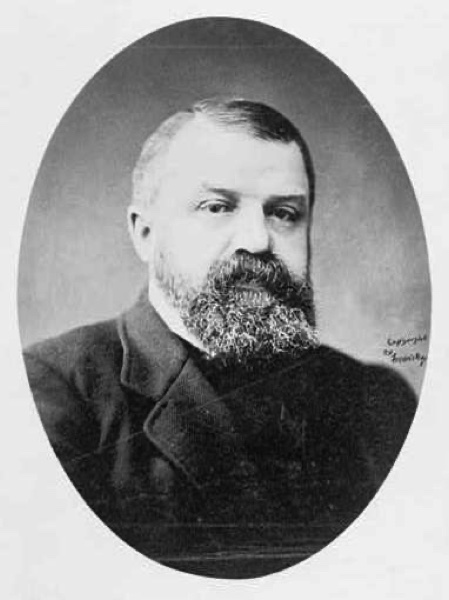
Dwight L. Moody · 1837–1899
- 12 chapters
- 3 hr 13 min read
- Accessible Reading difficulty
Free to read·No account needed
January
Taking books where there’s no signal? See Ochorus for missionaries or chaplains
About this book
A short daily devotional gathered by D. L. Moody: for every day of the year, a passage of Scripture and a brief comment drawn from the great devotional writers Moody loved to read. A quiet, varied companion for the morning or evening hour, ranging across the whole church from the Puritans to Moody's own contemporaries.
My Father, I am coming. Nothing on the mean plain shall keep me away from the holy heights. Help me to climb fast, and keep Thou my foot, lest it fall upon the hard rock! At Thy bidding I come, so Thou wilt not mock my heart.
Contents
Questions and Answers
What is Thoughts for the Quiet Hour about?
It is a short daily devotional gathered by D. L. Moody: for every day of the year, a passage of Scripture and a brief comment drawn from the great devotional writers Moody loved to read. Rather than his own words, it collects the choicest thoughts of many authors, making a quiet, varied companion for the morning or the quiet hour with God.
Who compiled it, and how?
D. L. Moody, the famous nineteenth-century American evangelist, gathered it — not by writing the meditations himself but by selecting, for each day, a verse of Scripture and a brief thought from the devotional writers he most valued. It is thus an anthology of many voices, arranged by Moody as a daily aid to reflection and prayer.
What makes this devotional distinctive?
Its variety. Because Moody drew the daily comments from many different authors rather than writing them himself, the reader hears a chorus of devotional voices across the year — Puritans, deeper-life writers, hymn-writers, and others. This gives the book a breadth and richness, offering a fresh perspective each day from the wide reading of a man who loved good devotional books.
What is the 'quiet hour'?
It is the time set apart for stillness with God — the daily appointment of Scripture, reflection, and prayer, often in the morning, that feeds the soul. Moody prized this habit and gathered these thoughts to enrich it, providing a short, focused portion for the reader's own quiet hour each day.
How is the book arranged?
As a reading for each day of the year, each pairing a passage of Scripture with a brief borrowed meditation. It is designed to be used one day at a time, a small and unhurried portion, making it easy to keep as a steady companion through the year without demanding much time on any single morning.
Who is this devotional for?
For any Christian wanting a brief, varied daily reading to guard the quiet hour with God, and especially for those who enjoy sampling the wisdom of many devotional writers. Its brevity suits busy mornings, and its breadth of sources makes it a rich and refreshing companion for daily reflection.
How does it differ from a single-author devotional?
Because Moody gathered its meditations from many writers, it offers a different voice almost every day, rather than one author's sustained style. This makes it more varied than devotionals like Spurgeon's or Meyer's, functioning as an anthology of the best devotional thoughts Moody had gathered from a lifetime of reading.
Where should a reader begin?
At today's date, and then one reading each day. Like other year-long devotionals it is meant to be lived with across a year rather than read straight through, so the best way to begin is simply to take up today's Scripture and thought and let them feed the quiet hour.
Read in your language
More like this



Public domain. Source text from the original edition.
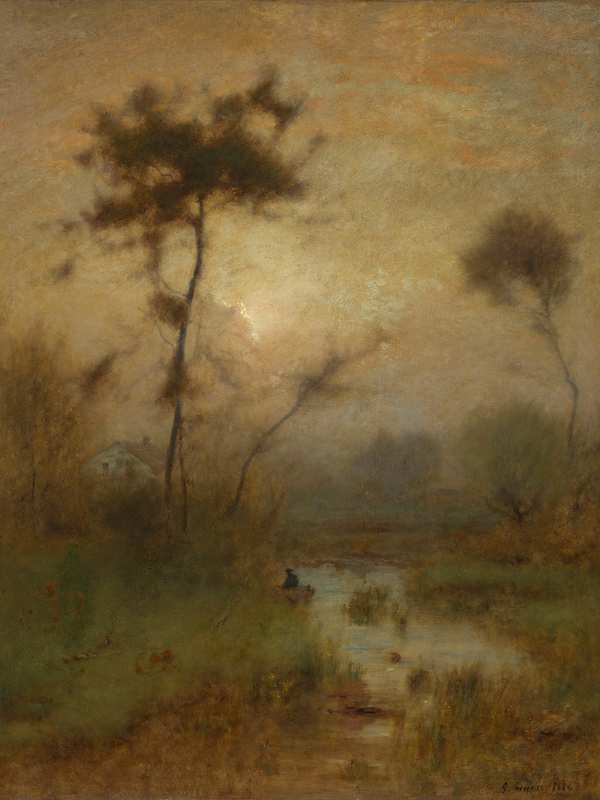
John Frederick Kensett, “Twilight on the Sound, Darien, Connecticut” (1872). The Metropolitan Museum of Art, Open Access.
Cite this book
Copy a citation in the style you need.
- MLA
- Moody, Dwight L. Thoughts for the Quiet Hour. 1900. Ochorus, https://ochorus.com/books/thoughts-for-the-quiet-hour/.
- Chicago
- Moody, Dwight L. Thoughts for the Quiet Hour. 1900. Reprint, Ochorus. https://ochorus.com/books/thoughts-for-the-quiet-hour/.
- Chicago footnote
- Dwight L. Moody, Thoughts for the Quiet Hour (1900; repr., Ochorus), https://ochorus.com/books/thoughts-for-the-quiet-hour/.
- BibTeX
- @book{moody1900thoughts, author = {Moody, Dwight L.}, title = {{Thoughts for the Quiet Hour}}, year = {1900}, publisher = {Ochorus}, url = {https://ochorus.com/books/thoughts-for-the-quiet-hour/} }