

Book
Lectures on Revivals of Religion
How Revival Comes
Other titles: Revival Lectures · Lectures on Revival · Revivals of Religion
Charles G. Finney · 1792–1875
- 24 chapters
- 16 hr 47 min read
- Moderate Reading difficulty
Free to read·No account needed
The Lecturer’s Preface
Taking books where there’s no signal? See Ochorus for missionaries or chaplains
Reader’s guide
About this book
Charles Finney’s famous lectures on the nature of revival—what a revival of religion is, when it may be expected, and how it may be promoted. He deals searchingly with prevailing prayer, the spirit of prayer, being filled with the Spirit, and the means God uses to awaken sinners and revive His church. Plain-spoken and demanding, these lectures have influenced generations of Christians.
IT is supposed that the prophet Habakkuk was contemporary with Jeremiah, and that this prophecy was uttered in anticipation of the Babylonish captivity. Looking at the judgments which were speedily to come upon his nation, the soul of the prophet was wrought up to an agony, and he cries out in his distress, “O Lord, revive thy work.” As if he had said, “O Lord…
Contents
- 1 The Lecturer’s Preface 6 min
- 2 Advertisement by the Reporter 2 min
- 3 Lecture I. What a Revival of Religion is 28 min
- 4 Lecture II. When a Revival is to be Expected 29 min
- 5 Lecture III. How to Promote a Revival 29 min
- 6 Lecture IV. Prevailing Prayer 44 min
- 7 Lecture V. The Prayer of Faith 37 min
- 8 Lecture VI. The Spirit of Prayer 40 min
- 9 Lecture VII. On Being Filled with the Spirit 39 min
- 10 Lecture VIII. Meetings for Prayer 35 min
- 11 Lecture IX. Means to be Used with Sinners 34 min
- 12 Lecture X. To Win Souls Requires Wisdom 40 min
- 13 Lecture XI. A Wise Minister will be Successful 44 min
- 14 Lecture XII. How to Preach the Gospel 63 min
- 15 Lecture XIII. How Churches Can Help Ministers 60 min
- 16 Lecture XIV. Measures to Promote Revivals 55 min
- 17 Lecture XV. Hinderances to Revivals 70 min
- 18 Lecture XVI. The Necessity and Effect of Union 53 min
- 19 Lecture XVII. False Comforts for Sinners 66 min
- 20 Lecture XVIII. Directions to Sinners 46 min
- 21 Lecture XIX. Instructions to Converts 64 min
- 22 Lecture XX. Instruction for Young Converts 46 min
- 23 Lecture XXI. Backslider in Heart 35 min
- 24 Lecture XXII. Growth in Grace 41 min
Questions and Answers
What is Lectures on Revivals of Religion about?
It is Charles Finney's famous series of lectures on revival — what a revival of religion is, when it may be expected, and how it may be promoted. Drawing on his own experience as an evangelist, Finney deals searchingly with prevailing prayer, the spirit of prayer, being filled with the Spirit, and the means he believed God uses to bring about seasons of spiritual awakening.
Who was Charles Finney?
Charles Grandison Finney was a nineteenth-century American revivalist and, later, a college president and theologian, one of the most influential and controversial figures of the Second Great Awakening. His revival campaigns drew great crowds, and these lectures, delivered and published in the 1830s, set out his understanding of how revivals come about.
What is Finney's view of how revivals happen?
Finney famously argued that a revival is not a miracle in the sense of being wholly outside the reach of means, but the right use of appropriate means under God — that if the church will meet the conditions, especially in prayer and repentance, revival may be expected. This emphasis on means and conditions was both influential and much debated.
Why has the book been controversial?
Because Finney's stress on human means and conditions in producing revival struck some as diminishing the sovereign, gracious work of God, and his theology on other points was disputed. Yet even critics have recognized the power of his call to prayer and holiness, and the lectures have shaped how many Christians think about seeking revival ever since.
What does Finney teach about prayer and revival?
That prevailing prayer and the spirit of prayer are central to revival — that God works in answer to the earnest, believing, persevering prayer of his people. Finney devotes searching attention to what such prayer is and what hinders it, treating a praying church as the great human condition God honours in sending times of awakening.
Is this book only of historical interest?
No — while it reflects its nineteenth-century setting and Finney's particular views, its searching treatment of prayer, repentance, and wholehearted seeking after God still challenges readers today. Many have found it a stirring call to examine the church's coldness and to pray earnestly for revival, whatever they make of Finney's theology of means.
Who should read this book?
Anyone interested in the history of revival and American religion, and any Christian burdened for spiritual awakening. It is essential for understanding the Second Great Awakening and Finney's influence, and it works as a bracing, if debated, summons to the prayer and seriousness that Finney believed revival requires.
Where should a reader begin?
At the beginning, with Finney's account of what a revival is and when it may be expected, since the later lectures build on that foundation. Delivered originally as lectures, the chapters read as direct addresses, so the book can be taken up in sequence and read as the earnest, practical appeals to the church that Finney meant them to be.
Read in your language
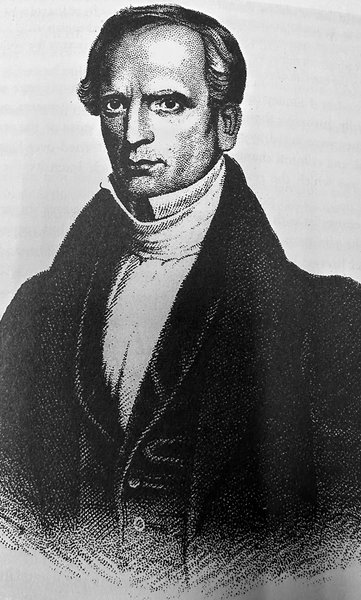
About the author
Charles G. Finney
Lectures on Revivals of Religion · 1835
More like this


Thomas Cole, “View of Schroon Mountain, Essex County, New York, After a Storm” (1838). The Cleveland Museum of Art, CC0.
Cite this book
Copy a citation in the style you need.
- MLA
- Finney, Charles G. Lectures on Revivals of Religion. 1835. Ochorus, https://ochorus.com/books/revival-lectures/.
- Chicago
- Finney, Charles G. Lectures on Revivals of Religion. 1835. Reprint, Ochorus. https://ochorus.com/books/revival-lectures/.
- Chicago footnote
- Charles G. Finney, Lectures on Revivals of Religion (1835; repr., Ochorus), https://ochorus.com/books/revival-lectures/.
- BibTeX
- @book{finney1835lectures, author = {Finney, Charles G.}, title = {{Lectures on Revivals of Religion}}, year = {1835}, publisher = {Ochorus}, url = {https://ochorus.com/books/revival-lectures/} }