

Book
A Treatise Concerning Religious Affections
The Nature of True Religion
Other titles: Religious Affections
Jonathan Edwards · 1703–1758
- 26 chapters
- 12 hr 19 min read
- Moderate Reading difficulty
Free to read·No account needed
Introduction
Taking books where there’s no signal? See Ochorus for missionaries or chaplains
Reader’s guide
About this book
A book about how to tell true religion from its counterfeits. Edwards argues first that genuine faith is not cool assent but affection — the heart moved — and then spends the rest of the treatise refusing every easy test of whether those affections are real. Twelve signs prove nothing either way: intensity, fluency in talking about it, the order in which things happened, even confidence. Twelve more are the real marks.
He wrote it in 1746, after the Great Awakening had swept New England and then curdled. Thousands had been converted; some of them were not, and nobody could tell which. Edwards had defended the revival publicly and now had to say what in it had been the work of God and what had been enthusiasm — a judgement that cost him his own pulpit a few years later.
The twelfth sign is where the argument lands, and it is the plainest thing in the book: gracious affections show themselves in practice — in what a life actually does, over time, under pressure. Edwards gives it more room than the other eleven together, having spent three hundred pages removing every shortcut a reader might have preferred.
It is demanding and it is meant to be uncomfortable. Anyone who has wondered whether an experience of God was genuine is the reader Edwards had in mind, and he neither dismisses the question nor answers it cheaply.
I. It is no sign one way or the other, that religious affections are very great, or raised very high. Some are ready to condemn all high affections: if persons appear to have their religious affections raised to an extraordinary pitch, they are prejudiced against them, and determine that they are delusions, without further inquiry.
Contents
- 1 Introduction 13 min
- 2 Part I. Concerning the nature of the affections and their importance in religion 72 min
- 3 I. It is no sign one way or the other, that religious affections are very great, or raised very high 10 min
- 4 II. It is no sign that affections have the nature of true religion, or that they have not, that they have great effects on the body 8 min
- 5 III. It is no sign that affections are truly gracious affections, or that they are not, that they cause those who have them to be fluent, fervent, and abundant, in talking of the things of religion 6 min
- 6 IV. It is no sign that affections are gracious, or that they are otherwise, that persons did not make them themselves, or excite them of their own contrivance and by their own strength 10 min
- 7 V. It is no sign that religious affections are truly holy and spiritual, or that they are not, that they come with texts of Scripture, remarkably brought to the mind 8 min
- 8 VI. It is no evidence that religious affections are saving, or that they are otherwise, that there is an appearance of love in them 4 min
- 9 VII. Persons having religious affections of many kinds, accompanying one another, is not sufficient to determine whether they have any gracious affections or no 9 min
- 10 VIII. Nothing can certainly be determined concerning the nature of the affections, by this, that comforts and joys seem to follow awakenings and convictions of conscience, in a certain order 28 min
- 11 IX. It is no certain sign that the religious affections which persons have are such as have in them the nature of true religion, or that they have not, that they dispose persons to spend much time in religion, and to be zealously engaged in the external duties of worship 5 min
- 12 X. Nothing can be certainly known of the nature of religious affections by this, that they much dispose persons with their mouths to praise and glorify God 4 min
- 13 XI. It is no sign that affections are right, or that they are wrong, that they make persons that have them exceeding confident that what they experience is divine, and that they are in a good estate 33 min
- 14 XII. Nothing can be certainly concluded concerning the nature of religious affections, that any are the subjects of, from this, that the outward manifestations of them, and the relation persons give of them, are very affecting and pleasing to the truly godly, and such as greatly gain their charity, 21 min
- 15 Part III 10 min
- 16 II. The first objective ground of gracious affections, is the transcendently excellent and amiable nature of divine things as they are themselves; and not any conceived relation they bear to self, or self-interest 32 min
- 17 III. Those affections that are truly holy, are primarily founded on the loveliness of the moral excellency of divine things 29 min
- 18 IV. Gracious affections do arise from the mind's being enlightened, richly and spiritually to understand or apprehend divine things 58 min
- 19 V. Truly gracious affections are attended with a reasonable and spiritual conviction of the judgment, of the reality and certainty of divine things 46 min
- 20 VI. Gracious affections are attended with evangelical humiliation 68 min
- 21 VII. Another thing, wherein gracious affections are distinguished from others, is, that they are attended with a change of nature 11 min
- 22 VIII. Truly gracious affections differ from those affections that are false and delusive, in that they tend to, and are attended with the lamblike, dovelike spirit and temper of Jesus Christ 30 min
- 23 IX. Gracious affections soften the heart, and are attended and followed with a Christian tenderness of spirit 15 min
- 24 X. Another thing wherein those affections that are truly gracious and holy, differ from those that are false, is beautiful symmetry and proportion 25 min
- 25 XI. Another great and very distinguishing difference between gracious affections and others is, that gracious affections, the higher they are raised, the more is a spiritual appetite and longing of soul after spiritual attainments increased 13 min
- 26 XII. Gracious and holy affections have their exercise and fruit in Christian practice 170 min
Questions and Answers
What is Religious Affections about?
It is Jonathan Edwards's test of true religion: how to tell a genuine work of God in the heart from its many counterfeits. Edwards argues that real faith is not cool assent but affection — the heart truly moved — and then spends the rest of the treatise refusing every easy way of proving whether those affections are gracious or false.
Why did Edwards write it?
He wrote it in 1746, after the Great Awakening had swept New England and then curdled. Thousands had professed conversion; some clearly were not converted, and no one could reliably tell which. Edwards had publicly defended the revival, and now had to say what in it had been the work of God and what had been mere excitement — so the book is the sober, hard-won reflection of a pastor who had seen both.
What are the 'twelve signs that prove nothing'?
Edwards lists twelve marks that many took as proof of grace but which, he argues, settle nothing either way — for example the intensity of one's feelings, fluency in talking about religion, the order in which experiences came, the presence of Scripture texts rushing to mind, or great confidence and assurance. None of these, he shows, distinguishes a true work of God from a counterfeit; they can accompany either.
What are the reliable marks of true grace?
The twelve distinguishing signs that follow are the heart of the book. The chief of them — the one Edwards weighs most heavily — is that gracious affections bear fruit in Christian practice: a changed, humble, holy life. True affections have their root in the beauty of God's own holiness, produce a lamblike and dovelike spirit, and issue in obedience, rather than remaining mere feeling.
What does Edwards mean by 'affections'?
Not shallow emotion or mere passing feeling, but the deep inclinations of the soul — the heart's strong bent toward or away from things. Edwards argues that true religion consists largely in holy affections, because a faith that never moves the heart is dead; but he is equally clear that not all strong feeling is holy, which is the whole problem the book sets out to solve.
Is this book relevant outside of a revival?
Yes — though occasioned by the Awakening, its question is permanent: how does anyone know whether their religion is real? Every generation of serious Christians faces it, and Edwards's answer, that the surest evidence is a transformed life rather than intense experience, has made the book a standard treatment of assurance and self-examination ever since.
Is it difficult to read?
It is a demanding book — closely argued and long, written by one of the most rigorous minds in American history. But it rewards patience, and its structure is clear: what true religion is, what does not prove it, and what does. Many readers who find the whole treatise heavy still return to the twelve distinguishing signs, which can be read on their own.
Where should a reader begin?
With Edwards's opening argument that true religion lies much in the affections, then the two lists — the signs that prove nothing, and the signs that distinguish. Readers pressed for time often go straight to the final and longest sign, that gracious affections issue in Christian practice, which Edwards himself treats as the surest evidence of all.
Read in your language
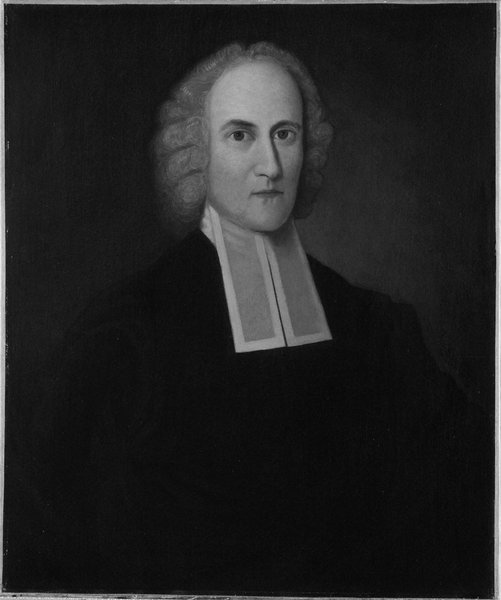
About the author
Jonathan Edwards
A Treatise Concerning Religious Affections · 1746
More like this






Claude Lorrain (Claude Gellée), “Sunrise” (possibly 1646–47). The Metropolitan Museum of Art, Open Access.
Cite this book
Copy a citation in the style you need.
- MLA
- Edwards, Jonathan. A Treatise Concerning Religious Affections. 1746. Ochorus, https://ochorus.com/books/religious-affections/.
- Chicago
- Edwards, Jonathan. A Treatise Concerning Religious Affections. 1746. Reprint, Ochorus. https://ochorus.com/books/religious-affections/.
- Chicago footnote
- Jonathan Edwards, A Treatise Concerning Religious Affections (1746; repr., Ochorus), https://ochorus.com/books/religious-affections/.
- BibTeX
- @book{edwards1746treatise, author = {Edwards, Jonathan}, title = {{A Treatise Concerning Religious Affections}}, year = {1746}, publisher = {Ochorus}, url = {https://ochorus.com/books/religious-affections/} }