New to Jarena Lee? Start with
Religious Experience and Journal
All works · 3 hr 54 min read
Biography
- 1783 Born
- 1804 Converted
- 1811 Married
- 1819 First to preach
- 1864 Died
My soul was gloriously converted to God, under preaching, at the very outset of the sermon.
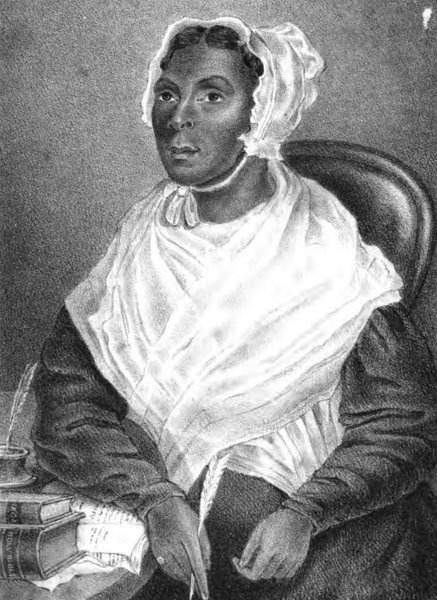
Jarena Lee was born free on February 11, 1783, in Cape May, New Jersey — a rare thing for a Black child in revolutionary America, and a mercy she never took for granted. Freedom did not spare her hardship. At seven years old she was sent sixty miles from her parents to work as a servant girl, and she grew up lonely, far from home, and hungry for something her circumstances could not give her. Long before she understood the gospel, she was aware of God: a tender conscience, a fear of death, a sense that she was made for more than service in another family's house.
That hunger drew her, as a young woman, to Philadelphia — the cradle of the free Black church. There she came under the preaching of the Reverend Richard Allen, the former slave who had founded Bethel African Methodist Episcopal Church and would soon become the first bishop of the AME denomination. She had passed through years of religious searching first — trying one congregation and then another, convicted of sin, at times so oppressed in spirit that the tempter pressed her toward taking her own life. But God, she believed, was "mercifully striving" with her the whole while. Under Allen's ministry, about 1804, her long seeking came to its end.
My soul was gloriously converted to God, under preaching, at the very outset of the sermon.
— Jarena Lee
Conversion did not settle her; it set her seeking a deeper work. For years she wrestled with her own sinfulness, with doubt, even with temptation to despair. Then one day, alone, the assurance she had prayed for broke over her like a storm of light.
The call she could not silence
Not long after, Jarena Lee heard what she could only describe as a voice — an inward, unmistakable command to preach the gospel. It frightened her. She was a poor, unlettered Black woman in a church, and an age, that reserved the pulpit entirely for men. But the call would not leave her, so she carried it to Richard Allen himself.
She told him plainly "that the Lord had revealed it to me, that I must preach the gospel." Allen, kind but bound by the Methodist Discipline, answered that their book made no provision for women preachers. Lee submitted — outwardly. Inwardly, the conviction only deepened, and she came to see the refusal as the age's blindness rather than God's will. In her narrative she set down a defense of women's preaching that still rings:
If the man may preach, because the Saviour died for him, why not the woman? seeing he died for her also. Is he not a whole Saviour, instead of a half one?
— Jarena Lee
In 1811 she married the Reverend Joseph Lee, pastor of a Black congregation at Snow Hill, some distance from Philadelphia. The marriage carried her away from the Bethel community that had nurtured her, into isolation she felt keenly. Then grief came in waves: within about six years she had buried her husband and several of her children, and found herself a widow with a young child and almost nothing. Yet the sorrow did not extinguish the call — it clarified it. Stripped of the supports she had leaned on, she leaned harder on God, and the old command to preach returned with new force.
"An altogether supernatural impulse"
The breakthrough came about 1819, in the very church where she had been converted. A visiting preacher rose to expound a text, faltered, and seemed to lose the Spirit's help. What happened next Jarena Lee never claimed as her own doing.
The same instant, I sprang, as by altogether supernatural impulse, to my feet, when I was aided from above to give an exhortation on the very text which my brother had taken.
— Jarena Lee
She preached — extemporaneous, unauthorized, on fire — and then sat down trembling, certain she had disgraced herself and would be expelled. Instead, Bishop Allen rose before the whole assembly. Eight years earlier, he told them, this woman had come to him asking leave to preach, and he had put her off; but he now believed, as fully as of any preacher present, that God had called her to the work. It was the answer to a prayer she had carried, like Jonah, for nearly a decade.
With that blessing she became the first woman authorized to preach in the African Methodist Episcopal Church.
Thousands of miles for the gospel
What followed was one of the most extraordinary preaching lives of the nineteenth century. For decades Jarena Lee travelled — on foot, by wagon, and by the new railroad "cars" — thousands of miles a year, across the free states and into slave territory, preaching in churches and camp meetings, homes and open fields, to Black and white congregations alike. In a single year she recorded travelling more than two thousand miles and preaching nearly two hundred sermons. She was often the only woman in the pulpit, and just as often met with suspicion, exhaustion, and poverty. Her journal, kept faithfully across the 1820s, 30s, and 40s, is the record of a woman who simply would not stop.
It is also, page after page, a record of prayer. She prayed her way into strange towns and hostile meetings; she prayed over the sick and the seeking; she prayed when her body failed and her purse was empty, and she wrote down, with a diarist's plainness, how God met her.
Her travels carried her into real danger. She preached in the slave states of Maryland and beyond, where a free Black woman proclaiming the gospel — and the equal worth of every soul Christ died for — was a provocation, and where she once preached with enslaved men and women weeping before her and their masters looking on. She never separated the gospel she preached from the bondage she witnessed; the God who had made her free in Christ, she was certain, had not made anyone a slave. Her whole ministry was a living argument that the good news belongs to the poor, the enslaved, the unlettered, and the woman as fully as to anyone else.
She counted her hardships as fellowship with Christ, not grounds for complaint. Opposition to a woman in the pulpit she answered by preaching better; poverty she answered by trusting God for the next meal and the next mile; loneliness she answered by pressing into the presence she had known since that night the lightning of assurance struck her soul. She had no formal education and no earthly patron — only a call, a Bible, and a conviction that the One who gave the call would supply the strength.
A book, and a long silence
In 1836, Jarena Lee did something no African American woman had done before: she published her autobiography, The Life and Religious Experience of Jarena Lee, paying for the printing herself so that her testimony would outlast her. In 1849 she expanded it into the fuller Religious Experience and Journal of Mrs. Jarena Lee, adding the travel journal that makes up most of this volume. Both books she carried in her own bags and sold at her own meetings — a Black woman evangelist self-publishing her call in defiance of every convention of her day.
After 1849 the record goes quiet; she is thought to have died about 1864, in her early eighties, her later years unrecorded. For a long time her name was quiet too, remembered mostly by the church she had served. But her testimony did outlast her, exactly as she hoped. In 2016 the African Methodist Episcopal Church posthumously ordained her, formally granting the standing that the age had denied and God had plainly given. Jarena Lee had never really waited on that permission. She had a whole Saviour, and a whole gospel to preach, and she had spent her life proving that the good news is no respecter of persons — that the God who died for the woman as surely as for the man will use whom he calls, and answer the prayers of those who will not let him go.
Books by Jarena Lee (1)
Articles about Jarena Lee (1)
Questions and Answers
Who was Jarena Lee?
Born free in New Jersey in 1783, Jarena Lee was converted under Richard Allen and became the first woman authorized to preach in the African Methodist Episcopal Church, travelling thousands of miles to proclaim the gospel. She published the first autobiography by an African American woman, and spent decades on foot, by wagon and by rail carrying a message she was certain belonged to the poor, the enslaved, the unlettered and the woman as fully as to anyone else.
What was her early life?
She was born free on 11 February 1783 in Cape May, New Jersey — a rare thing for a Black child in revolutionary America, and a mercy she never took for granted. Freedom did not spare her hardship: at seven she was sent sixty miles from her parents to work as a servant girl, and she grew up lonely, far from home, and aware long before she understood the gospel of a tender conscience, a fear of death, and a sense that she was made for more.
How was she converted?
That hunger drew her to Philadelphia, the cradle of the free Black church, where she came under the preaching of Richard Allen, the former slave who had founded Bethel and would become the first bishop of the AME denomination. She had passed through years of religious searching, at times so oppressed in spirit that the tempter pressed her toward taking her own life; then, about 1804, "My soul was gloriously converted to God, under preaching, at the very outset of the sermon."
What was her experience of sanctification?
Conversion did not settle her; it set her seeking a deeper work, and for years she wrestled with her own sinfulness, doubt and temptation to despair. Then, alone, after weeks pleading to know she was wholly the Lord's, the assurance broke over her like a storm of light: "That very instant, as if lightning had darted through me, I sprang to my feet, and cried, 'The Lord has sanctified my soul!' There was none to hear this but the angels who stood around to witness my joy."
What was the call she could not silence?
Not long after, she heard what she could only describe as an inward, unmistakable command to preach the gospel, and it frightened her — a poor, unlettered Black woman in a church and an age that reserved the pulpit entirely for men. She carried it to Richard Allen, who, kind but bound by the Methodist Discipline, answered that their book made no provision for women preachers. She submitted outwardly, but inwardly the conviction only deepened.
How did she defend women's preaching?
She came to see the refusal as the age's blindness rather than God's will, and set down a defense that still rings: "If the man may preach, because the Saviour died for him, why not the woman? seeing he died for her also. Is he not a whole Saviour, instead of a half one?" It was the conviction her whole ministry would prove — that the good news is no respecter of persons.
How did grief shape her call?
In 1811 she married the Reverend Joseph Lee, which carried her away from the Bethel community into isolation she felt keenly. Then grief came in waves: within about six years she had buried her husband and several of her children and found herself a widow with a young child and almost nothing. Yet the sorrow did not extinguish the call — it clarified it; stripped of her supports, she leaned harder on God, and the old command to preach returned with new force.
What was the breakthrough about 1819?
In the very church where she had been converted, a visiting preacher rose to expound a text, faltered, and seemed to lose the Spirit's help. "The same instant, I sprang, as by altogether supernatural impulse, to my feet," she wrote, and gave an exhortation on his very text; then sat down trembling, certain she had disgraced herself. Instead Bishop Allen rose before the whole assembly and declared that he now believed, as fully as of any preacher present, that God had called her — the answer to a prayer she had carried for nearly a decade.
What was her preaching life like?
One of the most extraordinary of the nineteenth century. For decades she travelled thousands of miles a year — on foot, by wagon, and by the new railroad cars — across the free states and into slave territory, preaching in churches, camp meetings, homes and open fields to Black and white congregations alike. In a single year she recorded travelling more than two thousand miles and preaching nearly two hundred sermons, her journal page after page a record of prayer that carried her into strange towns and hostile meetings.
What did she write, and how is she remembered?
In 1836 she did what no African American woman had done before, publishing her autobiography, "The Life and Religious Experience of Jarena Lee," paying for the printing herself so her testimony would outlast her, and in 1849 she expanded it with her travel journal. After 1849 the record goes quiet; she is thought to have died about 1864. Her testimony did outlast her: in 2016 the African Methodist Episcopal Church posthumously ordained her, granting the standing the age had denied and God had plainly given.