
Book
A Plain Account of Christian Perfection
As Believed and Taught by John Wesley
Other titles: A Plain Account of Christian Perfection, as Believed and Taught by the Reverend Mr. John Wesley
John Wesley · 1703–1791
- 6 chapters
- 2 hr 49 min read
- Accessible Reading difficulty
Free to read·No account needed
Sections 1-7
Taking books where there’s no signal? See Ochorus for missionaries or chaplains
About this book
John Wesley's own account, gathered over fifty years, of what he did and did not mean by Christian perfection: not freedom from mistake, ignorance or infirmity, but a heart so filled with love to God and neighbour that nothing contrary remains. The clearest statement of the doctrine that defined Methodism.
1. What I purpose in the following papers is, to give a plain and distinct account of the steps by which I was led, during a course of many years, to embrace the doctrine of Christian perfection.
Contents
Questions and Answers
What is A Plain Account of Christian Perfection about?
It is John Wesley's own account, gathered over fifty years, of what he did and did not mean by Christian perfection. He is careful to explain that he does not mean freedom from mistake, ignorance, or infirmity, but a heart so filled with love to God and neighbour that nothing contrary to love remains — the great and controversial doctrine that lay at the centre of the Methodist movement.
Who was John Wesley?
John Wesley was the eighteenth-century founder of Methodism, an Anglican clergyman whose tireless preaching and organizing helped spark a great revival in Britain. Christian perfection, or entire sanctification, was one of his most distinctive and disputed teachings, and this book is his mature, careful defence and explanation of it.
What does Wesley mean by 'Christian perfection'?
He means perfect love — a heart wholly given to God and neighbour, cleansed from the reigning power of sin, so that love becomes the ruling principle of the whole life. It is not, he insists, a claim to sinless flawlessness or freedom from human limitation, but the fullness of love that he believed God could work in a believer in this life.
What does Wesley say perfection is NOT?
He is emphatic on this. Christian perfection does not mean freedom from ignorance, mistake, infirmity, or temptation; the perfected believer still errs and still needs Christ every moment. Wesley wrote much of the book to clear away these misunderstandings, insisting that what he means is a perfection in love, not an absolute flawlessness impossible in this life.
Why was this teaching controversial?
Because critics feared it claimed a sinless perfection that Scripture denies to this life, or that it bred pride and self-deception. Wesley spent decades defending and refining the doctrine against such objections, which is partly why the book is cast as a 'plain account' — an attempt to state carefully, and guard against misuse, a teaching many found either impossible or dangerous.
How does Wesley say perfection is received?
By faith, as a work of God's grace, often received in a moment though prepared for over time — not achieved by human effort but wrought by the Holy Spirit in a fully surrendered heart. Wesley taught believers to seek it earnestly and expect it, while always resting on Christ, and to regard it as God's gift rather than their own attainment.
Who should read this book?
Anyone wanting to understand Wesley and Methodism at their heart, or the holiness tradition that flowed from him, and any Christian interested in the pursuit of holiness and perfect love. It is essential for grasping a doctrine that shaped whole movements, and useful for anyone weighing what Scripture holds out to the believer in this life.
Where should a reader begin?
At the beginning; the book is arranged largely as Wesley's own chronological account, tracing how his understanding developed and answering objections along the way. Read in order, it lets the reader see the doctrine take shape in Wesley's hands and understand both what he affirmed and what he was careful to deny.
Read in your language
About the author
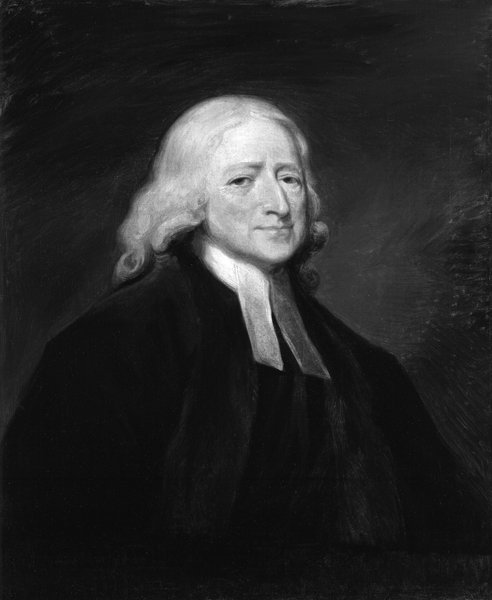
John Wesley
A Plain Account of Christian Perfection · 1766
More like this



George Inness, “Harvest Time” (1864). The Cleveland Museum of Art, CC0.
Cite this book
Copy a citation in the style you need.
- MLA
- Wesley, John. A Plain Account of Christian Perfection. 1766. Ochorus, https://ochorus.com/books/plain-account-christian-perfection/.
- Chicago
- Wesley, John. A Plain Account of Christian Perfection. 1766. Reprint, Ochorus. https://ochorus.com/books/plain-account-christian-perfection/.
- Chicago footnote
- John Wesley, A Plain Account of Christian Perfection (1766; repr., Ochorus), https://ochorus.com/books/plain-account-christian-perfection/.
- BibTeX
- @book{wesley1766plain, author = {Wesley, John}, title = {{A Plain Account of Christian Perfection}}, year = {1766}, publisher = {Ochorus}, url = {https://ochorus.com/books/plain-account-christian-perfection/} }