
Book
The Mortification of Sin in Believers
On Killing Sin by the Spirit
Other titles: Of the Mortification of Sin in Believers · The Mortification of Sin
John Owen · 1616–1683
- 15 chapters
- 3 hr 33 min read
- Moderate Reading difficulty
Free to read·No account needed
Preface
Taking books where there’s no signal? See Ochorus for missionaries or chaplains
Grow with the story

Reader’s guide
About this book
Owen's subject is Paul's clause in Romans 8:13 — “if ye through the Spirit do mortify the deeds of the body, ye shall live” — and his thesis is the line everybody quotes: be killing sin, or it will be killing you. What follows is the most careful anatomy in English of how a besetting sin actually works, what pretends to be its cure, and why willpower and self-hatred are not the same thing as mortification.
It began as sermons to Oxford undergraduates while Owen was vice-chancellor of the university — young men, mostly, being told that sin is not managed by resolutions. That audience shows: the book is direct, unromantic, and assumes its hearers are already trying and already failing.
The book falls into three parts, and the third is the useful one: having established that the duty is lifelong and that the Spirit does the work, Owen turns to directions — how to load the conscience with the guilt of the sin, how to trace it back to what it actually wants, how to tell a wounded sin from a dead one. It is the section that reads least like theology and most like diagnosis.
Owen's prose is the hardest going of any book on this shelf; the sentences are long and the clauses stack. It is also the one readers most often say changed how they fight. Take it slowly — a section a sitting — and it opens.
Contents
- 1 Preface 3 min
- 2 The foundation of the whole discourse, laid in Romans viii. 13 10 min
- 3 The necessity of mortification: the duty of the best believers 19 min
- 4 The Spirit is the only author of this work 12 min
- 5 The usefulness of mortification to the vigour of our spiritual lives 8 min
- 6 What it is to mortify a sin, negatively considered 10 min
- 7 The mortification of sin in particular described 13 min
- 8 General rules, without which no lust will be mortified 19 min
- 9 Without universal sincerity, no one lust will be mortified 7 min
- 10 Consider the dangerous symptoms of any lust 18 min
- 11 Get a clear sense of the guilt, danger and evil of the sin 16 min
- 12 Load thy conscience with the guilt of the perplexing distemper 16 min
- 13 Thoughtfulness of the excellency of the majesty of God 19 min
- 14 When the heart is disquieted by sin, speak no peace to it until God speak it 22 min
- 15 Act faith on Christ for the killing of thy sin 21 min
Questions and Answers
What is The Mortification of Sin about?
It is the most careful anatomy in English of how a besetting sin actually works, what falsely pretends to cure it, and how it is truly put to death. Owen takes up Paul's clause in Romans 8:13 — that if by the Spirit we put to death the deeds of the body, we shall live — and turns it into a searching, practical handbook for the Christian who is fighting a sin and losing.
What is Owen's most famous sentence?
Be killing sin, or it will be killing you. It is the line the whole book exists to unfold: that indwelling sin is never dormant or neutral but always at work, so that a believer who ceases the fight will find the fight being carried on against him. The Christian life, on Owen's account, includes a daily, deliberate war that is never finally won this side of death.
Who did Owen write it for?
It began as sermons to Oxford undergraduates while Owen was vice-chancellor of the university — young men, mostly, who were making no progress against habits they hated. That audience shows: the book is direct, unromantic, and assumes its readers are already trying and already failing, which is exactly why it refuses to hand them more willpower as the answer.
What does 'mortification' actually mean here?
Not the mere restraining of an outward act, nor self-hatred, nor the temporary lull that follows a scare, but the weakening of a sin at its root by the power of the Holy Spirit. Owen is careful to distinguish true mortification from its many counterfeits — a sin merely diverted, or hidden, or aged out of — and insists it is the Spirit's work in which the believer is an active, not passive, participant.
Does Owen think willpower can defeat sin?
No — and much of the book is spent showing why self-effort, resolutions, and self-loathing are not the same as mortification and cannot do its work. Willpower may suppress a sin's expression while leaving its life untouched. Owen directs the fighter instead to the cross and the Spirit, to faith in Christ and a heart kept tender, as the only power that actually kills sin rather than merely gagging it.
What Scripture is the book built on?
Romans 8:13 — 'if ye through the Spirit do mortify the deeds of the body, ye shall live.' Owen weighs almost every word of it: that the duty is the believer's, that the power is the Spirit's, that the object is the deeds of the body, and that the promise attached is life. The whole treatise is essentially an exposition of that single verse pressed home to the conscience.
Is this book only for people with a 'big' sin?
No — Owen writes for every believer, because indwelling sin remains in the holiest Christian and the fight is lifelong. He warns particularly against thinking oneself past the danger. The book has been valued across the centuries precisely because it speaks to the ordinary, hidden struggles of serious Christians, not only to dramatic falls.
Where should a reader begin?
At the beginning, reading slowly — it is dense but not long. Owen first establishes the necessity and nature of mortification, then exposes the false cures, then gives direction for the actual work. Readers often find the diagnostic chapters, on what mortification is not, the most searching; but the book is meant to end in hope, at the cross where sin is finally undone.
Read in your language
More like this



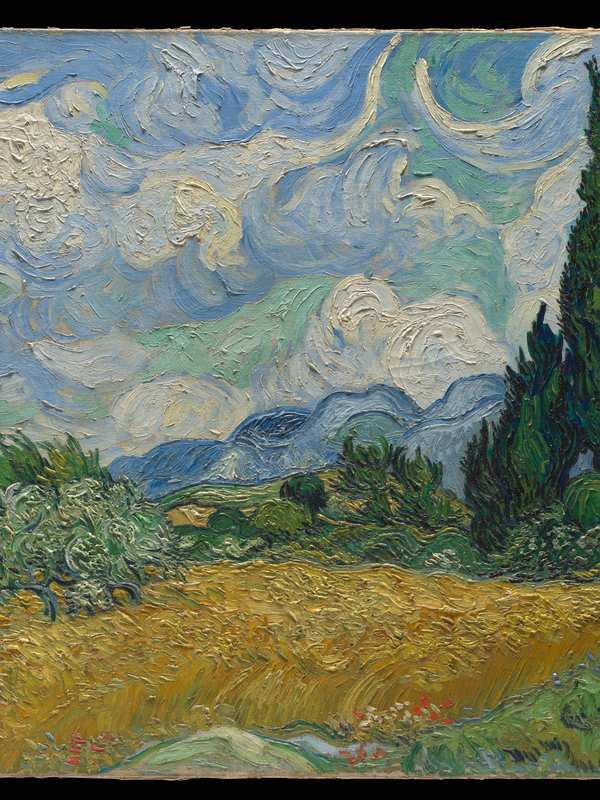


Jan Griffier, “Winter Landscape” (c. 1680–1718). The Cleveland Museum of Art, CC0.
Cite this book
Copy a citation in the style you need.
- MLA
- Owen, John. The Mortification of Sin in Believers. 1656. Ochorus, https://ochorus.com/books/mortification-of-sin/.
- Chicago
- Owen, John. The Mortification of Sin in Believers. 1656. Reprint, Ochorus. https://ochorus.com/books/mortification-of-sin/.
- Chicago footnote
- John Owen, The Mortification of Sin in Believers (1656; repr., Ochorus), https://ochorus.com/books/mortification-of-sin/.
- BibTeX
- @book{owen1656mortification, author = {Owen, John}, title = {{The Mortification of Sin in Believers}}, year = {1656}, publisher = {Ochorus}, url = {https://ochorus.com/books/mortification-of-sin/} }